
Last updated November 24, 2026
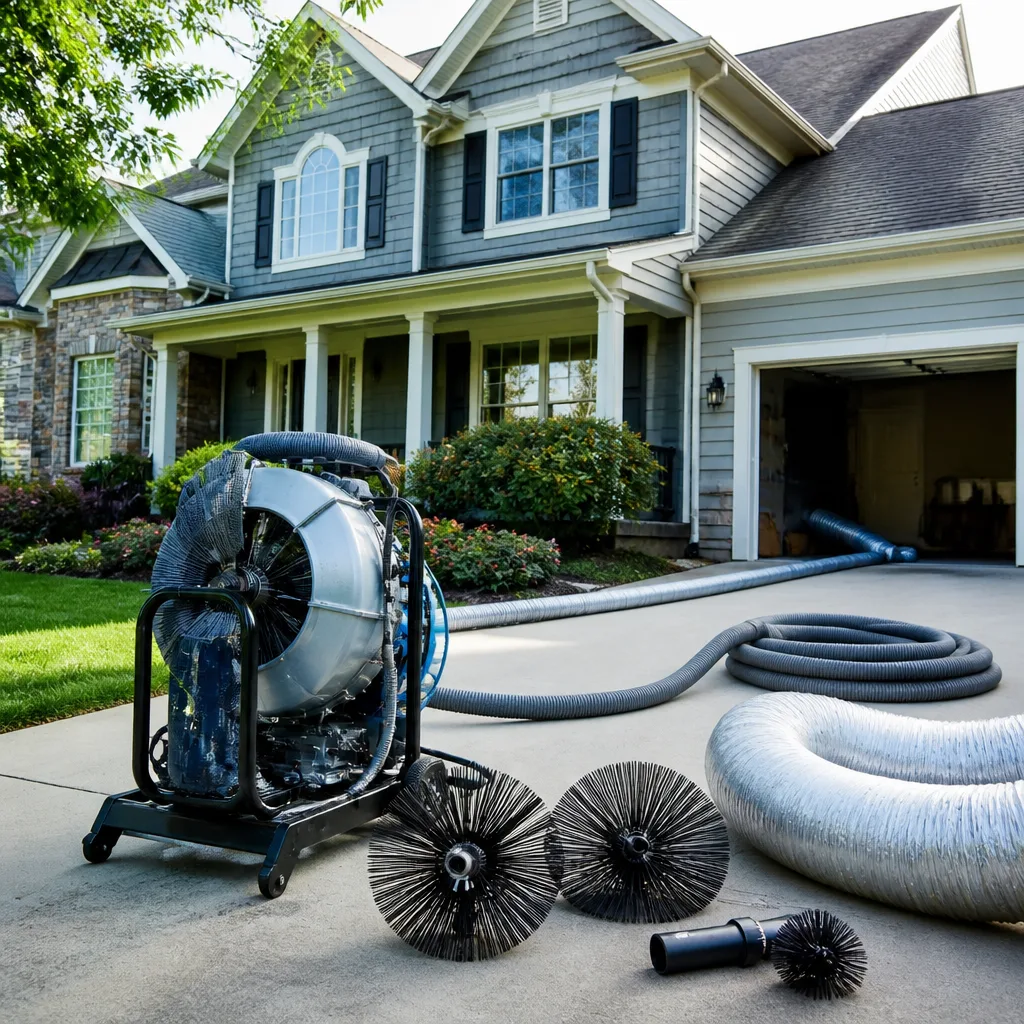 Whole-home duct cleaning
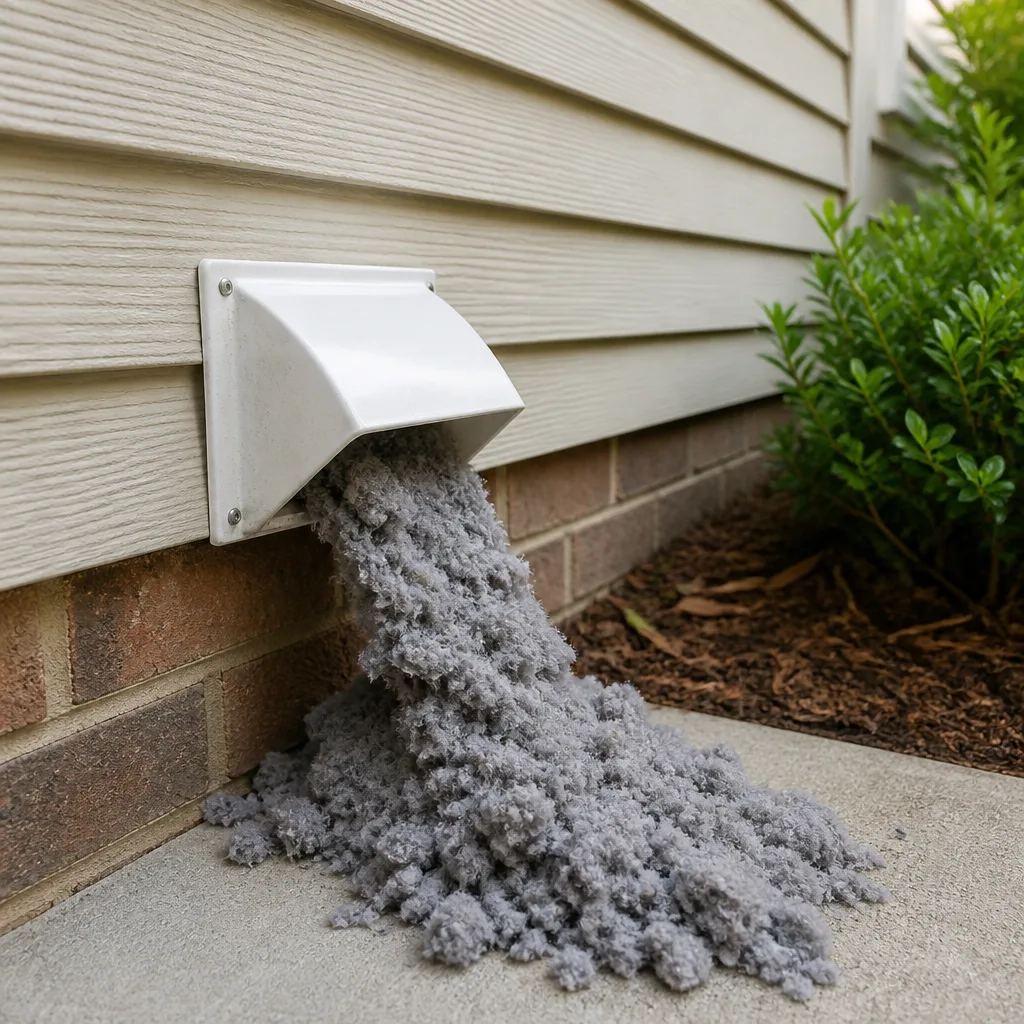 Dryer vent cleaning
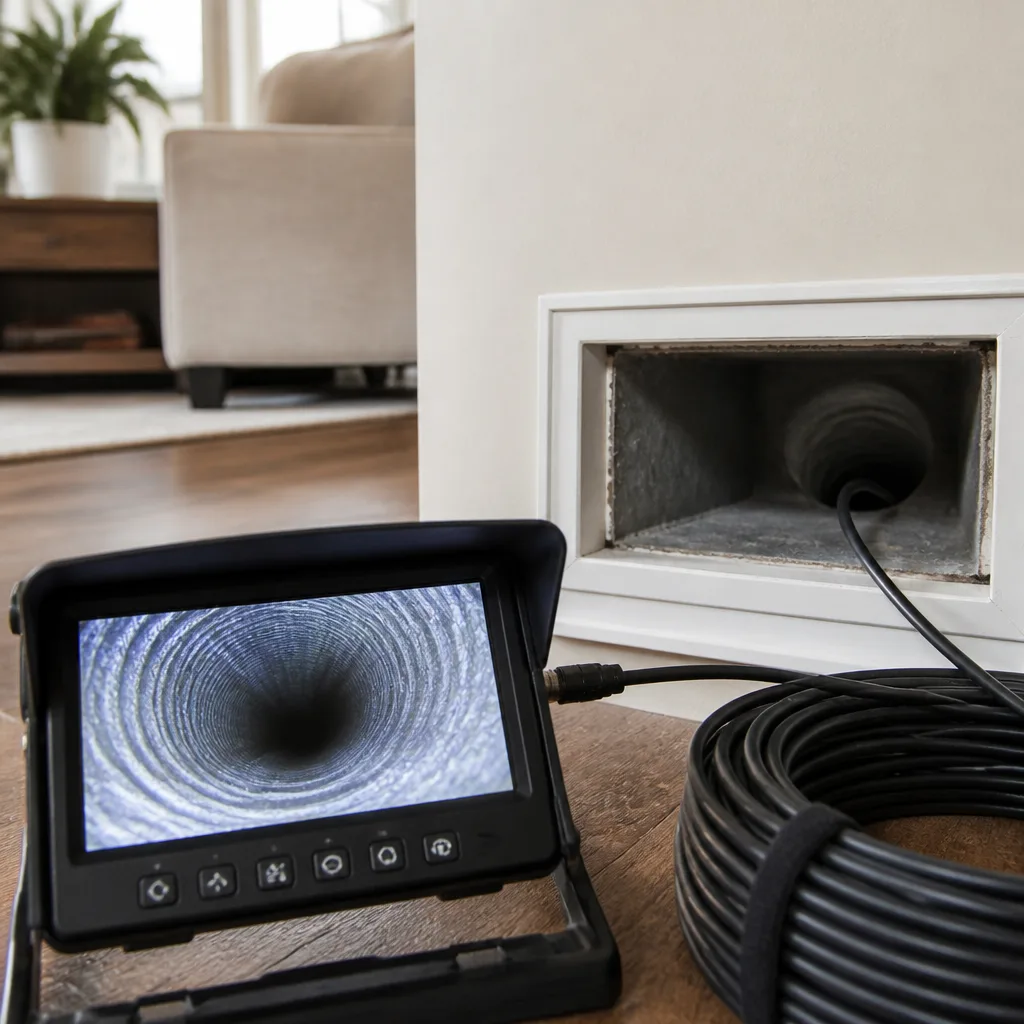 Camera inspection
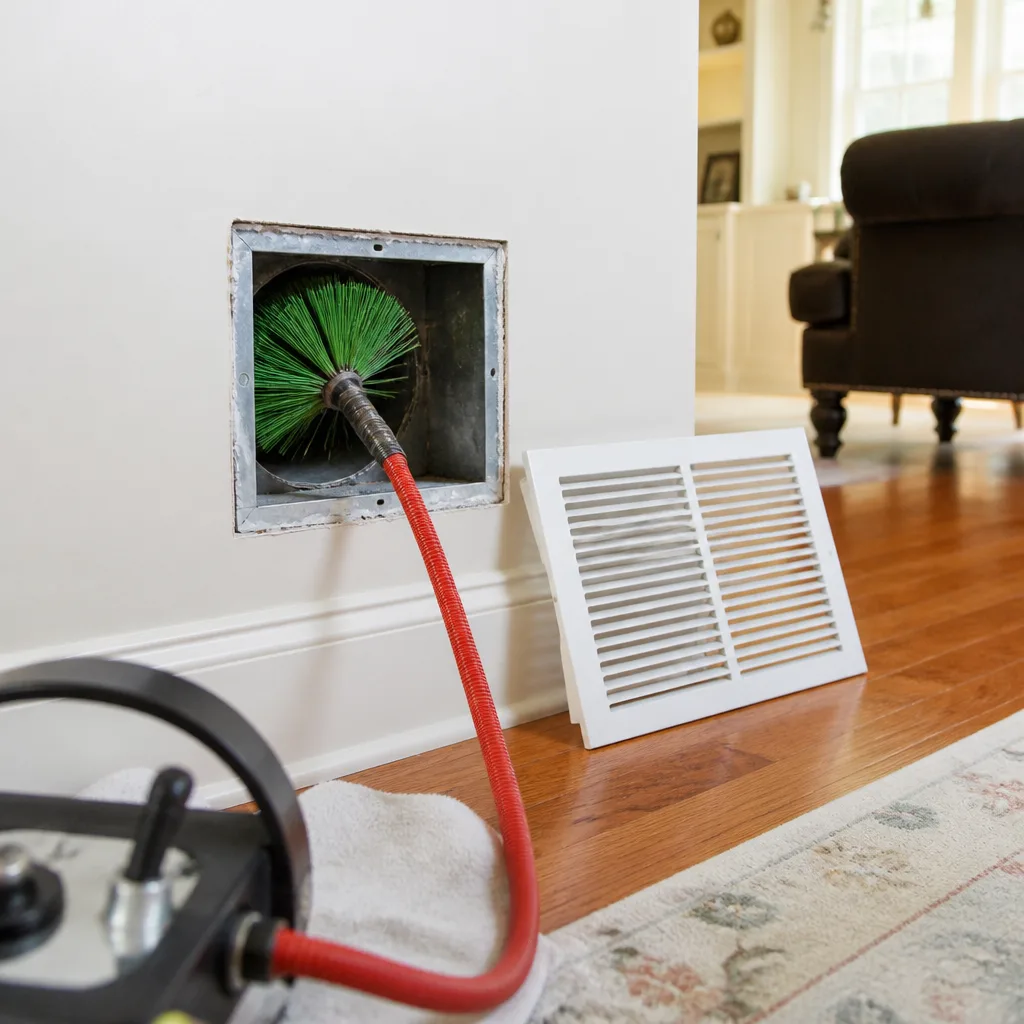 Sanitizing & deodorizing
Whole-system duct and dryer vent check with before-and-after photos - you see exactly what came out of your vents
That "$99 whole-house special" is a bait ad - the real number appears once they are in your hallway, or the "clean" is a shop-vac at the register. We photograph the inside of your ducts before and after instead.
Air Duct Cleaning Troubleshooting in Northwood: Common Problems and How to Fix Them
If a technician opens one register, peers inside with a flashlight, and declares your whole duct system clean, they diagnosed nothing. They looked at a single data point in a network that runs through every wall and ceiling in your home. This is the core problem with most duct troubleshooting: homeowners and even some service providers treat symptoms as isolated defects. Weak airflow in the bedroom is not a bedroom problem. A musty smell is rarely a duct-wall problem. The real answer usually lives somewhere else along the air pathway. In this guide, we walk through the diagnostic sequence our technicians use in Northwood so you can describe what you’re experiencing accurately before anyone shows up to fix it.
Quick Answer
Most duct problems in Northwood trace back to one of three sources: accumulated debris restricting airflow, leaks and disconnected joints bleeding conditioned air into walls and attics, or equipment issues that mimic duct problems. The fastest way to narrow it down is a register-by-register airflow and temperature test. Note which rooms are weak and which are fine, check whether the smell changes with the system running, and look at your filter before calling anyone. That information helps a technician skip the guesswork and go straight to the actual cause.
Styles & brands we work with
- Whole-home duct cleaning
- Dryer vent cleaning
- Camera inspection
- Sanitizing & deodorizing
Table of Contents
- Dirty Ducts vs. Leaky Ducts vs. Blower Problems: How to Tell the Difference
- The Register-by-Register Test: Locating the Problem Run Before a Technician Arrives
- What Musty Odors After Cleaning Actually Mean
- Why Restricted Ducts Mimic HVAC Equipment Failure
- Symptom-to-Cause Reference Table for Northwood Homeowners
- When the Fix Is Repair and Sealing, Not Just Cleaning
- Why Containment and Extraction Equipment Change the Outcome
Dirty Ducts vs. Leaky Ducts vs. Blower Problems: How to Tell the Difference
These three problems feel similar from inside the house, but they need very different fixes. A dirty duct system restricts airflow gradually. A leaky duct system loses air before it ever reaches the register. A blower problem means the air handler itself isn’t moving enough air, often because something upstream is blocking it. Cleaning a leaky duct system will not restore lost airflow. Replacing a blower on a system with crushed flex duct won’t help either.
Here’s a simple way to separate them before anyone touches your system.
- Check the filter first. A clogged filter starves the whole system. If airflow improves noticeably with a fresh filter, you’ve found your restriction. If nothing changes, keep going.
- Listen at the return. A strong, steady pull at the return grille usually means the blower is moving air. A weak or pulsing pull points toward a blower or filter issue.
- Compare supply registers. If one or two rooms are weak and the rest are strong, you’re looking at a duct run issue. If every register is weak, the problem is upstream: filter, blower, or a collapsed main trunk.
- Feel for escaping air. In an accessible attic or crawl space, run the system and feel along duct joints. Warm or cool air escaping at a joint means leakage, not dirt.
- Watch the dust pattern. Heavy dust concentrated at one register points to that specific run. Dusty air throughout the house points to a system-wide problem.
Airflow complaints are common in Northwood’s older single-story homes, where original duct layouts run long distances through unconditioned attic space. Those long runs lose pressure before they reach the far bedrooms. If the far room has always been weak and the near rooms are fine, that’s a design and leakage issue, not a debris problem. Cleaning helps, but air duct cleaning alone won’t overcome a run that’s undersized or leaking at every joint.
The Register-by-Register Test: Locating the Problem Run Before a Technician Arrives
This is the single most useful thing you can do before calling for service. It takes about fifteen minutes and gives a technician a map of where the problem lives.
- Set the thermostat to a steady temperature and let the system run for ten minutes. You want stable operation, not a system that’s cycling on and off.
- Hold a hand or a strip of tissue at each supply register. Note the strength: strong, moderate, weak, or none.
- Record a room-by-room temperature reading. An inexpensive thermometer works fine. Write down the number for each room.
- Note the pattern on a sketch of your floor plan. Weak rooms clustered on one side of the house point to a shared trunk problem. Weak rooms scattered randomly point to individual branch issues.
- Note any rooms where the smell is stronger. Odor concentrated in one room tells you where the source is likely located.
The pattern matters more than any single reading. In Northwood homes, we often see a cluster of weak registers on the far end of the house, which usually traces back to a long, sagging flex run or a trunk that’s leaking at a wye fitting. A branch serving one bedroom is a different problem entirely. A single weak register with every other one strong is usually a branch with a collapsed or disconnected section, not a whole-system failure.
When you can tell a technician “the two back bedrooms are cold and weak, the front rooms are fine, and there’s a musty smell near the hallway return,” you’ve done half the diagnostic work. That’s a far more useful call than “my airflow feels low.” It lets us bring the right tools for the right job rather than starting from scratch. If your HVAC equipment itself is the concern rather than the ducts, our HVAC cleaning service addresses the coil and air handler side of the loop.
What Musty Odors After Cleaning Actually Mean
Here’s the uncomfortable truth: a musty smell that persists after a duct cleaning almost never comes from the duct walls. It comes from the evaporator coil or the drain pan. Both stay wet for most of the cooling season, and in Northwood’s mild climate, the system can run for months without ever drying out completely. That constant moisture is where mold and bacteria settle in.
This matters because a homeowner who notices a musty smell after cleaning often calls back and assumes the cleaning failed. More often than not, the ducts are clean and the real source was never addressed. The duct cleaning was working on the wrong component.
Here’s how to tell the difference.
- Smell only when the system runs. If the odor appears when airflow starts and fades when it stops, the source is somewhere in the air path, most likely the coil or drain pan.
- Smell all the time. A persistent background odor even when the system is off can indicate moisture issues in a duct run, often a low or unconditioned section.
- Smell strongest at one register. A single-point odor usually traces to that branch, often where it passes an unconditioned space or a plumbing chase.
- Smell only after rain or in humid weather. This points to a moisture source outside the ductwork, such as a crawl space or attic.
If the source is the coil or drain pan, cleaning the ducts alone won’t fix the smell. The coil needs to be cleaned, the drain pan cleared and treated, and the condensate line checked for standing water. This is where a full-system approach matters: the ducts, coil, and air handler are one loop, and odor lives wherever moisture settles. Our Air Duct Cleaning Northwood team treats odor as a diagnostic symptom, not something to mask with a scented fogger. If a technician sprays deodorizer into your vents and calls it done, ask what the actual source was. Then ask what they did to remove it.
A quality sanitizing treatment applied at the right location helps, but only after the moisture source is gone. Applying sanitizer over a wet coil without cleaning it first just coats the problem.
Why Restricted Ducts Mimic HVAC Equipment Failure
Static pressure is the resistance air encounters as it moves through the system. When ducts are restricted by debris buildup, collapsed flex runs, or undersized returns, static pressure climbs. The blower pushes against more resistance than it was designed for. The system responds the way any motor does under load: it moves less air, runs longer, and sometimes shows the behavior of a failing component.
What homeowners actually notice is that the system never quite satisfies the thermostat. Rooms stay warm in the afternoon. The AC runs without stopping. The far bedroom never cools. Somebody suggests the compressor is failing. Another suggests the blower motor is weak. A third brings up the duct system.
Here’s how to tell restricted ductwork from a true equipment failure.
- Does the system cool when it runs? If supply air is cold and the room is still warm, the equipment is producing cooling but the air isn’t reaching the room. That’s a distribution problem.
- Does the restriction show up at a specific register? Weak airflow at some registers with strong airflow at others means air is being delivered unevenly. A failing blower shows up everywhere.
- Does the return side feel restricted? A weak pull at the return grille points to a filter or return duct problem. A strong pull points to a supply-side issue.
- Does the breaker trip? Repeated breaker trips or the blower failing to start at all point to a true equipment problem, not a duct restriction.
- Does the static pressure test confirm it? A technician will measure static pressure across the air handler. High readings on both sides of the coil confirm restriction. Normal readings point to the equipment.
In our experience, a large share of “failing AC” calls in Northwood turn out to be heavily restricted return ductwork or a collapsed flex run. The equipment was working the whole time. It was pushing against a closed door. Cleaning and sealing fix the pressure problem. Replacing equipment while leaving the restriction in place just puts a new blower behind the same closed door.
Symptom-to-Cause Reference Table for Northwood Homeowners
Use this table to organize what you’re experiencing before you call. For each symptom, look at the likely cause and the check you can do yourself. Then describe your results to whoever you call.
- Symptom: weak airflow at some registers only. Likely cause: restricted or disconnected branch run. Check: compare registers room by room.
- Symptom: weak airflow at every register. Likely cause: clogged filter, restricted return, or failing blower. Check: replace the filter and retest.
- Symptom: warm air from supply registers. Likely cause: equipment or refrigerant problem. Check: feel the supply air temperature; if it’s warm, stop at the equipment side.
- Symptom: uneven room temperatures. Likely cause: leakage at joints or long undersized runs. Check: sketch the pattern on a floor plan.
- Symptom: musty smell when running. Likely cause: mold or bacteria at the coil or drain pan. Check: note whether the smell appears only with airflow.
- Symptom: excess dust in a single room. Likely cause: gap near a register boot or a dirty branch. Check: look at the boot-to-drywall seal.
- Symptom: higher energy bills with no weather change. Likely cause: leakage sending conditioned air into walls or attic. Check: feel along joints in accessible areas.
- Symptom: dust puffing from registers on startup. Likely cause: debris settled in the ducts. Check: capture dust on a white cloth at a register and see whether it’s dark or fibrous.
- Symptom: whistle at a vent. Likely cause: leak at a register boot or a tight duct set at high pressure. Check: run a hand around the vent edges.
- Symptom: persistent allergy symptoms indoors. Likely cause: accumulated debris plus restricted airflow. Check: combine with a filter and register test.
Northwood’s mild climate keeps HVAC systems running for long stretches, so the system rarely gets a break. Long run times concentrate whatever debris is in the system onto damp coil surfaces. That’s why seasonal timing matters: cleaning before the long cooling stretch prevents the buildup from settling into the coil.
When the Fix Is Repair and Sealing, Not Just Cleaning
In a fair portion of the homes we inspect in Northwood, the cleanliness was never the primary problem. The ducts are reasonably clean but leaking at the joints, or disconnected at a flex run, or crushed where a piece of furniture has been sitting on it for years. Cleaning that system is worthwhile, but it doesn’t stop the losses.
Repair and sealing fix the actual problem. Here’s what that work involves.
- Inspect every accessible joint and connection. Attic, crawl space, and closet chases usually reveal more than homeowners expect.
- Reseal the joints with mastic or foil tape rated for HVAC use. Consumer duct tape isn’t a long-term seal and breaks down when exposed to the temperature swings inside an attic.
- Repair disconnected runs and collapsed flex sections. A disconnected run dumps conditioned air into the wall, costing you airflow and money every time the system runs.
- Reconnect boots to the drywall or subfloor with a proper seal. Gaps at the boot are one of the most common causes of dust near a register and pressure loss in the run.
- Verify the repair. A technician should re-check airflow at the register and confirm that the leaks are sealed.
The reason repair on the same visit matters: cleaning a system and then leaving gaps you found along the way does not solve anything. Conditioned air escapes, dust pulls back in through the same openings, and the homeowner is back to the same problem in a season or two. Repair what’s found, then clean. That’s the sequence that holds.
Sealing also helps the rest of the air-quality chain. When the duct system is sealed, whole-home filtration adds value instead of fighting leakage. If your technician is familiar with Aprilaire or Honeywell product lines, they can recommend filtration and humidification that actually fit the sealed system rather than being sized against leaks.
Why Containment and Extraction Equipment Change the Outcome
Cleaning without containment is an old approach: agitate the debris, let the blower pull it into the return, and hope it doesn’t end up on the furniture. It almost always ends up on the furniture. That’s why professional duct cleaning today uses negative-air containment. Abatement Technologies makes containment and negative-air equipment that captures dislodged debris at the source and pulls it out of the building, rather than sending it through the home.
The other half of the equation is the extraction equipment. Rotobrush and Nikro systems are rotary brush and high-volume vacuum units built for professional duct cleaning and commercial restoration work, not the portable shop vacs that show up on discount coupon calls. The right equipment matters because the wrong equipment can’t reach into the duct run the way a rotary brush can, and it can’t hold negative pressure the way a professional machine can.
Here’s what a professional cleaning should look like at the equipment level.
- Negative-air containment set up before cleaning starts. HEPA-filtered vacuum connected to the main trunk, with the system isolated so debris doesn’t get pushed into the living space.
- Rotary brush agitation of every accessible run. A rotating brush loosens debris from the duct walls; a stationary wand just scrapes the bottom.
- High-volume extraction at the takeoffs. The Abatement Technologies equipment and the Nikro extraction units work together to pull dislodged material out of the system.
- Register boots and return grilles cleaned last. Remove debris from the whole system before finishing at the entry points.
- Before-and-after photos at the registers and main trunk. The photos should show your ducts, not a generic demo image.
If a technician shows up with a shop vac and a hose, the equipment can’t create negative pressure, can’t extract from deep in the run, and can’t hold containment. The results reflect the equipment. Cleaning a duct system with consumer tools is like pressure-washing a driveway with a garden hose.
Common Mistakes to Avoid
- Trusting a per-vent coupon price. A price that’s “per vent” almost never includes the coil, the return side, or the main trunk. The final invoice usually lands far above the coupon figure. Ask for a whole-system price before work starts.
- Skipping the filter and going straight to the ducts. A clogged filter starves the system, and cleaning the ducts won’t fix that. Change the filter first, then decide.
- Deodorizing instead of diagnosing. A fogger that masks a musty smell leaves the wet coil and drain pan untouched. The smell returns within weeks. Find the moisture source first.
- Cleaning without repairing obvious gaps. If a technician finds a disconnected run, a crushed flex section, or a gap at the boot and just cleans around it, the same dust pulls back in. Repair and seal on the same visit.
- Assuming the AC is failing when the ducts are restricted. High static pressure mimics equipment failure. Measure first; the compressor could be fine.
- Letting a technician clean with a portable blower and no containment. Debris recirculates into the home and settles on surfaces after the crew leaves. Ask what containment equipment will be set up.
- Forgetting the dryer vent as part of the same system check. A restricted dryer vent is a lint-fire risk, not just an efficiency problem, and it’s often overlooked while the HVAC side is being cleaned.
If you’d recognize any of those patterns on a quote, ask about them before you book. Any provider working on your home should be able to explain the equipment they’ll use and the sequence they’ll follow.
See the difference
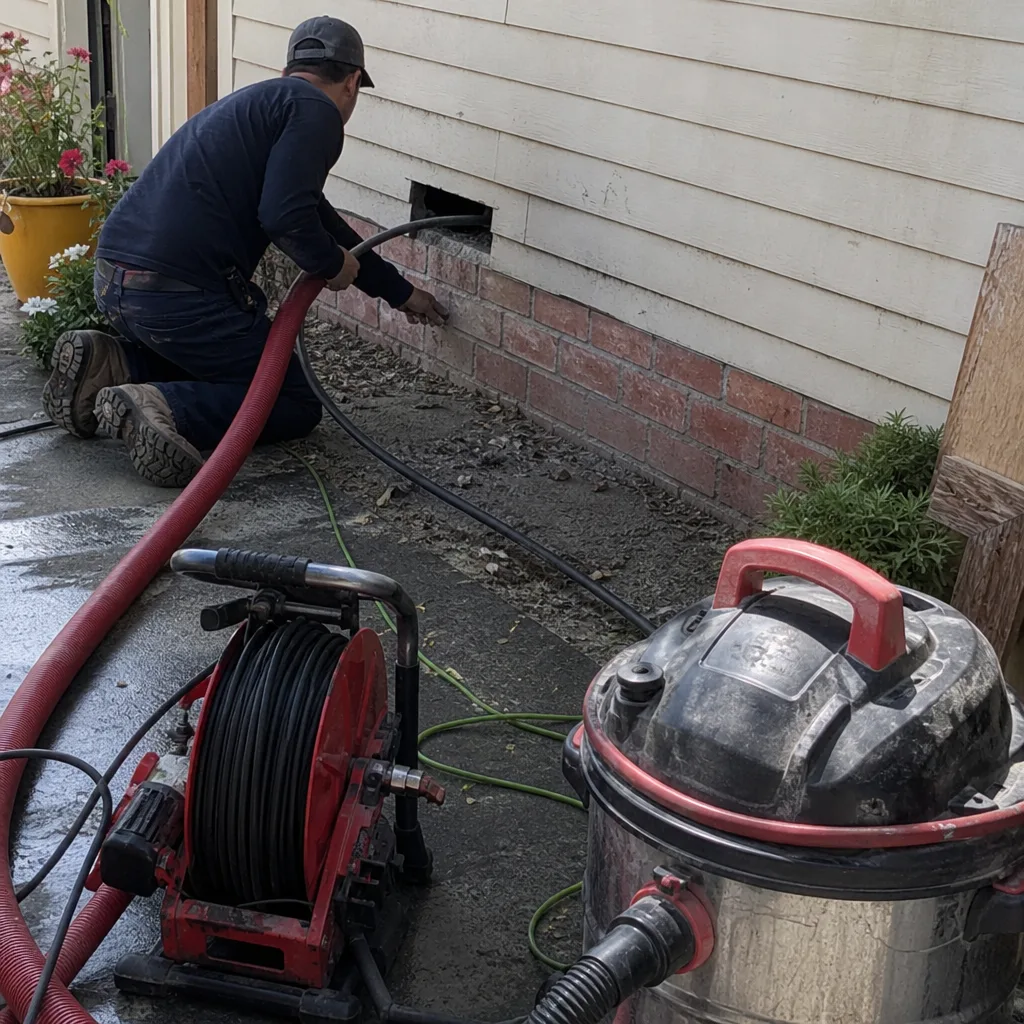 Before
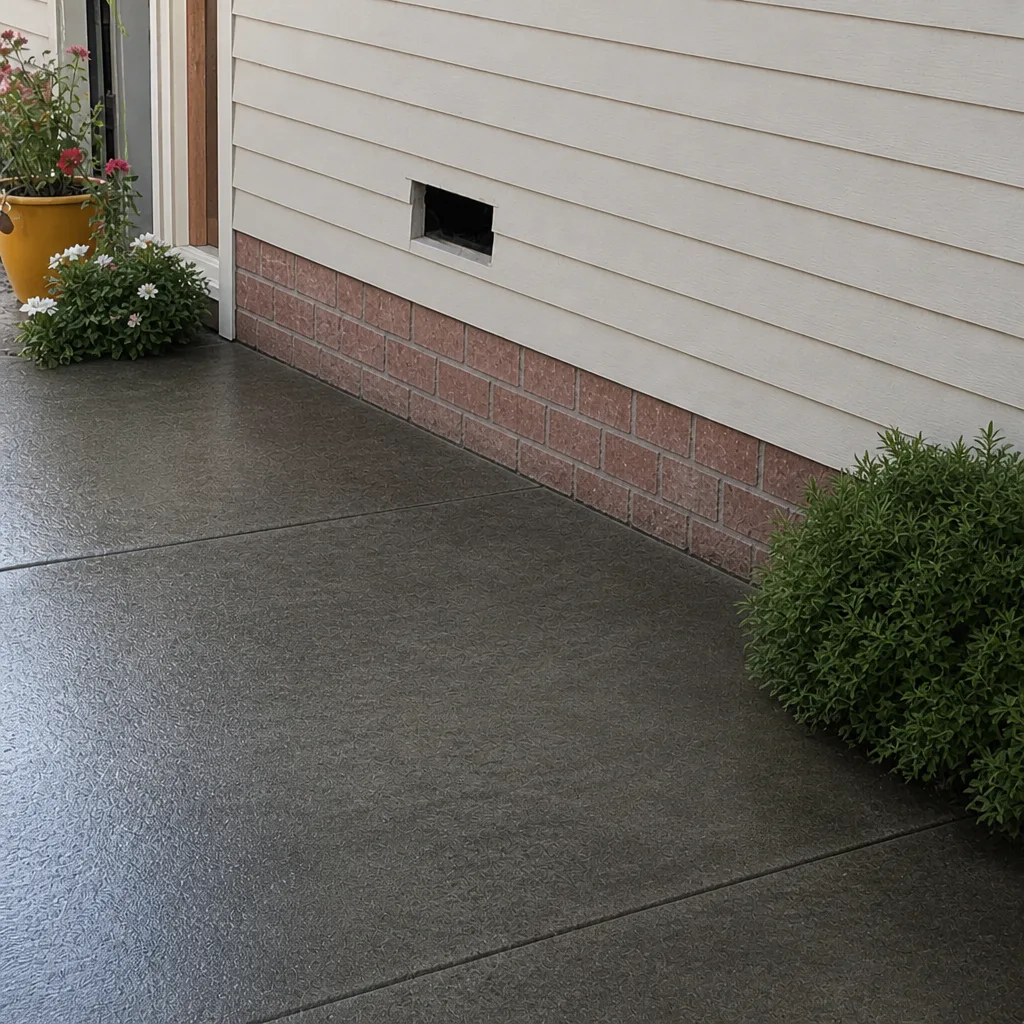 After
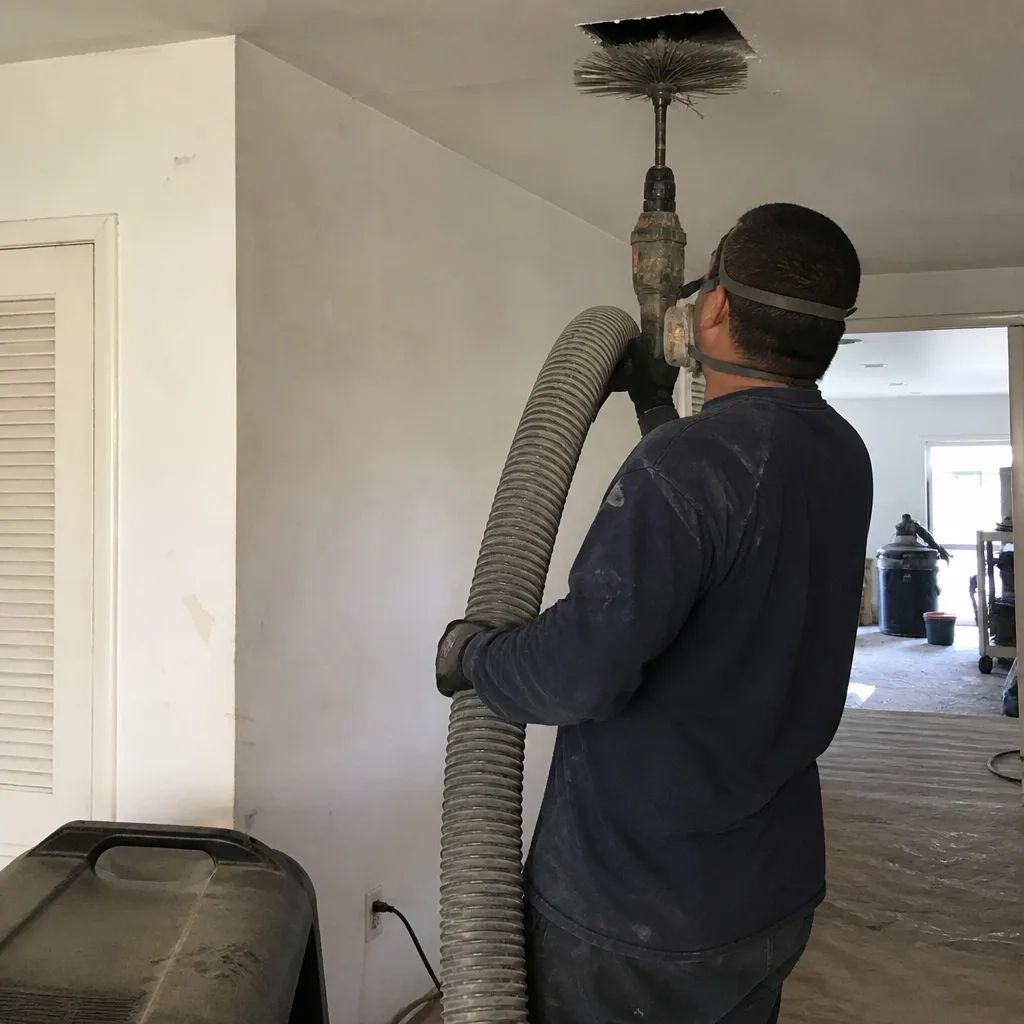 Before
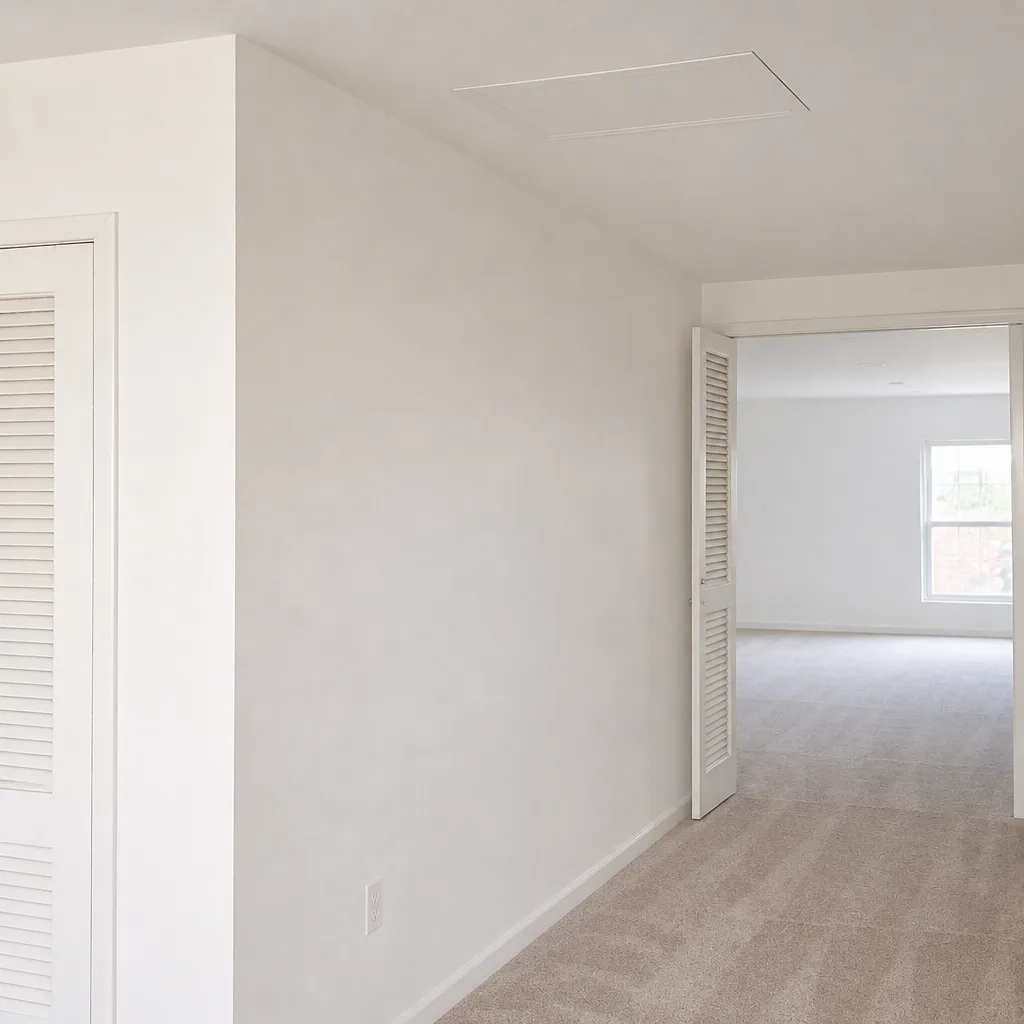 After
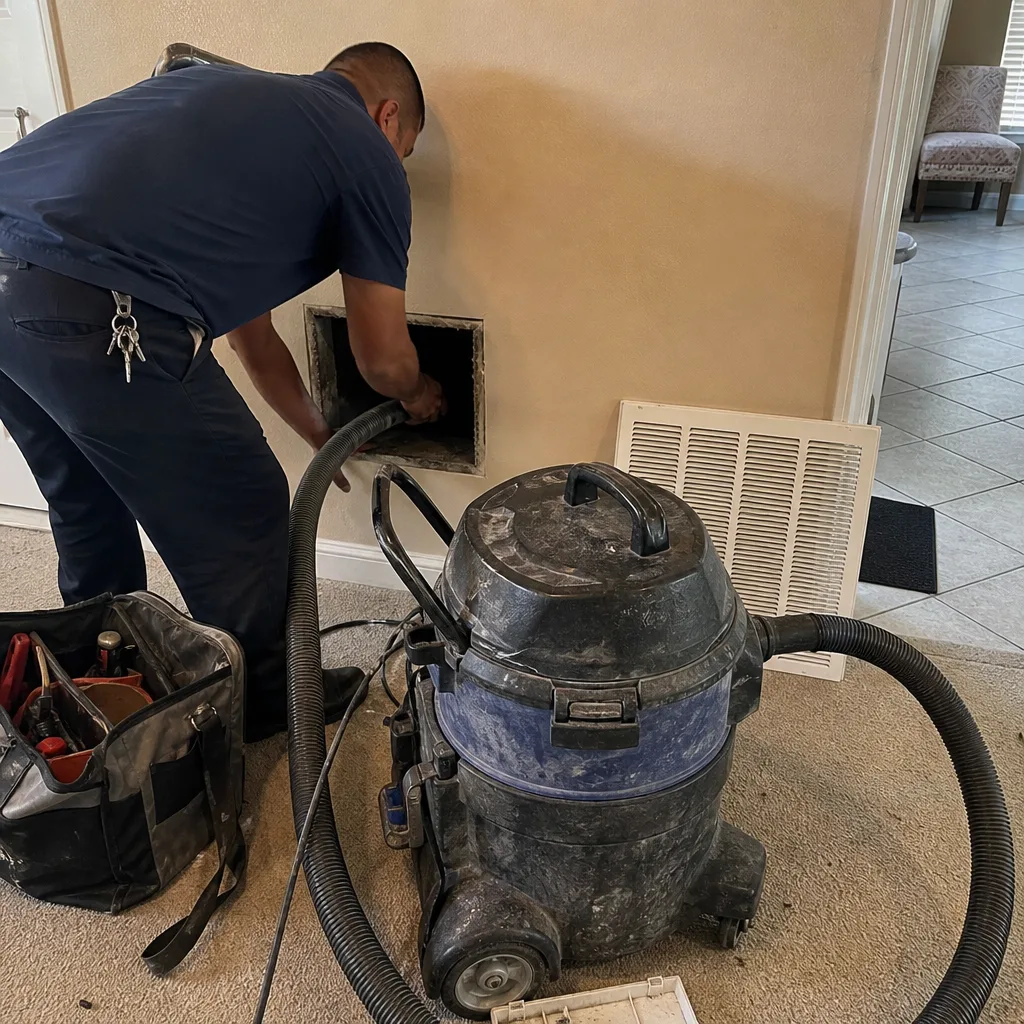 Before
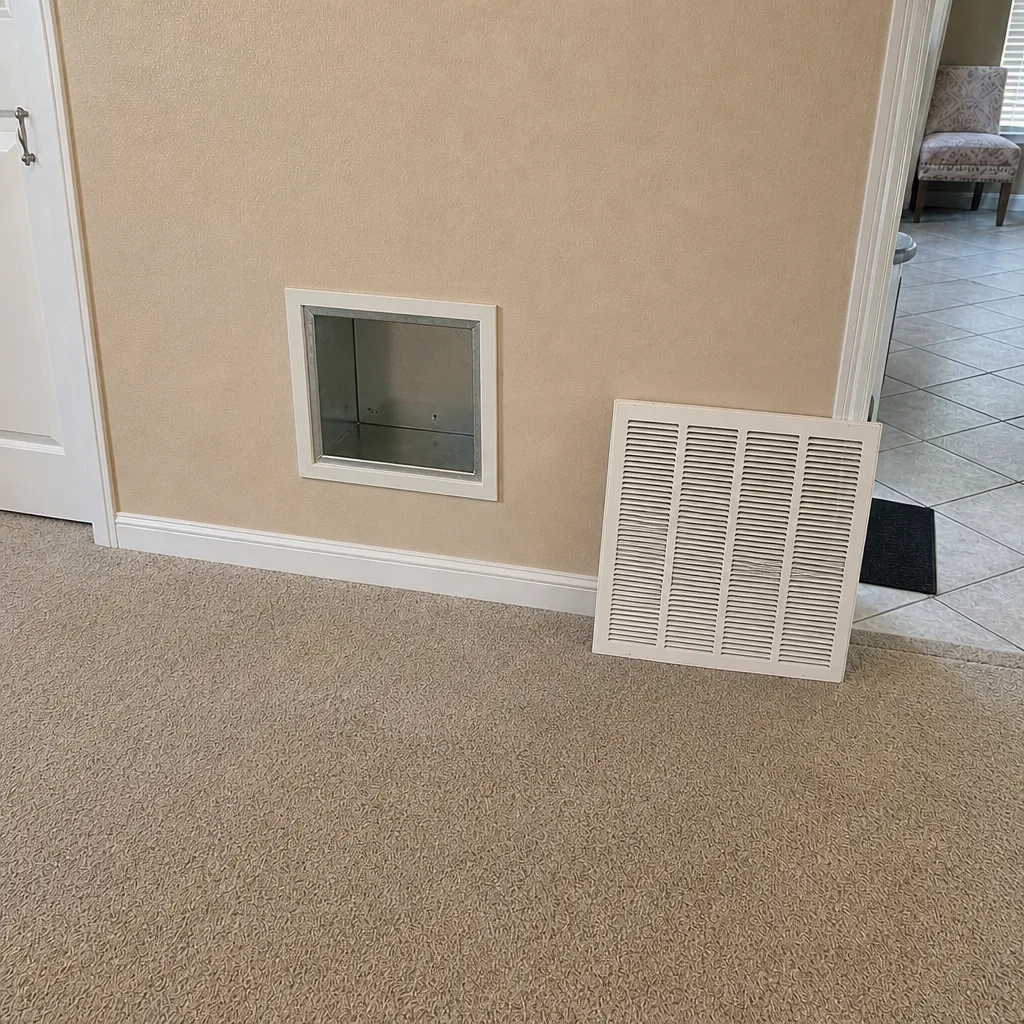 After
When to Call a Professional
Some problems are worth handling yourself: filter changes, surface dust at the register, and the register-by-register test. Others should go to a professional with the right equipment and the experience to trace the actual source. Call a professional when airflow is weak at multiple registers, when there’s a musty smell that returns after each cleaning, when you’ve found a disconnected or crushed duct run, when the same rooms stay warm every summer, or when a renovation or new HVAC install has filled the system with drywall dust and debris. The dryer vent cleaning service belongs on that list too: a lint-clogged dryer vent isn’t a problem to handle with a shop vac.
For homeowners in Northwood, Air Duct Cleaning Northwood offers free estimates. Our technicians have up to 14 years of experience and can walk through your symptoms, look at the register-by-register results with you, and tell you whether you’re looking at a cleaning, a repair, or an equipment issue. Call (866) 947-9073. We answer 24/7. Fast dispatch from 7am to 7pm, Sunday through Friday.
Frequently Asked Questions
Whole-system duct cleaning in Northwood typically runs from around $350 to $750 for a standard single-family home, though homes with multiple systems, extensive runs, or heavy debris land toward the higher end. Pricing is per system, set by a written estimate before any work begins, not per vent. A per-vent coupon price usually excludes the coil, return side, and main trunk, so the invoice grows on site. Call (866) 947-9073 for an exact quote. Estimates are free.
Cheap quotes are usually cheap for a reason: the provider is set up to clean one register in a few minutes with a portable blower and no containment. No negative-air equipment, no rotary brush agitation, no coil cleaning, and often no return side. What looks like a deal on the coupon converts to a bigger invoice on site once the technician “discovers” problems, or the work is done at a surface level that doesn’t touch the actual debris. Ask what equipment will be used on your system, and ask for before-and-after photos of your ducts. Call (866) 947-9073 for a whole-system estimate. It’s free.
The honest answer is: only with documentation. Ask for before-and-after photos at the registers and the main trunk, not generic photos from a brochure. Ask what containment equipment will be set up before cleaning begins and whether the system is isolated during the process. Ask how much debris was extracted. A professional job leaves evidence. A surface vacuum-and-go leaves you guessing. Call (866) 947-9073 to schedule with a team that shows its work. Estimates are free.
For most Northwood homes, every few years is reasonable, but timing depends on what’s happening in the house. After a renovation, following a new HVAC install, or after moving into a home that hasn’t been cleaned in years, sooner makes sense. Households with pets, allergies, or heavy dust accumulation generally need it more often. If airflow has dropped noticeably or a musty smell keeps returning, that’s a signal regardless of the calendar. Call (866) 947-9073 and we’ll walk through your situation. Estimates are free.
Because the source was never the duct walls. A musty smell that persists after cleaning usually comes from the evaporator coil or the drain pan, both of which stay damp during cooling season. Cleaning the ducts doesn’t clean the coil. The fix is cleaning and sanitizing the coil and drain pan, plus confirming the condensate line isn’t standing water. Mention the smell to whoever you call, so the coil gets on the list. Call (866) 947-9073 for a free estimate on coil and duct service together.
Yes, and it happens regularly. Restricting the duct system raises static pressure, and the blower moves less air while running longer. The system looks like it can’t keep up, and the quick diagnosis is “the AC is failing.” Check the filter, compare registers room by room, and feel the supply air. If the air is cold but weak, the equipment is producing cooling and the airflow is the problem. Call (866) 947-9073 and we’ll help you figure out which direction the problem actually lives. Estimates are free.
The Bottom Line
Most duct problems Northwood homeowners troubleshoot are system symptoms, not isolated defects. Weak airflow to a bedroom, uneven room temperatures, and persistent odors all have to be traced through the full air pathway before anyone fixes anything. The register-by-register test tells you where the problem lives. Static pressure tells you whether the equipment is failing or the ducts are restricting it. A musty smell after cleaning points to the coil and drain pan, not the duct walls. And any fix that doesn’t include repair and sealing on the same visit is a partial fix. Start with the filter, test the registers, describe what you find, and call when the pattern points to a system-level problem.
If you’ve done the diagnostic work and you want a professional inspection, call Air Duct Cleaning Northwood at (866) 947-9073 for a free estimate. We answer 24/7. Fast dispatch from 7am to 7pm, Sunday through Friday.
Written by the team at Air Duct Cleaning Northwood.