
Last updated November 24, 2026
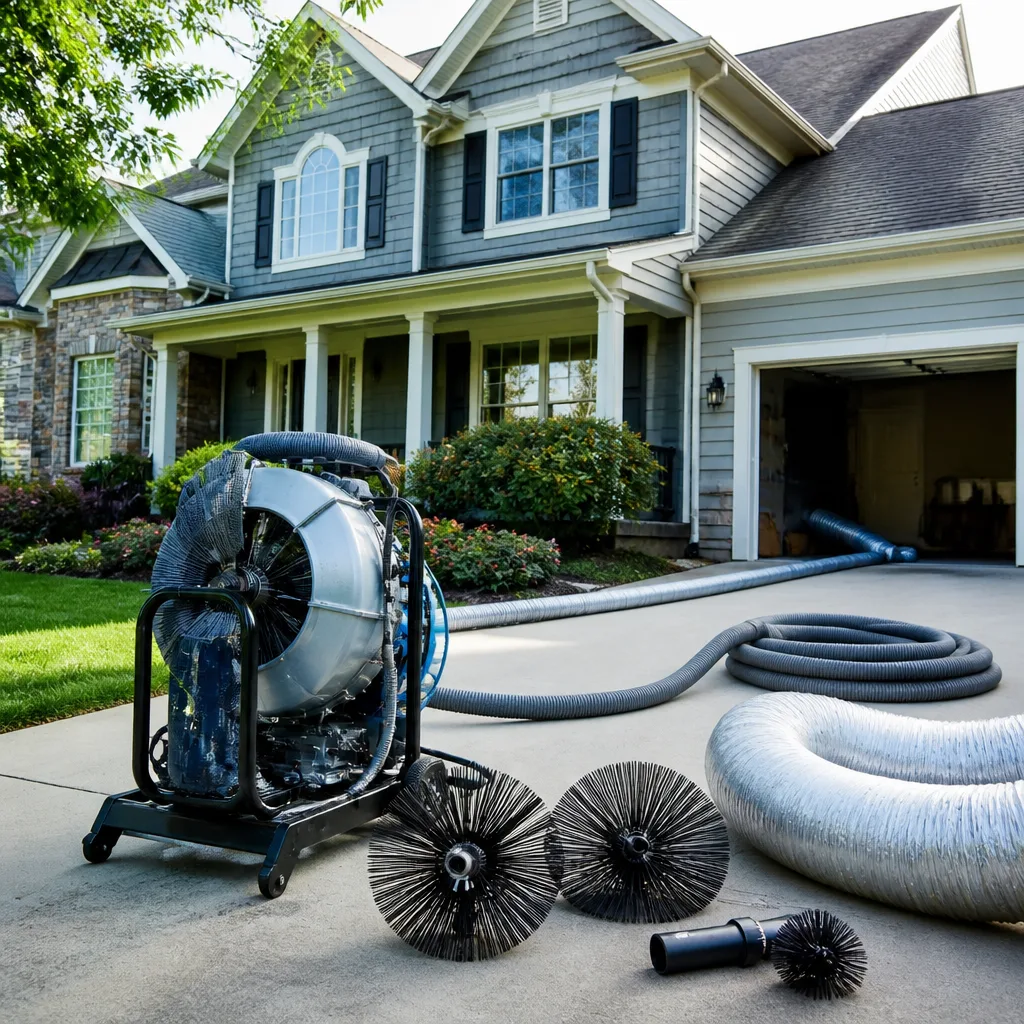 Whole-home duct cleaning
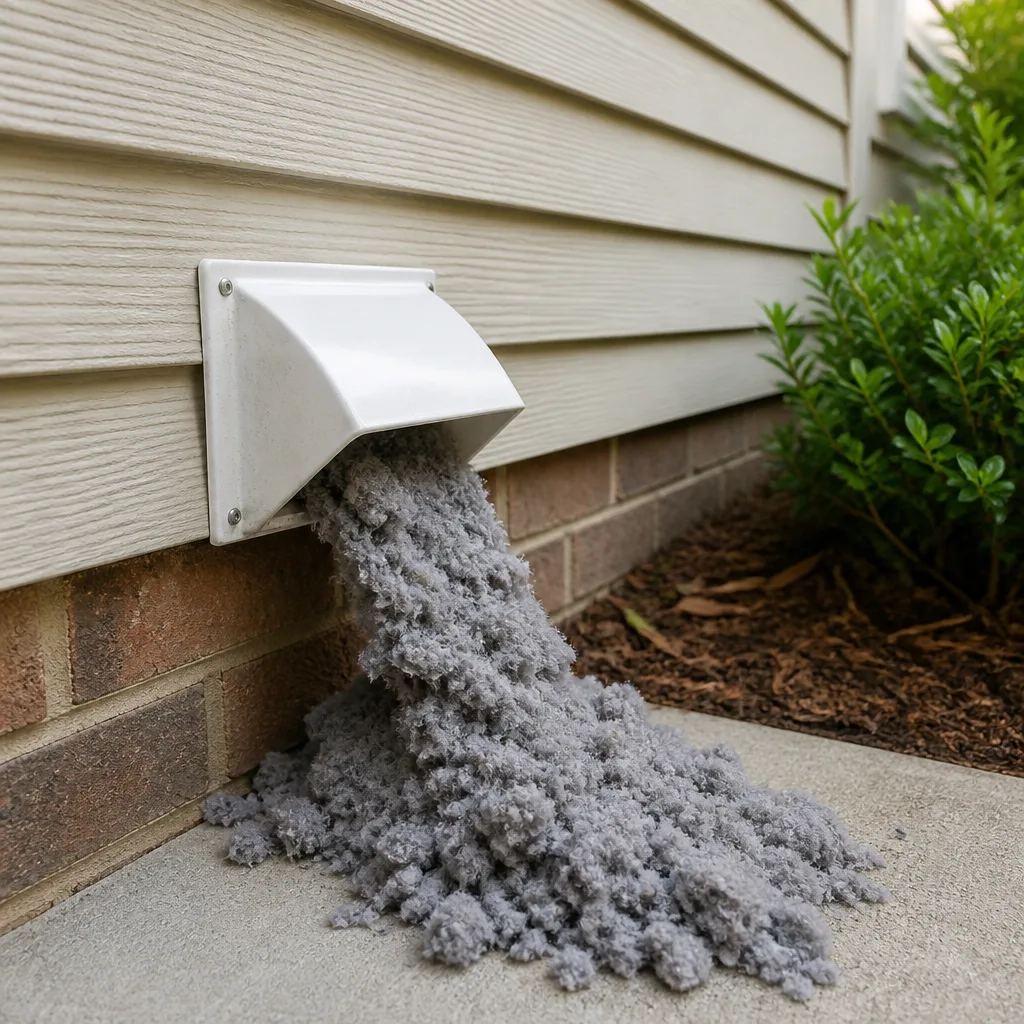 Dryer vent cleaning
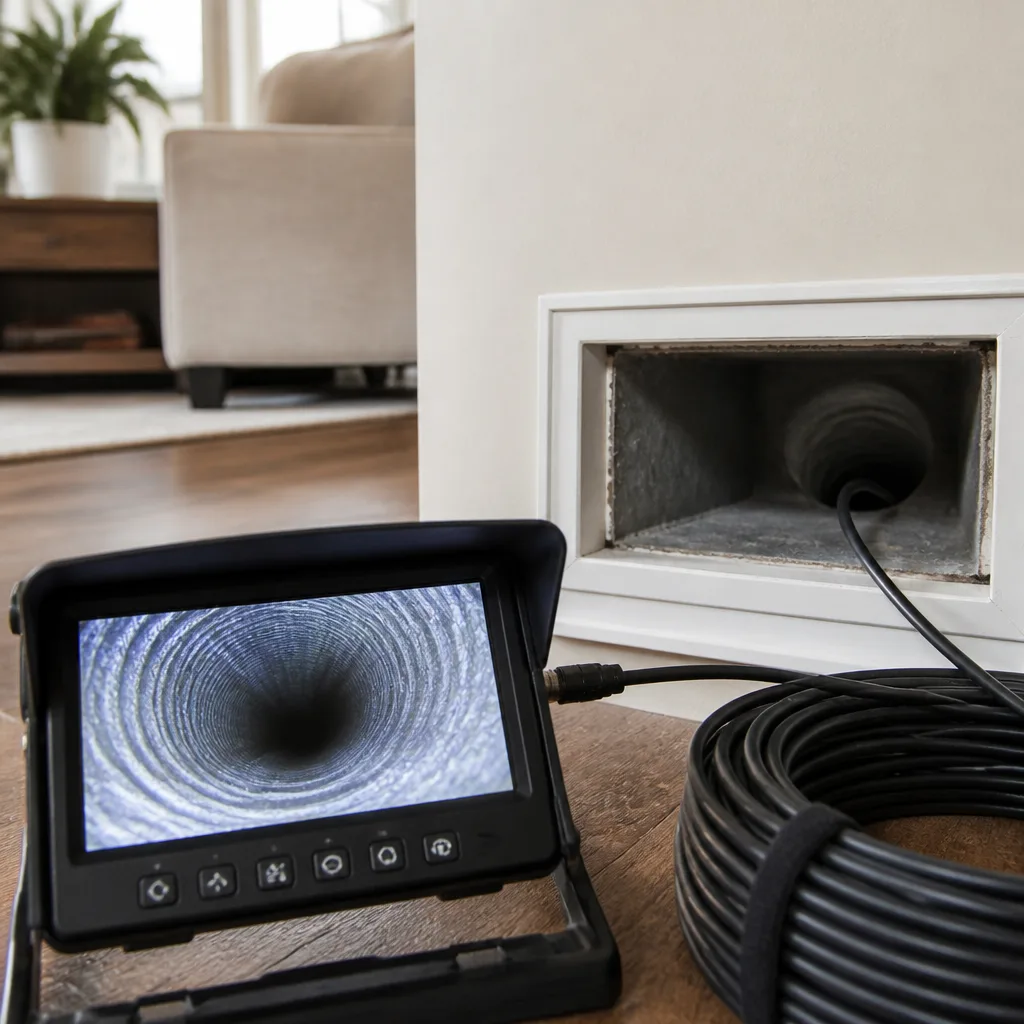 Camera inspection
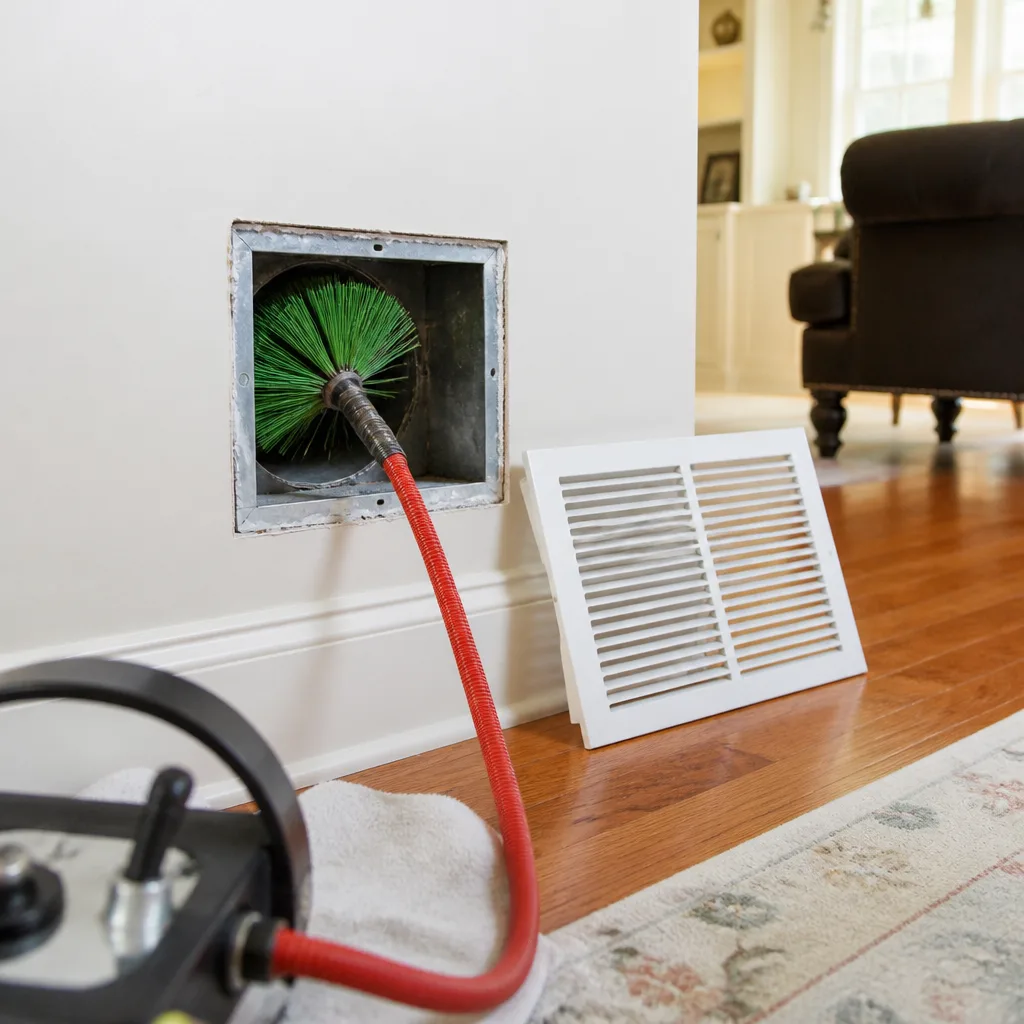 Sanitizing & deodorizing
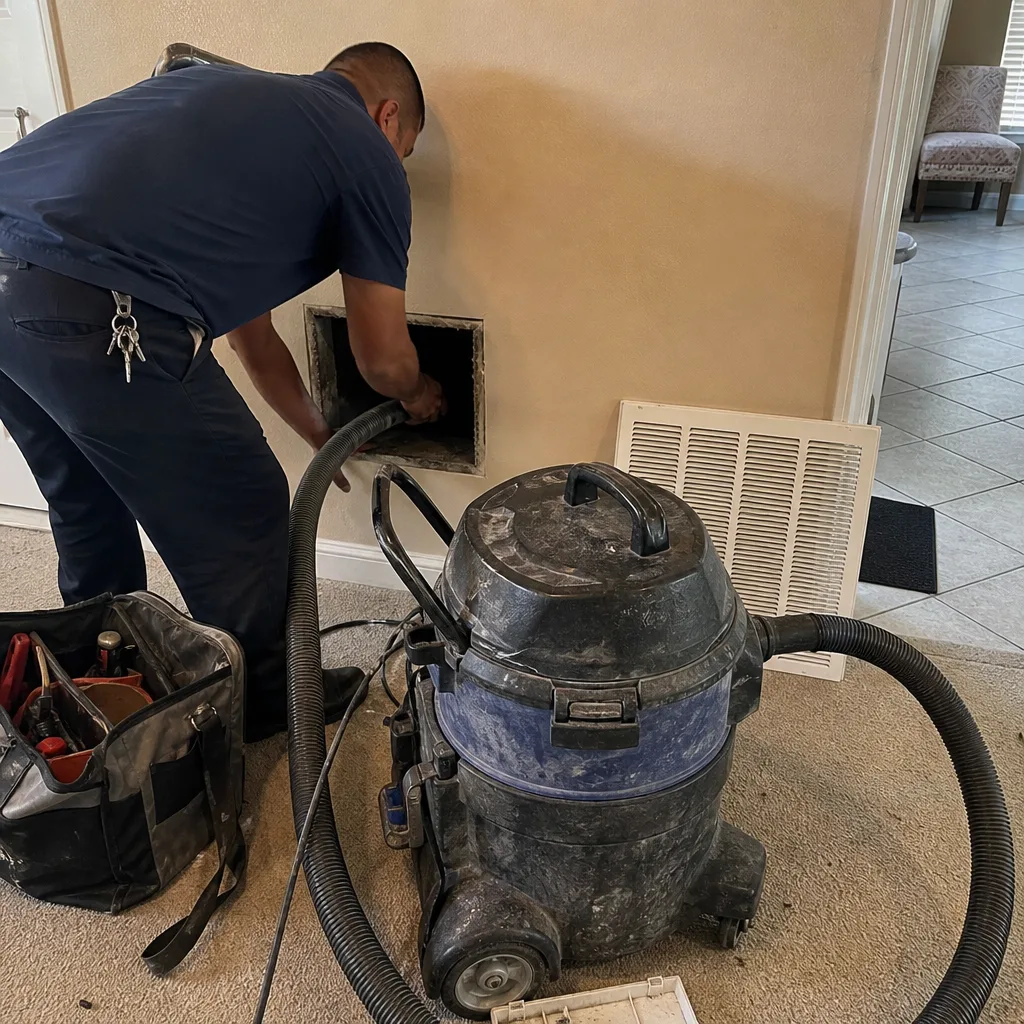
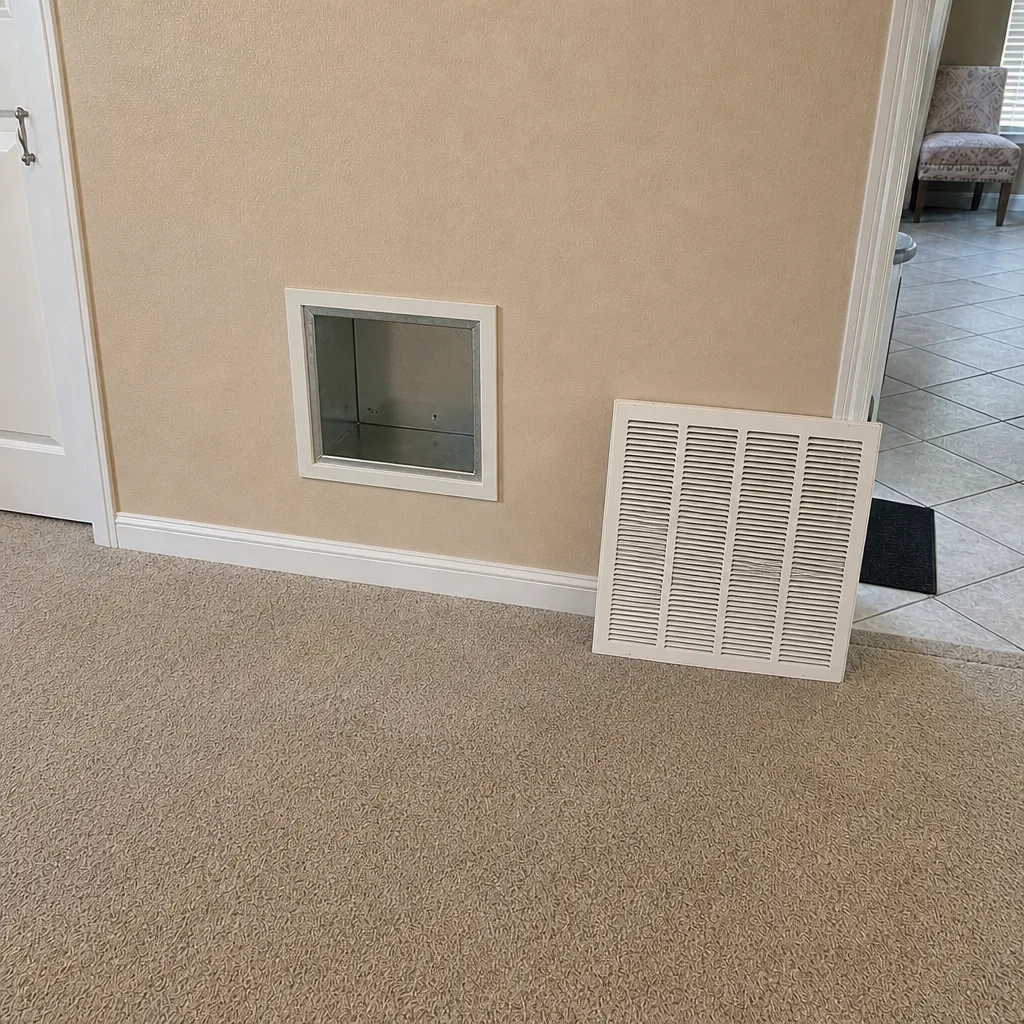
Whole-system duct and dryer vent check with before-and-after photos - you see exactly what came out of your vents
That "$99 whole-house special" is a bait ad - the real number appears once they are in your hallway, or the "clean" is a shop-vac at the register. We photograph the inside of your ducts before and after instead.
Air Duct Cleaning Permits, Codes & Inspections in Northwood, CA: What You Need to Know
Most homeowners treat a duct cleaning as maintenance, not construction. That assumption holds right up until someone cuts a new access panel into a return trunk, reconnects a boot that pulled loose in the attic, or replaces foil-faced insulation inside a conditioned chase. At that point, California building code may see the work very differently from the homeowner. The line between cleaning and construction is real, it’s specific, and it matters most at the two moments people never plan for: a home inspection during a sale, and an insurance claim after a loss. This guide walks through which duct tasks stay permit-exempt in Northwood, which ones usually don’t, how Title 24 energy rules come into play when sealing gets tested, and what to ask a contractor before anyone touches your system.
Quick Answer
Cleaning the inside of your ducts, and sealing joints with mastic or approved tape, is generally treated as routine maintenance and does not require a building permit in Northwood. Work that changes the system itself, such as replacing ducts, cutting new access openings into the structure, reconnecting disconnected runs, replacing an air handler, or installing insulation in conditioned space, typically does require a permit and often an inspection. The distinction is scope, not paperwork for its own sake: if the job alters the building or the mechanical system, assume a permit belongs on it until your city’s building department says otherwise.
Styles & brands we work with
- Whole-home duct cleaning
- Dryer vent cleaning
- Camera inspection
- Sanitizing & deodorizing
Table of Contents
- Which duct tasks are permit-exempt and which usually aren’t
- How California Title 24 applies when ducts are sealed and tested
- What a code-compliant duct inspection actually involves
- When Orange County or city jurisdiction requires an inspection
- Resale and insurance consequences of unpermitted HVAC work
- New HVAC installs, renovations, and the duct work that follows
- What to ask a contractor before work begins
- Keeping records that protect you later
Which duct tasks are permit-exempt and which usually aren’t
People ask us this more than almost anything else, and the honest answer is that the trade itself has a fairly clear dividing line. Cleaning the interior of an existing duct system, capturing debris with negative-air containment, and sealing accessible joints with mastic or code-approved tape are maintenance activities. They restore the system to how it should have been performing. They don’t change its layout, its capacity or the structure of the house.
Permits come into play when the work crosses into construction or alters the mechanical system in a way an inspector would want to see. In our experience, the categories break down like this:
- Usually permit-exempt: Source-removal cleaning of ducts and plenums, sealing accessible joints with mastic or approved foil tape, replacing a supply register or grille of the same size, cleaning the blower compartment as part of maintenance.
- Usually requires a permit: Replacing sections of ductwork rather than cleaning them, cutting a new access opening through drywall, sheathing or structural members, reconnecting a duct that has fully separated from a trunk or boot, replacing or relocating an air handler or furnace, and installing duct insulation in conditioned space.
None of that is legal advice, and none of it replaces a call to your local building department. Enforcement varies by jurisdiction, and the person who signs off on your scope is the plan reviewer, not us. What we can tell you is that the most common problem we encounter isn’t a homeowner who pulled the wrong permit. It’s a homeowner who never knew a permit question existed because nobody raised it during the estimate. Northwood has a lot of older housing stock where ducts have quietly shifted, sagged, or come apart at the collar over time, and those are exactly the conditions that turn a cleaning visit into a repair decision.
How California Title 24 applies when ducts are sealed and tested
Title 24 is California’s energy code, and it governs how a home’s duct system is supposed to perform, not just how it’s built. When duct sealing is performed as part of a permitted alteration, the code expects the work to be verified. That verification usually means a duct leakage test, and the test has to be done by someone qualified to run it with calibrated equipment. This is the part that surprises homeowners: sealing a few joints sounds like a hardware-store afternoon, but once the work is pulled under a permit, the standard changes.
Here’s what that looks like in practice:
- The contractor identifies leakage points, usually at joints, collars, boots and the plenum connections.
- Sealing is performed with mastic or an approved tape on accessible joints, and duct mastic on the rest where reachable.
- A duct leakage test is performed on the sealed system using a calibrated duct blaster and a pressure manometer.
- Results are documented and submitted to the enforcing jurisdiction as part of the permit record.
- Any leakage that exceeds the threshold gets addressed before the inspection is signed off.
For Northwood homeowners, the practical takeaway is this: if a contractor is doing duct sealing as part of a larger permitted job, ask who will perform the leakage test and whether that test is included in the scope. If it isn’t, the permit file can stall. And if the work is done without a permit at all, there’s no test on record, which is precisely the gap that comes back to bite people at resale. A properly sealed system also performs better, and that’s the point of the code in the first place. You’ll find more about the cleaning side of this work on our air duct cleaning page, but the energy code question is separate and worth understanding on its own.
What a code-compliant duct inspection actually involves
When an inspection is triggered, what the inspector wants to see is documentation and physical access. The system has to be reachable and the work has to be visible. That sounds simple until you’re standing in an attic with a duct run that’s buried under blown insulation and sealed behind a knee wall.
A code-compliant inspection typically covers:
- Access: Sufficient openings to inspect the duct system, the plenum, and the air handler connections. Access panels added for inspection must be sized and located correctly.
- Connection integrity: Ducts attached to boots, trunks and plenums with mechanically fastened and sealed connections, not tape alone.
- Support and routing: Ducts supported at proper intervals, not sagging or crushed against framing.
- Insulation: Duct insulation intact and continuous where the code requires it, especially in unconditioned spaces.
- Sealing and testing: Documented leakage test results where a permit requires them.
- Clearances: Adequate clearance around the air handler and any combustion appliance connections.
In our experience, the most common inspection failure isn’t the sealing itself. It’s access. A crew can do excellent work and still fail because the inspector can’t see the connection at the far end of a run. That’s why professional containment equipment and proper access planning go together: both are about making the system visible and verifiable rather than hiding the work behind drywall. We use Abatement Technologies negative-air equipment during cleaning so debris is captured rather than pushed through the house, and that same discipline of working cleanly and visibly carries over to how a system should be left for inspection.
When Orange County or city jurisdiction requires an inspection
Northwood sits within Orange County, and permitting here is generally handled at the city level with the county involved in some specific areas. The practical rule for homeowners is that the city where the property sits holds the permit authority, and the scope of work determines whether an inspection gets scheduled. A cleaning-only job generally doesn’t generate a permit record at all. A permitted alteration does, and that record usually includes at least one inspection before the job is closed out.
What triggers the inspection requirement is worth spelling out:
- Any permitted mechanical alteration, including duct replacement and air handler work.
- Duct sealing performed under a permit where Title 24 leakage testing applies.
- Insulation installation in conditioned space when it’s part of a permitted alteration.
- Reconnection of a duct system that was found fully disconnected, since that’s a repair of the mechanical system rather than a cleaning.
- Any work that changes the number, location or size of supply or return outlets.
The jurisdictional piece that catches people is that Orange County and its cities don’t all interpret small-scope work identically. Some jurisdictions are comfortable with a contractor’s judgment on what qualifies as maintenance. Others want a permit pulled the moment a duct run is cut and replaced. If you’re unsure, the call to make is to the city building department, and it’s a short one. Ask them to describe your scope back to you and confirm whether a permit is required. That single call is the difference between a clean file and a surprise during a future home inspection.
Resale and insurance consequences of unpermitted HVAC work
This is where the permit question stops being abstract. When a home in Northwood goes on the market, the buyer’s inspector walks the attic and the mechanical closet. Permitted work shows up in the city’s records. Unpermitted work doesn’t, and that gap raises a question the seller has to answer.
During escrow, unpermitted duct or HVAC work typically surfaces in one of a few ways:
- The home inspection notes new ductwork, a replaced air handler, or added access panels with no matching permit record.
- The buyer’s agent requests permit history, and the missing record becomes a negotiation point.
- The lender or insurer asks for documentation of recent mechanical work, and none exists.
- A retroactive permit is required, which can mean opening walls or attic access to expose work that’s already finished.
Insurance adds another layer. If a loss occurs and an adjuster finds that the HVAC system was altered without a permit, the claim can be contested on the grounds that the work wasn’t code-compliant. That’s not a scare tactic, it’s how policy language about unpermitted alterations reads. The fix is simple: keep the paper trail. A permit and a signed-off inspection are the cheapest insurance a homeowner can buy on a mechanical system, and they cost far less than a contested claim or a re-opened wall during escrow.
New HVAC installs, renovations, and the duct work that follows
A new HVAC install almost always pulls a permit, and the duct work connected to it usually rides along in that same scope. The same is true after a renovation. When a kitchen or addition changes the load on the system, the duct work often has to be rebalanced, extended, or rerouted, and that’s construction, not maintenance. Homeowners who’ve just finished a remodel are sometimes surprised to learn that the duct changes inside their new walls needed a permit signature.
In Northwood, the pattern we see most often involves older homes where a system has been replaced once and the ducts have been left in place. When the new equipment goes in, the ducts should be evaluated for size, sealing and integrity at the same time. That’s also when we typically recommend a full HVAC cleaning so the new equipment starts on a clean system rather than inheriting whatever was in the old plenum. We use Rotobrush and Nikro systems on these jobs because the rotary brush and high-volume vacuum combination is designed for professional restoration-grade work, not surface dusting. If a duct run turns out to be compromised, we repair and seal it on the same visit with mastic and proper mechanical fastening rather than report it and leave the gap. Aprilaire and Honeywell product familiarity helps when a homeowner wants to add whole-home filtration or humidification at the same time, since those components integrate with the system rather than sitting off to the side. Our technicians have up to 14 years of experience with these systems, and that experience matters most in the attic, where the permit question and the physical reality of the duct run meet.
What to ask a contractor before work begins
These are the questions that keep a job permit-clean, and a professional should be able to answer all of them without hesitating.
- Which parts of this scope are maintenance and which are construction? A good contractor will separate them out clearly instead of lumping it all together.
- If a duct turns out to be disconnected, who pulls the permit? The answer should be the contractor, and it should be in writing.
- Is Title 24 leakage testing required for this scope, and who performs it? If the work is permitted and involves sealing, ask for the test to be named in the scope.
- Will you leave the system accessible for inspection? Access planning should be discussed before work starts, not after.
- What documentation will I receive at the end of the job? Photos, a written scope, and permit records if applicable.
- Are you working within the confirmed scope, or will you subcontract the repair? Onsite repair capability matters here, since a contractor who can’t repair will hand the permit question back to you.
- Can I see before-and-after photos of my own system? This is the simplest way to confirm the work matched the scope.
Ask these before the estimate is finalized. None of them are adversarial, and a competent contractor will welcome the clarity. We recommend the same when you’re evaluating dryer vent cleaning as part of a broader air-quality job, because the same principles of access, containment and documentation apply.
Keeping records that protect you later
The paper trail is the whole point of understanding permit rules. Keep every document in one place, physical or digital.
- The original written estimate and scope of work.
- Any permit number and inspection sign-off for the job.
- Photos of the system before and after the work.
- Duct leakage test results if Title 24 testing applied.
- The invoice, showing the work performed and the price agreed in advance.
- Product documentation for any filtration, humidification or purification components added.
If you ever sell the home, that folder answers the inspector’s question before it’s asked. If you ever file a claim, it’s the first thing an adjuster wants. And if a future contractor questions the condition of the system, the record shows what was done and when. Ten years from now, nobody will remember which joints were sealed. The folder will.
Common Mistakes to Avoid
- Assuming cleaning is always maintenance and repair is always construction. It usually is, but a reconnection or a new access panel shifts a cleaning visit into permitted territory, and that shift happens mid-job.
- Accepting “we don’t need a permit for this” without asking why. Sometimes it’s true. Sometimes it’s a shortcut. Ask the contractor to describe the scope back to you and confirm the reasoning in writing.
- Letting a contractor skip Title 24 leakage testing on a permitted sealing job. Without the test, the permit file can stall and the energy code requirement isn’t met.
- Cutting access panels into a return trunk yourself. This crosses into structural and mechanical alteration, and it’s the most common way a homeowner creates an unpermitted condition without realizing it.
- Filing no paperwork for work done in an attic or crawl space. Out of sight is exactly where unpermitted work hides and where a future home inspector will look.
- Choosing a contractor based on the cleaning price alone. The estimate that looks lowest often excludes the repair and permit work that the cleaning uncovers, which is where the real cost lands.
- Forgetting that Orange County jurisdictions don’t all interpret small-scope work identically. When in doubt, call the city building department. It’s a short conversation compared with a retroactive permit.
See the difference
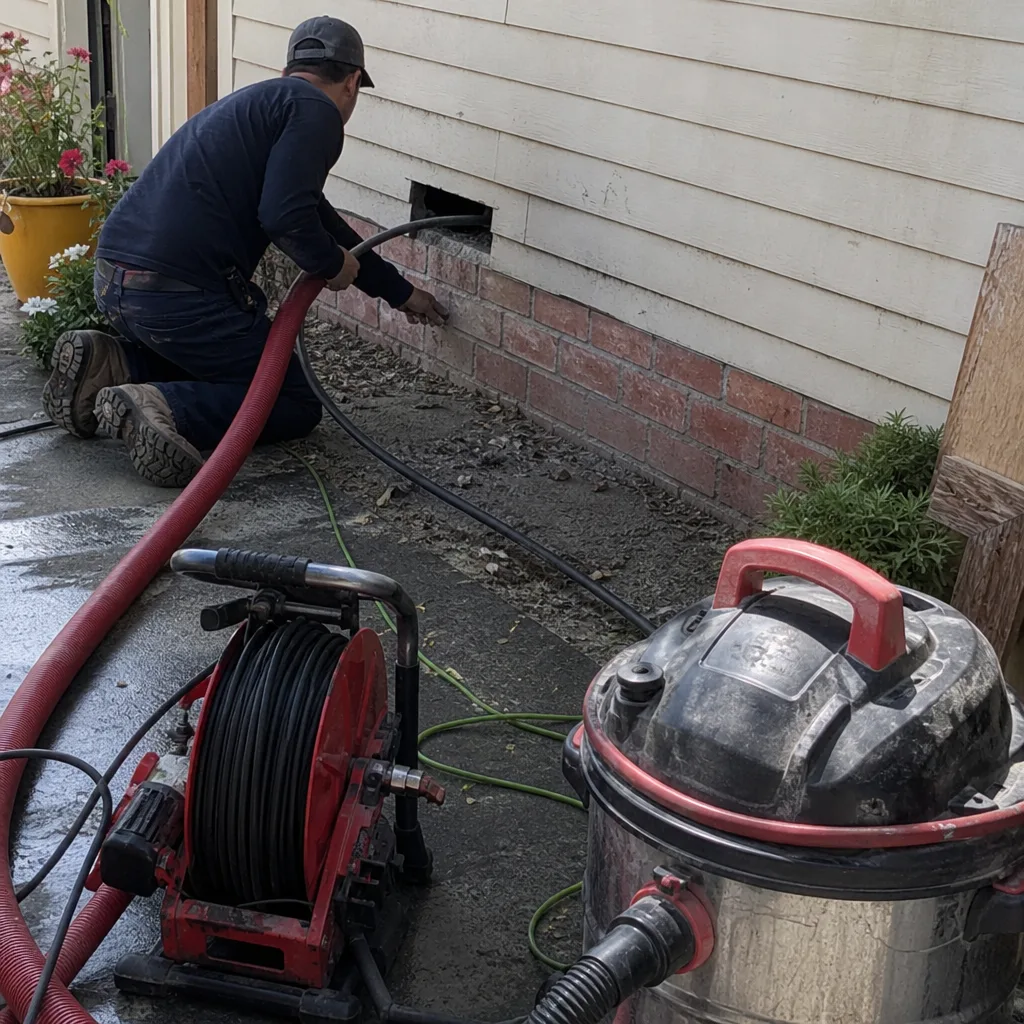 Before
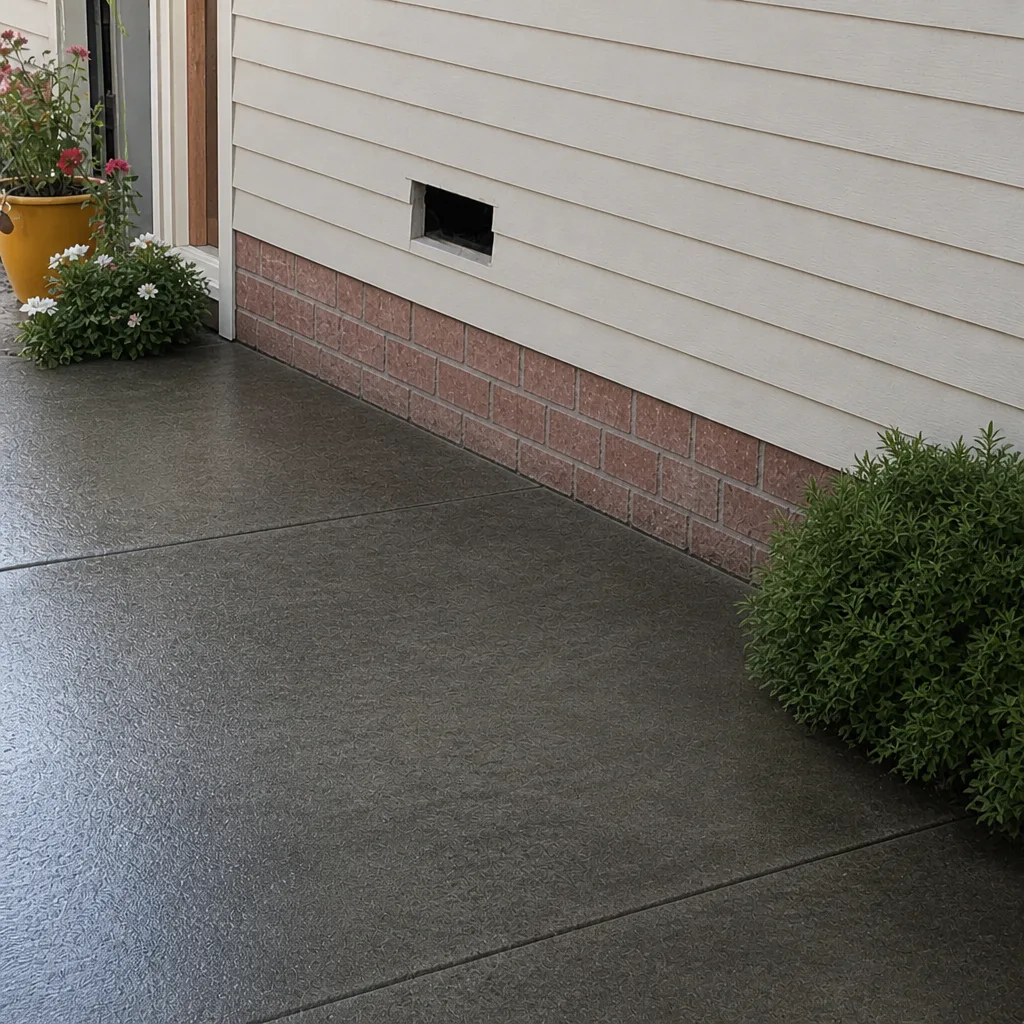 After
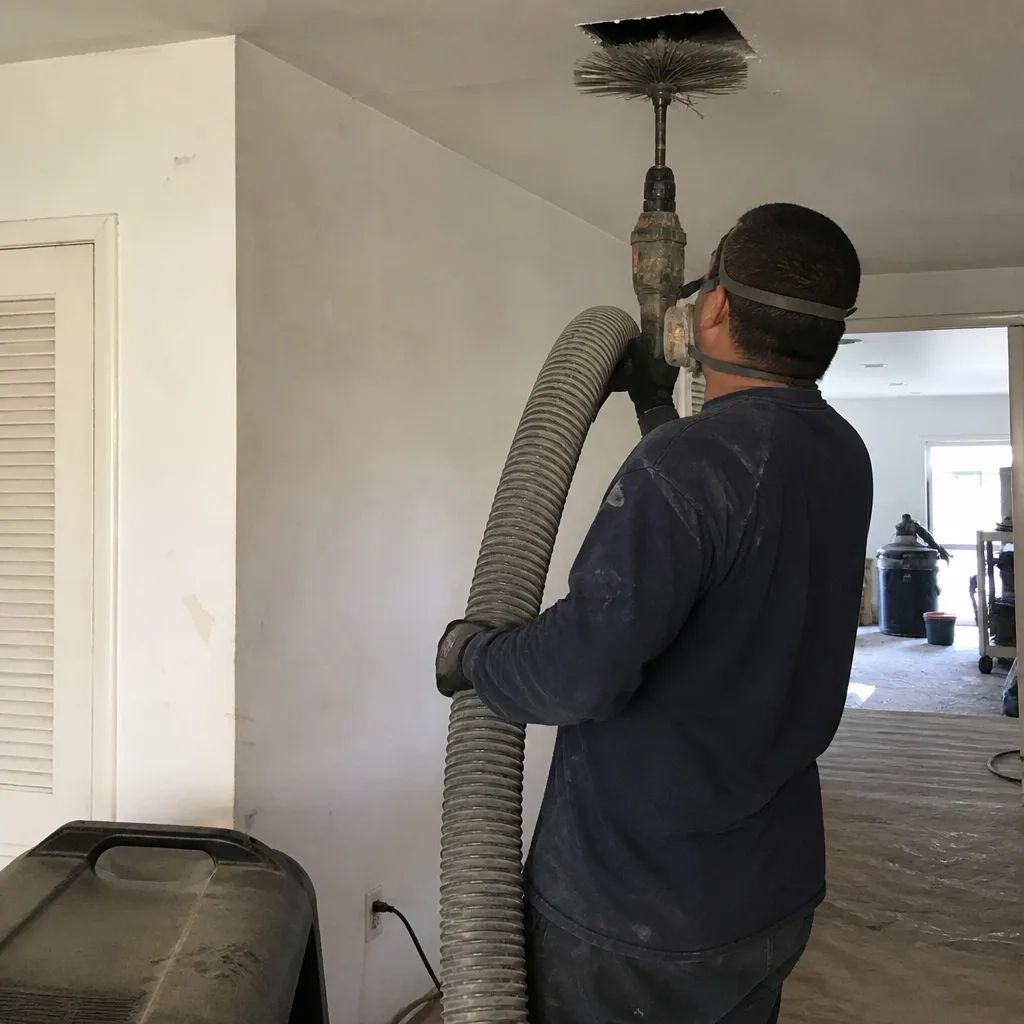 Before
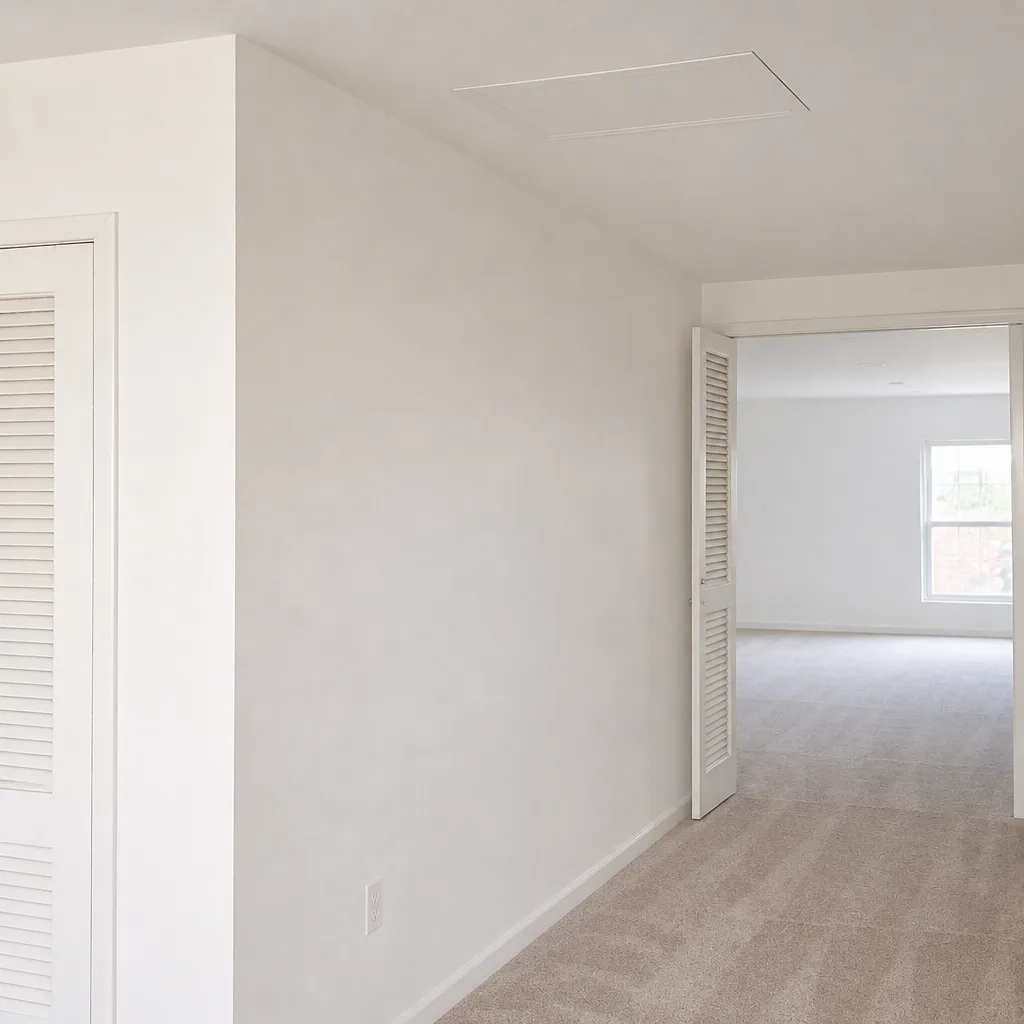 After
 Before
 After
When to Call a Professional
Call a professional when anything beyond surface cleaning is involved. If you’ve just had new HVAC equipment installed and the ducts weren’t evaluated, if a renovation changed the layout of your supply or return outlets, if a home inspection flagged duct or mechanical work without records, or if you’ve noticed a supply boot pulling away from the ceiling or floor, those are repair questions with permit implications, not cleaning questions. The same goes for any job where you need a written scope before you can answer a buyer’s or an adjuster’s question. Air Duct Cleaning Northwood offers free estimates in Northwood – call (866) 947-9073. We answer 24/7. Fast dispatch from 7am to 7pm, Sunday through Friday. The written estimate sets the price, one flat price per system agreed before work starts, and you’ll see before-and-after photos of your own system when the job is done.
Frequently Asked Questions
No, cleaning the interior of an existing duct system is generally treated as maintenance and does not require a building permit in Northwood. The permit question appears when the work becomes a repair or alteration, such as reconnecting a fully disconnected duct, cutting a new access panel, replacing duct sections, or installing insulation in conditioned space. Call (866) 947-9073 for a free estimate and we’ll walk through which category your job falls into.
Duct sealing alone, done as maintenance with mastic or approved tape on accessible joints, typically is not permitted. When sealing is performed as part of a permitted alteration, Title 24 energy code may require a duct leakage test and documentation, and that test has to appear in the scope. Ask the contractor to name the test in writing before the estimate is signed. Call (866) 947-9073 for a free estimate on your Northwood home.
Unpermitted work usually surfaces during a home inspection, an escrow negotiation, or an insurance claim, and the resolution is typically a retroactive permit that may require opening access to expose the work. It doesn’t fix itself, and it doesn’t go away because it’s been there for years. Getting a professional assessment now is far cheaper than discovering the gap during a sale. Call (866) 947-9073 – estimates are free.
Yes, a professional job should include before-and-after photos of your own duct system, a written scope of work, and documentation of anything found during the visit. That record is what you hand to a buyer, an adjuster, or a future contractor. We also flag any repair work that would cross into permitted scope so you can make that call before it becomes a problem. Call (866) 947-9073 to book a free estimate in Northwood.
Title 24 applies when duct sealing is part of a permitted alteration, and in that case a duct leakage test is typically required and documented for the jurisdiction. If the sealing is done as standalone maintenance without a permit, the testing requirement generally doesn’t attach, but neither is there a record. The right answer depends on your specific scope, and a call to your city building department settles it quickly. Call (866) 947-9073 if you’d like us to review the scope first.
Frequency depends on the home: renovations, a new HVAC install, pets, allergies, or a long gap since the last cleaning all push it sooner rather than later. Cleaning frequency itself doesn’t create permit questions, but every cleaning is also an inspection opportunity, and that’s how disconnected ducts and failed seals get found before they become a repair with paperwork attached. Call (866) 947-9073 for a free estimate on your Northwood home – estimates are free and the price is set per job before work starts.
The Bottom Line
Cleaning your ducts is maintenance. Repairing, reconnecting or altering them is construction, and construction in Northwood generally means a permit, a possible Title 24 leakage test, and a paper trail worth keeping. The line between the two is drawn by scope, not by how the job is described in an estimate. Understand which side your job sits on, ask the contractor to name the permit responsibilities in writing, and keep every document in one folder. That folder is what protects you at resale, at claim time, and the next time someone asks what was actually done inside your walls. Call (866) 947-9073. We answer 24/7. Fast dispatch from 7am to 7pm, Sunday through Friday.
For more on how the cleaning side of this work is handled, see our Air Duct Cleaning Northwood guide.
Written by the team at Air Duct Cleaning Northwood.