
Last updated November 24, 2026
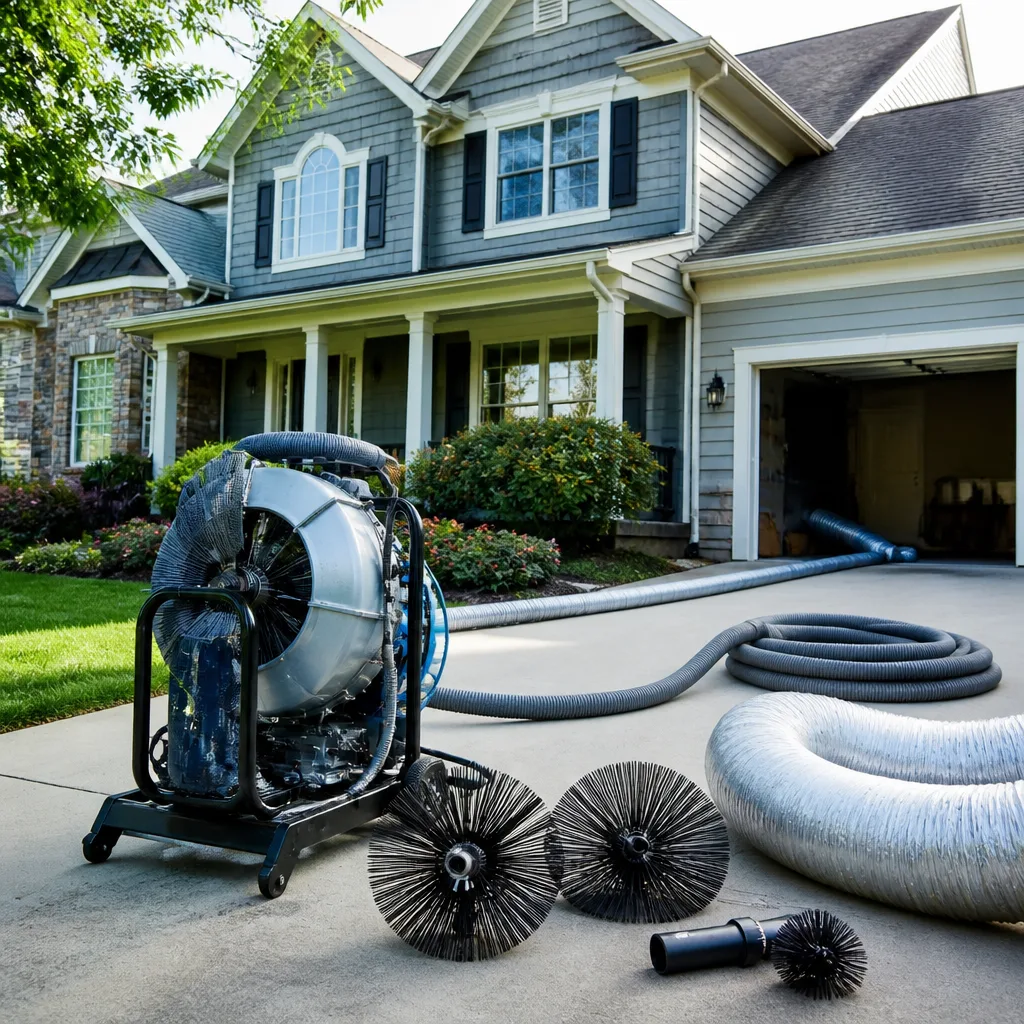 Whole-home duct cleaning
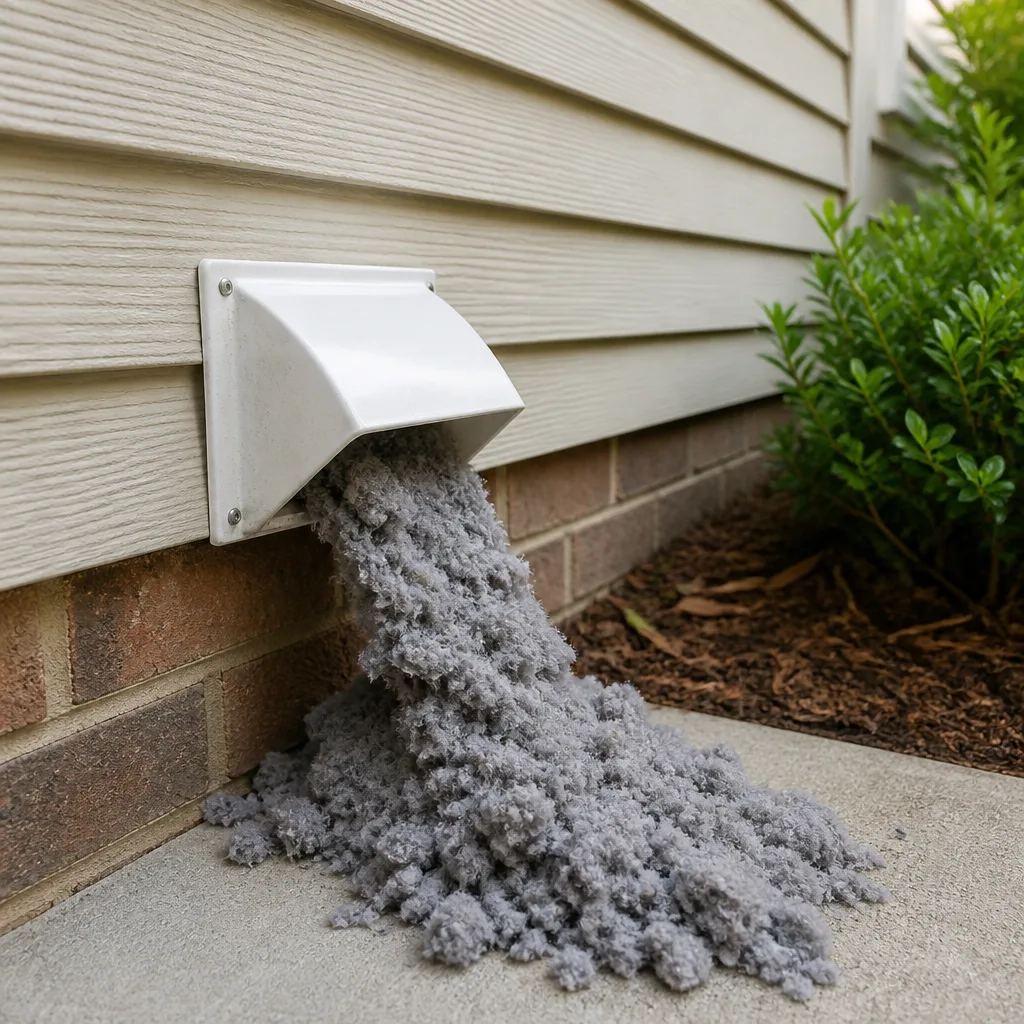 Dryer vent cleaning
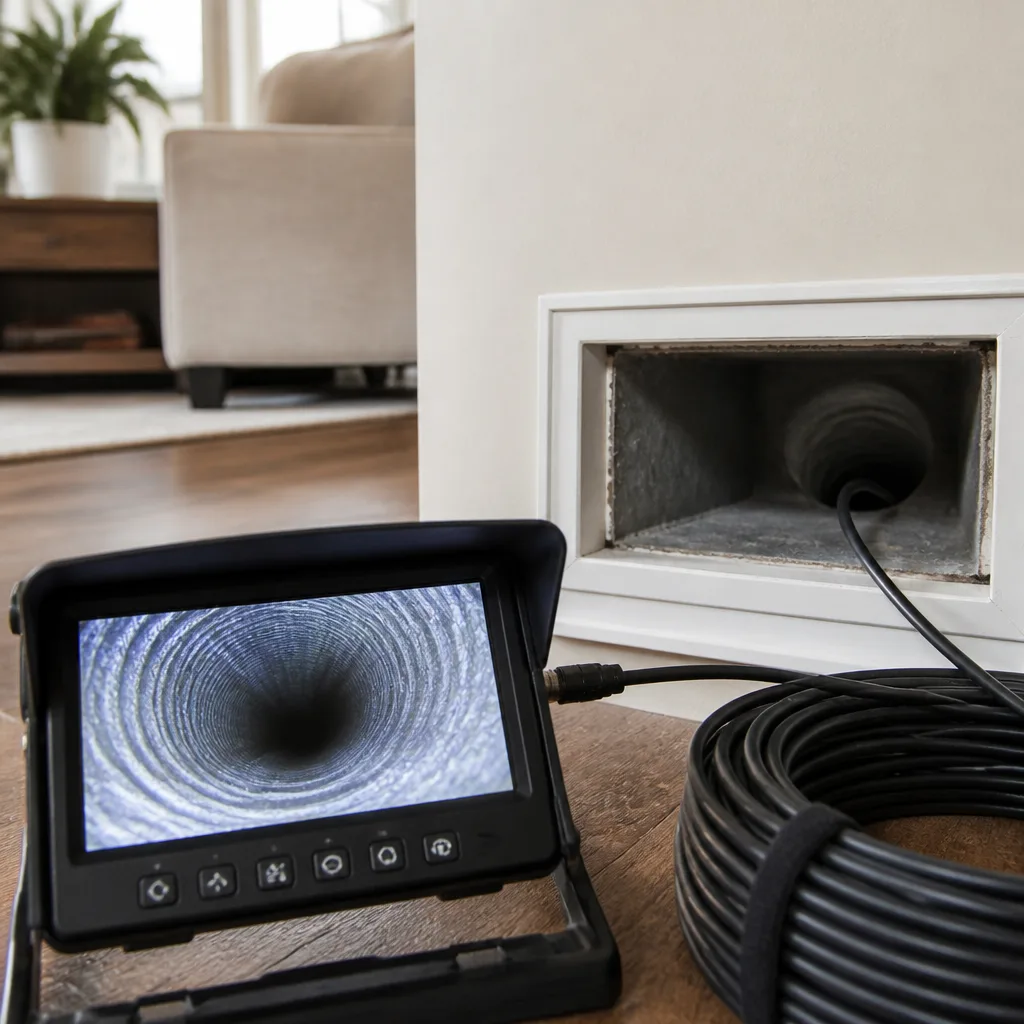 Camera inspection
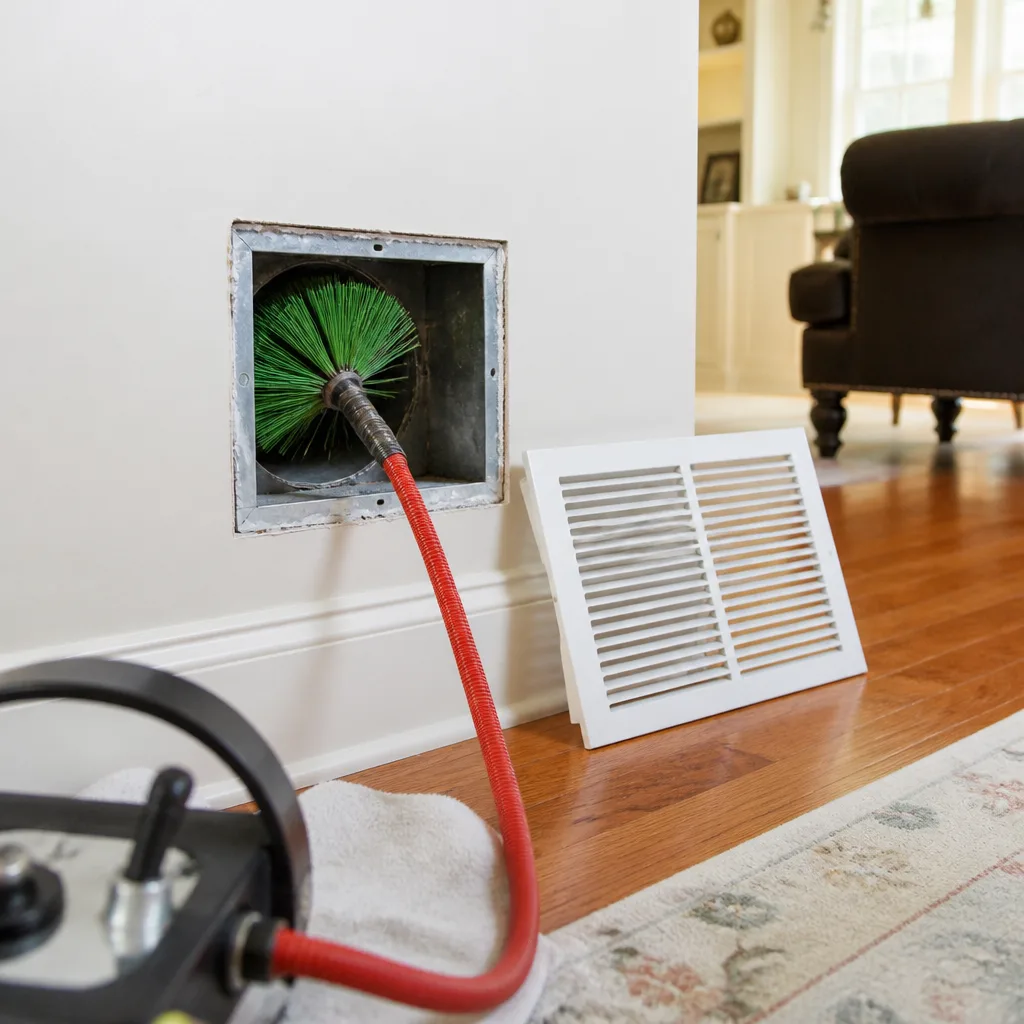 Sanitizing & deodorizing
Whole-system duct and dryer vent check with before-and-after photos - you see exactly what came out of your vents
That "$99 whole-house special" is a bait ad - the real number appears once they are in your hallway, or the "clean" is a shop-vac at the register. We photograph the inside of your ducts before and after instead.
Air Duct Cleaning Warning Signs: A Northwood Homeowner’s Reference Guide
Dust on a supply register doesn’t tell you much on its own. It can mean a clogged filter, a collapsed flex run, a dirty air handler, or nothing worse than a dusty house after a windy week. The sign looks identical in all four cases; the cause and the fix don’t. That’s why most warning-sign lists send homeowners down the wrong path. This guide reads the signals the way a technician does, separating contamination problems from system failures, and showing which patterns point to the source, the branch duct, or the air handler itself. You’ll finish knowing what to watch, what to photograph, and what to act on in Northwood.
Quick Answer
The main air duct cleaning warning signs are visible dust or debris blowing from registers, musty or chemical odors when the system runs, uneven airflow between rooms, and new sounds from the blower or ductwork. Some signs mean contamination has built up in the system, while others point to failing ductwork or equipment. The pattern, not any single symptom, tells you which one you’re dealing with. If two or more signs appear together, get a professional assessment rather than waiting.
Styles & brands we work with
- Whole-home duct cleaning
- Dryer vent cleaning
- Camera inspection
- Sanitizing & deodorizing
Table of Contents
- Contamination Warning Signs vs. System Failure Signs
- Reading Register Dust Patterns
- What Each Odor Type Tells You
- Wildfire Smoke Warning Signs in Northwood
- Airflow Imbalance and Hot or Cold Rooms
- Unusual HVAC Sounds Worth Investigating
- Watch-and-Wait vs. Same-Week Assessment
- Common Mistakes to Avoid
Contamination Warning Signs vs. System Failure Signs
Two different things go wrong inside a duct system, and they’re easy to confuse. Contamination is a buildup problem: dust, biological growth, construction debris, or smoke residue collecting where it shouldn’t. System failure is a mechanical problem: a disconnected duct, a crushed flex line, a blower that’s pulling the wrong amount of air, or a filter cabinet that doesn’t seal. Both produce visible symptoms in the living space, and both can be present at once.
Contamination signs tend to be gradual. The dust comes back faster after you clean, the house smells faintly musty when the fan starts, or dark staining appears around a register. Failure signs tend to be sudden or structural. A room that used to heat well stops heating well. A whistling sound starts at one grille. Pressure changes at doors or a filter that bows inward. In our experience, homeowners who assume every symptom is dirt end up paying for a cleaning that doesn’t fix the actual problem.
Here’s how the two categories break down:
- Contamination: recurring dust, musty odor, visible debris or staining at registers, allergy symptoms that improve when the system is off
- System failure: uneven room temperatures, weak or absent airflow at specific vents, rattling or whistling, a filter that clogs far faster than normal, energy bills that climb without a rate change
- Overlap: a disconnected duct in a Northwood attic pulls insulation fibers and dust into the airstream, so a failure produces a contamination symptom
When both sets show up together, the sequence matters. A technician checks the mechanical side first, because cleaning a system with an open return or a crushed run just moves dirt past the problem. Proper Air Duct Cleaning Northwood work starts with an inspection for exactly this reason. Repair what’s broken, then clean what’s dirty.
Reading Register Dust Patterns
The pattern of dust at a register is a location clue. Where the dirt shows up, and whether it’s on the grille face, the duct throat just behind it, or the ceiling around the boot, tells you roughly where the contamination originated.
Dust on the grille face only. This is usually surface dust from the room itself. Furniture, carpet, pets, and cooking settle on the grille and get pushed around by airflow. It’s a housekeeping sign more than a duct sign, and it doesn’t usually justify a full cleaning on its own.
Dust concentrated at one or two registers, with the rest of the house clean. That’s a branch duct clue. A single run may be loose, torn, or pulling air from an attic or crawl space. In Northwood, where homes often have long flex runs through unconditioned attic space, a single failed connection can feed one vent with insulation dust while every other register stays normal.
Dust at every register, evenly, coming back within weeks of cleaning. That points upstream to the air handler or the return side. The return pulls from the living space, and if the filter housing doesn’t seal or the filter is the wrong size, dust bypasses filtration and gets distributed everywhere. Cleaning the ducts alone won’t fix it.
Dark staining or streaking around the register boot. That’s often moisture-related or air leakage at the ceiling penetration. It’s worth a look at the attic side of that boot, not just the paint.
A quick way to sort this out yourself: wipe one register clean, note the date, and check it again in two weeks. Compare a register in the room you use most with one in a spare room. The comparison tells you more than either register alone.
What Each Odor Type Tells You
Smell is one of the most specific diagnostic signals a system gives you, because different contaminants produce recognizably different odors. Match the smell to the likely cause before you call anyone.
- Musty, damp, or earthy. This usually indicates microbial growth somewhere in the system, most often on a wet evaporator coil, a damp filter, or insulation that has stayed wet. Northwood’s mild winters mean air conditioning runs long stretches, and a coil that stays damp between cycles is a common host. Musty odor is a contamination sign, and it deserves a coil and drain pan inspection, not just a duct cleaning.
- Burning or hot-dust smell. A slight dust-burning smell the first time the heat runs in the season is normal. A persistent burning smell when the system is running is not, and it can indicate debris near the heat exchanger or an overheated component. Turn the system off and have it checked by a qualified HVAC technician. That’s a safety call, not an air quality call.
- Chemical or plastic smell. This often comes from duct insulation or sealant off-gassing, especially in a newer home or after a renovation. It typically fades, but if it persists it’s worth identifying the material rather than masking the smell.
- Stale, closed-up smell that clears when windows open. This is usually a ventilation issue rather than a duct contamination issue, and it’s worth addressing with filtration or fresh-air strategy rather than cleaning alone.
Odors are one of the strongest reasons to get a professional look rather than guess. We use Abatement Technologies negative-air containment during cleaning so that whatever is causing the smell gets captured and removed instead of blown through the house. That containment step is what separates a real cleaning from a dust disturbance.
Wildfire Smoke Warning Signs in Northwood
Northwood sits in a region where wildfire smoke events are a recurring seasonal reality. Smoke isn’t just an outdoor nuisance; it’s a fine particulate that can be drawn into a return and deposited on duct walls, the blower wheel, and the evaporator coil. The tricky part is that a smoke event leaves two very different kinds of contamination, and they call for different responses.
Surface contamination is what you can see and smell in the first days after a smoke event. The house smells like smoke when the system runs, registers have a faint grey film, and the air feels stale. Much of that clears on its own as the system runs clean air through a fresh filter, and a filter change plus a few days of normal operation handles a lot of it.
Deep system infiltration is different. Smoke residue that reaches the duct interior and the coil doesn’t clear with a filter change. The signs are a smoke smell that persists weeks after the air outside has cleared, a smell that’s stronger when the system first starts than after it’s been running, and visible film on the blower wheel or coil face. If you’re seeing those signals, the residue has settled in the system, and that’s a cleaning and sanitizing job rather than a filter job.
Here’s how to tell the two apart after a smoke event:
- Change the filter and run the system normally for a few days.
- Note whether the smoke smell fades or stays constant when the fan runs.
- Check the coil and blower compartment, if accessible, for visible film or residue.
- Watch whether the smell is stronger at startup (system residue) or constant (room source).
- If the smell persists past a couple of weeks, get a professional inspection.
For homeowners rebuilding after a fire or dealing with long-term smoke exposure, we offer air quality and sanitizing services alongside HVAC cleaning, and our familiarity with Aprilaire and Honeywell filtration equipment lets us recommend whole-home filtration as a longer-term answer, not just a one-time cleaning.
Airflow Imbalance and Hot or Cold Rooms
Airflow problems are the most misread of all duct warning signs, because they rarely get blamed on the ducts. A room that runs hot in summer and cold in winter is often treated as a thermostat problem or a house-design problem. Usually it’s neither.
Balanced airflow means every register delivers roughly the amount of air the room was designed for. When one room gets noticeably less, the cause is usually one of the following:
- A crushed or kinked flex duct. Flex runs bent tighter than their design radius lose capacity, and a Northwood attic run that got stepped on during a repair will quietly starve a room for years.
- A disconnected joint. Tape and mastic fail, and the duct blows into the attic instead of the room. That room gets cold and the attic gets warm.
- An undersized or blocked return. If a system can’t pull air back, it can’t push enough out, and the whole house suffers.
- A closed or blocked damper. Manual dampers left half-closed at install are more common than you’d expect.
The tell is consistency. A room that’s always a few degrees off is a duct or balance issue. A room that’s off only on the hottest days is a capacity issue. A room that’s off only when other rooms call for air is a duct-sizing issue. None of those get solved by cleaning, and all of them are worth checking during a proper inspection.
Because we handle duct repair and sealing on the same visit, we can fix a crushed run or reseal a disconnected joint during the same appointment rather than handing you a report and a sub-contractor phone number. That’s the difference between a cleaning and a system fix.
Unusual HVAC Sounds Worth Investigating
Sound is the warning sign most homeowners notice and least often act on. A new noise from the system is a specific mechanical signal, and the tone tells you roughly what’s going on.
- Rattling at one register. Usually a loose grille or a duct boot vibrating against framing. Minor, but it can work a joint loose over time.
- Whistling or whooshing. Air escaping through a gap, or a duct undersized for the airflow being pushed through it. Whistling is a leak signal.
- Rumbling or booming at startup. Often a duct that’s been re-sized wrong or a plenum that’s flexing under pressure.
- Scraping or grinding from the air handler. This is the one to act on immediately. It can indicate a failing blower bearing or debris contacting the wheel. Shut the system down and call for service.
- Clicking at the air handler. Could be a relay or a loose panel. Worth a look, less urgent than grinding.
Debris and surface buildup on the blower wheel is a common cause of both noise and reduced airflow, and it’s exactly the kind of finding a proper air duct cleaning inspection turns up before it turns into a blower replacement.
Watch-and-Wait vs. Same-Week Assessment
Not every sign is urgent, and treating all of them as emergencies burns money on inspections you don’t need. Here’s a practical triage, based on how quickly each sign tends to worsen.
Watch and document
- Light, even dust on registers across the whole house, no odor, no airflow change
- A faint musty smell that only appears after the system’s been off for a while
- A slight dust-burning smell the first time the heat runs in the season
- A single rattling register
For these, wipe a register, note the date, and check back in two to four weeks. Take a photo each time. The pattern tells you more than any single observation.
Get a professional assessment within the week
- Smoke or musty odor that persists more than two weeks or is stronger when the fan runs
- Airflow that has dropped noticeably at one or more registers
- Visible debris or dark residue at a register throat or on the coil face
- Recurring dust that comes back within weeks of cleaning
- Dust or debris around the air handler cabinet
Call immediately
- Any burning smell when the system is running
- Grinding or scraping from the blower
- Visible smoke or sparking at the unit
The first two on that last list are HVAC safety concerns, and they belong to a qualified HVAC technician, not a duct cleaner. We’ll tell you when that’s the case.
Common Mistakes to Avoid
- Assuming every symptom is a cleaning problem. A crushed duct or an undersized return needs repair, not a vacuum. Cleaning a broken system just moves dirt through the leak. Get the inspection first.
- Cleaning before the filter and housing are fixed. If the filter cabinet doesn’t seal, clean ducts get re-contaminated in days. In Northwood’s long cooling season, the filter runs hard, and a bad housing is a real bypass point. Fix the filtration path before or during the cleaning.
- Hiring on coupon price alone. A very low quote usually means a partial clean, no containment, and no repair capability. Ask what equipment they use and whether they can fix a disconnected joint on the visit.
- Ignoring a wildfire smoke smell that doesn’t clear. A smell that’s still there weeks after the outdoor air clears means residue in the system, and it doesn’t air out on its own.
- Letting a dryer vent go unchecked. Lint buildup is a separate but serious warning sign, and it’s covered by dryer vent cleaning. The symptoms are different from duct contamination, but the fire risk isn’t minor.
- Treating a unit smell as a duct smell. A smell that’s strongest right at the indoor unit is often a coil or drain-pan issue, not a duct issue. Cleaning the ducts won’t touch it.
- Doing it yourself with a shop vac. A shop vac at a register doesn’t reach the trunk, the coil, or the branch runs, and it can pull dust into the room rather than out of it. Professional rotary extraction is a different process.
See the difference
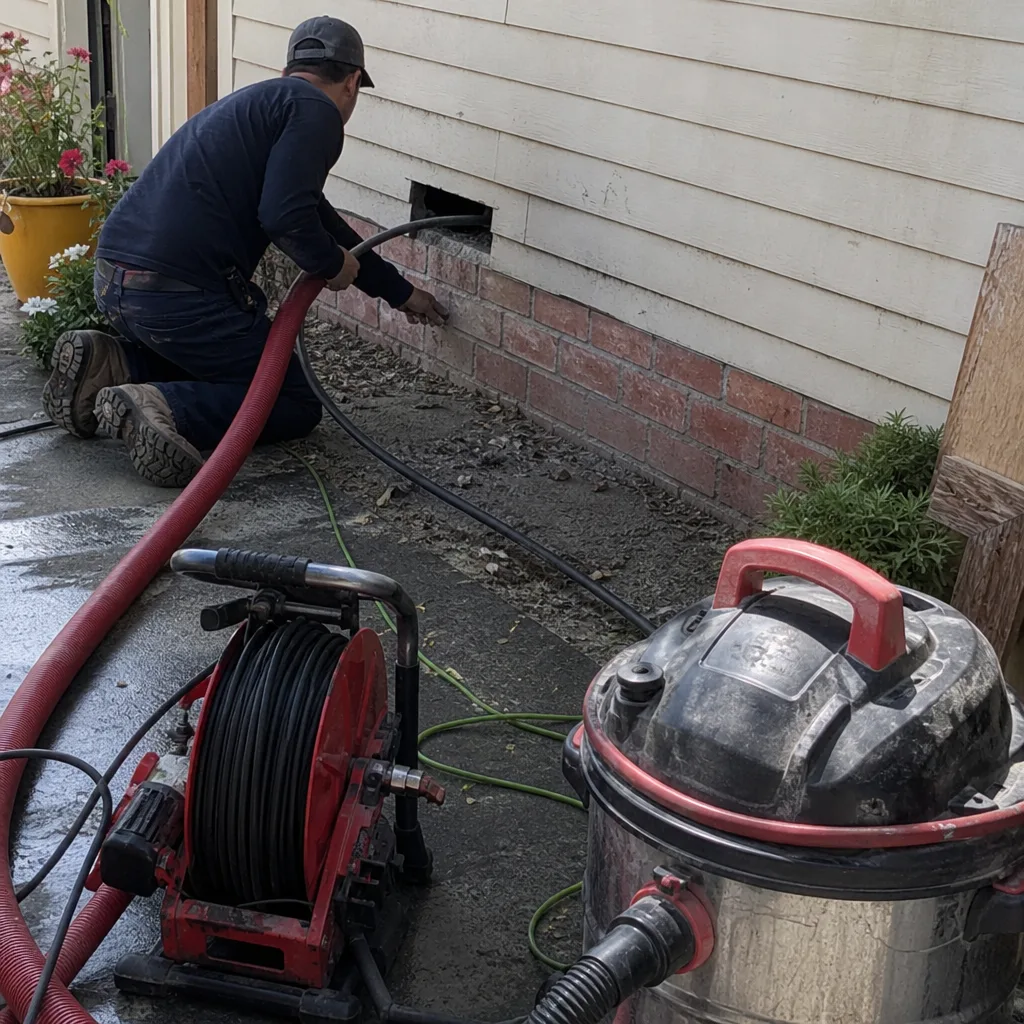 Before
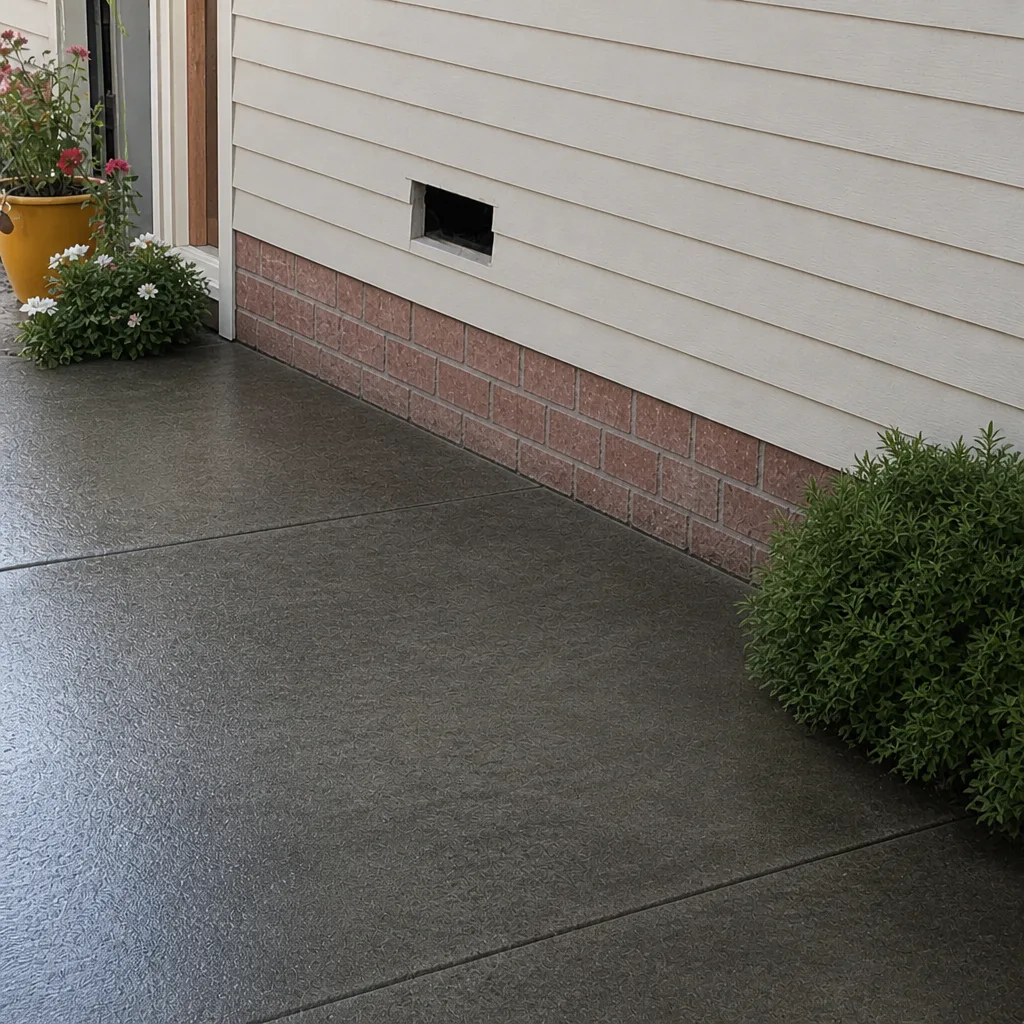 After
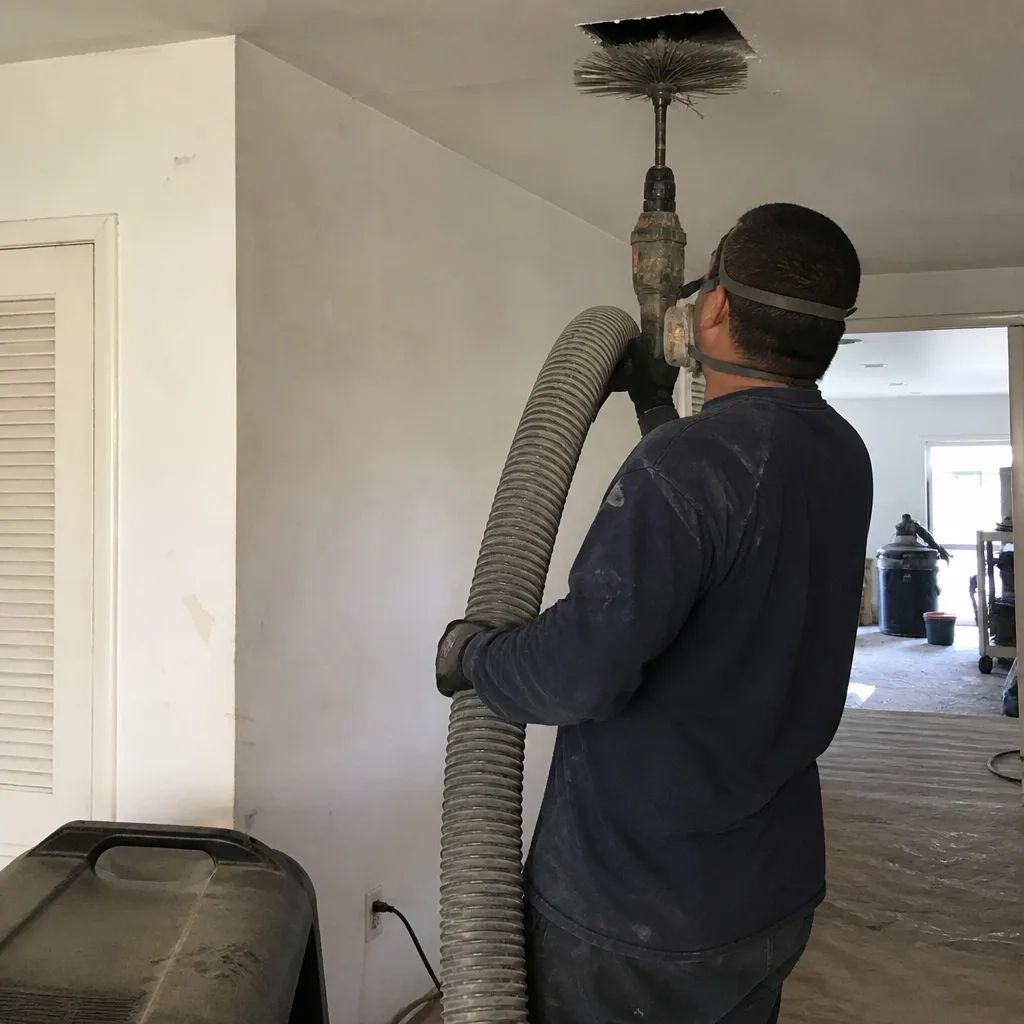 Before
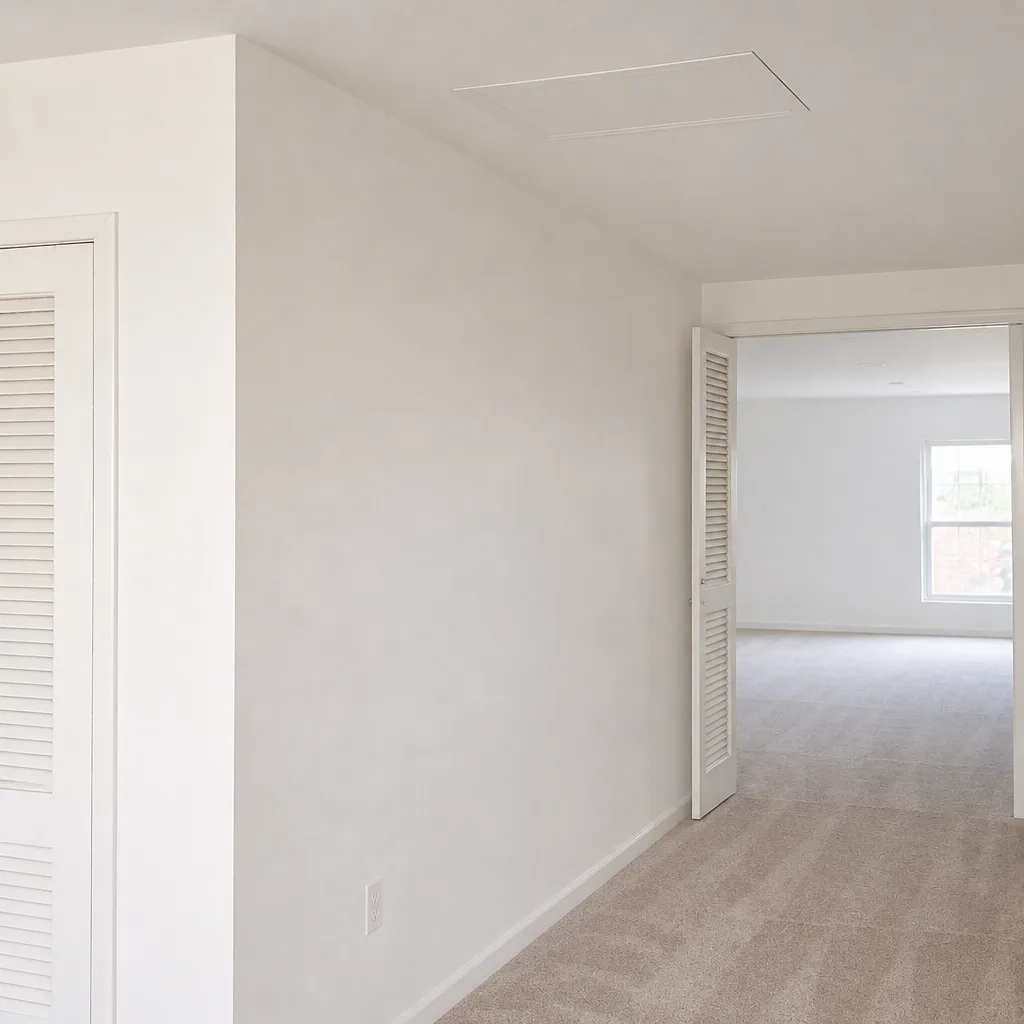 After
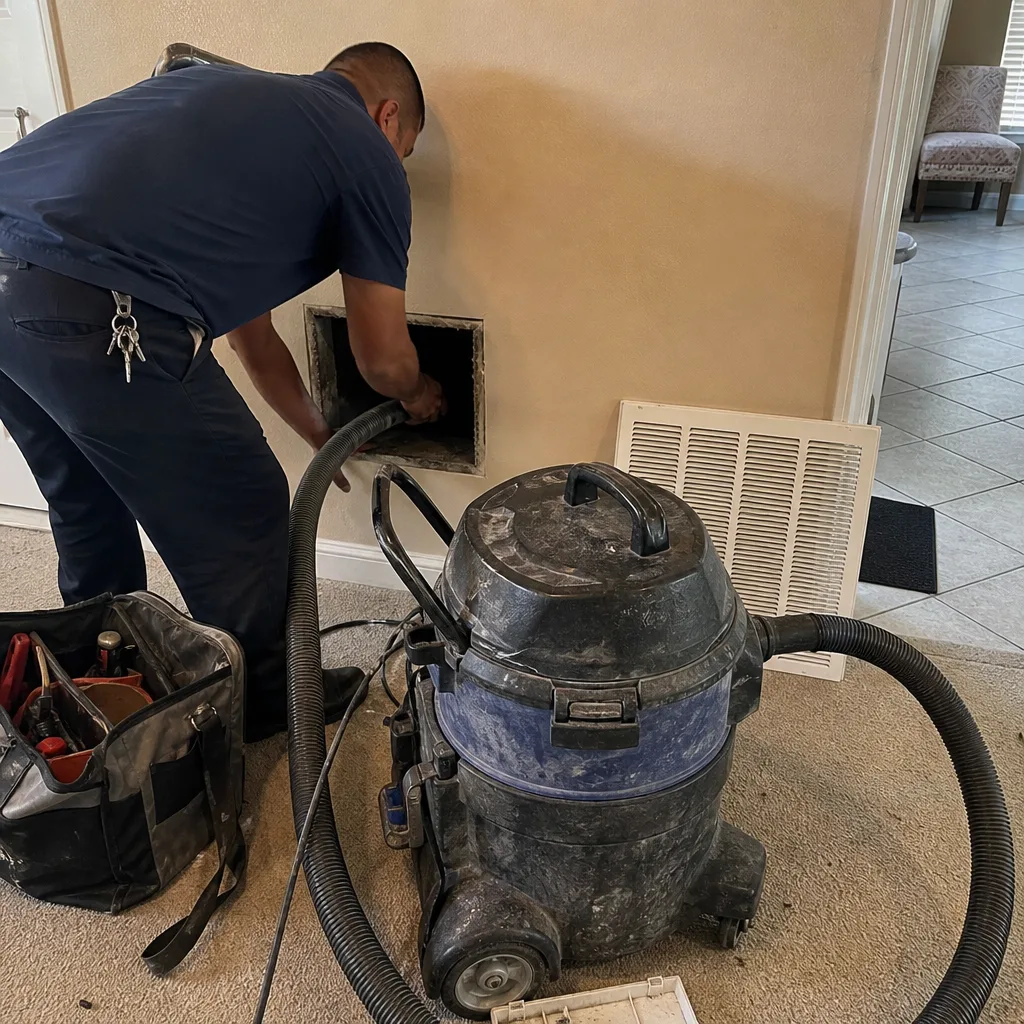 Before
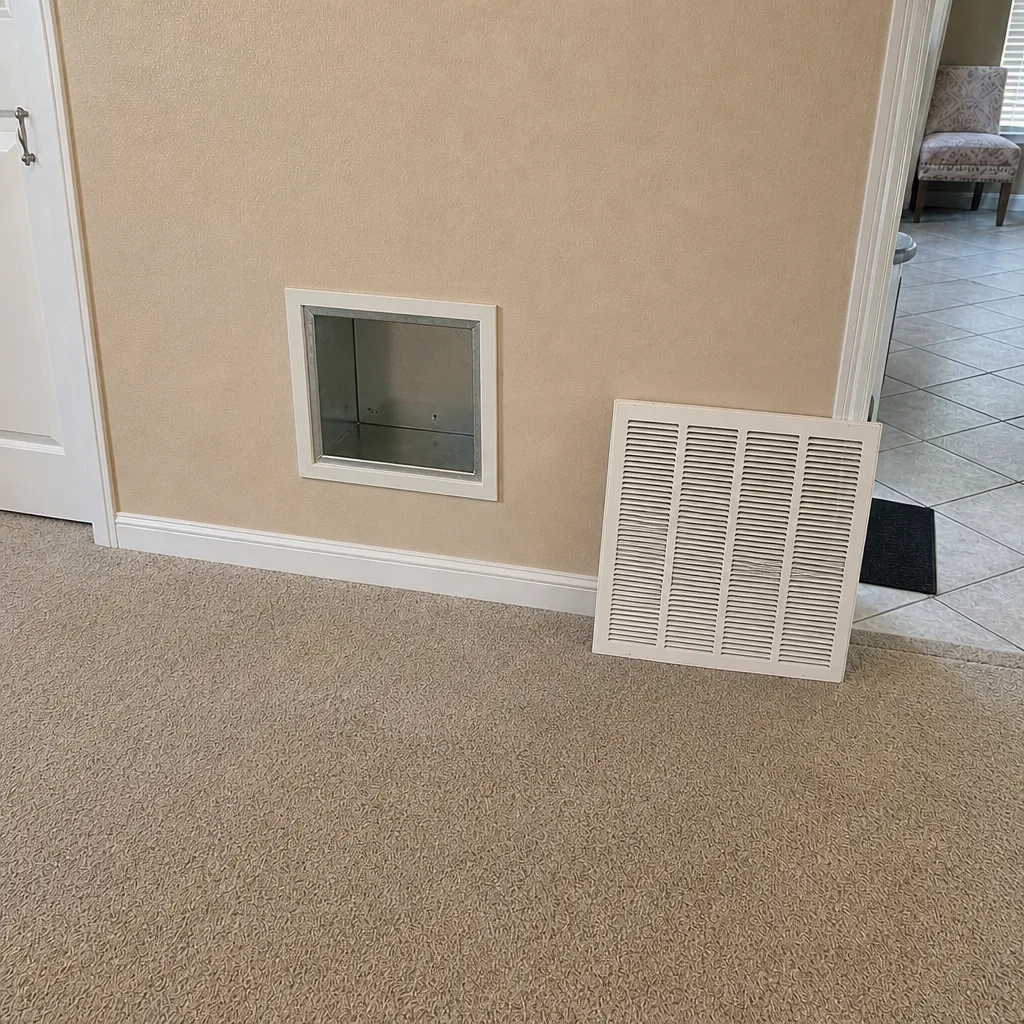 After
When to Call a Professional
Call a professional when you see two or more warning signs together, when airflow has visibly dropped in one or more rooms, when a musty or smoke odor persists past two weeks, or when dust returns within a month of cleaning. Any of those means an inspection will tell you more than another round of observation. Same for a home that has just had a renovation, an HVAC replacement, or a smoke event; those are the moments when a system-level check makes sense. Air Duct Cleaning Northwood offers free estimates in Northwood. Our technicians have up to 14 years of experience, and we use Rotobrush and Nikro equipment for the cleaning itself. Call (866) 947-9073. We answer 24/7. Fast dispatch from 7am to 7pm, Sunday through Friday.
Frequently Asked Questions
The most common are recurring dust at registers, musty odor when the system runs, uneven airflow between rooms, and a smell that lingers after wildfire smoke clears. Northwood’s climate and seasonal smoke exposure make the odor and smoke-residue signs especially common. If you’re seeing two or more of these together, get an assessment. Call (866) 947-9073 for an exact quote.
Gradual signs like returning dust and persistent odor usually point to contamination, while sudden or uneven problems like a room that stops heating well or a new whistle at one vent usually point to a system failure. When both appear together, a technician checks the mechanical side first because a leak or disconnected duct will undo a cleaning. Call (866) 947-9073 to schedule an inspection.
Dust on the grille face alone is usually room dust, dust concentrated at one or two registers points to a branch duct problem, and dust that returns evenly at every register within weeks of cleaning points to the air handler or the return side. Wiping one register and checking it again in two weeks gives you a comparison. Call (866) 947-9073 if the pattern holds.
Give it about two weeks with a fresh filter and normal system operation. If the smoke smell fades, the residue was mostly surface-level and the filter change handled it. If the smell persists, or is stronger when the fan first starts, the residue has reached the system and deserves a professional cleaning and sanitizing. Call (866) 947-9073 for an exact quote.
Low quotes often cover only the accessible runs, skip containment, and come without any repair capability. The result is a partial clean that leaves the coil, plenum, and branch runs untouched, plus a system that re-contaminates fast because the leak or filter bypass was never fixed. Ask what equipment the crew uses and whether they can repair ductwork on the visit. Call (866) 947-9073 for a written estimate.
For most Northwood homes, an as-needed schedule based on the warning signs works better than a fixed calendar. That usually means a cleaning every few years, sooner after a renovation, an HVAC replacement, a smoke event, or a new pet. Homes with allergies in the house often benefit from a shorter interval. Call (866) 947-9073 to talk through your situation.
The Bottom Line
Air duct warning signs are worth reading carefully because they point to different problems. Dust that returns everywhere points to the air handler or return side. Dust at one or two registers points to a branch duct. Musty odor points to moisture and microbial growth. A burning smell points to the equipment, not the ducts. Smoke smell that lingers past a couple of weeks means residue reached the system. Airflow loss at one room means a duct or balance problem, and cleaning alone won’t fix it. The pattern, not any single sign, is what tells you which fix is the right one. Once you’ve identified the pattern, get it verified by a professional who can also do the repair on the visit.
If you’re seeing warning signs in Northwood and want a clear read on what’s going on, call Air Duct Cleaning Northwood at (866) 947-9073 for a free estimate. We answer 24/7. Fast dispatch from 7am to 7pm, Sunday through Friday. We clean the system, not just the surface, and from the duct to the air you breathe, one crew handles every step of the air quality chain.
Written by the team at Air Duct Cleaning Northwood.