
Last updated November 24, 2026
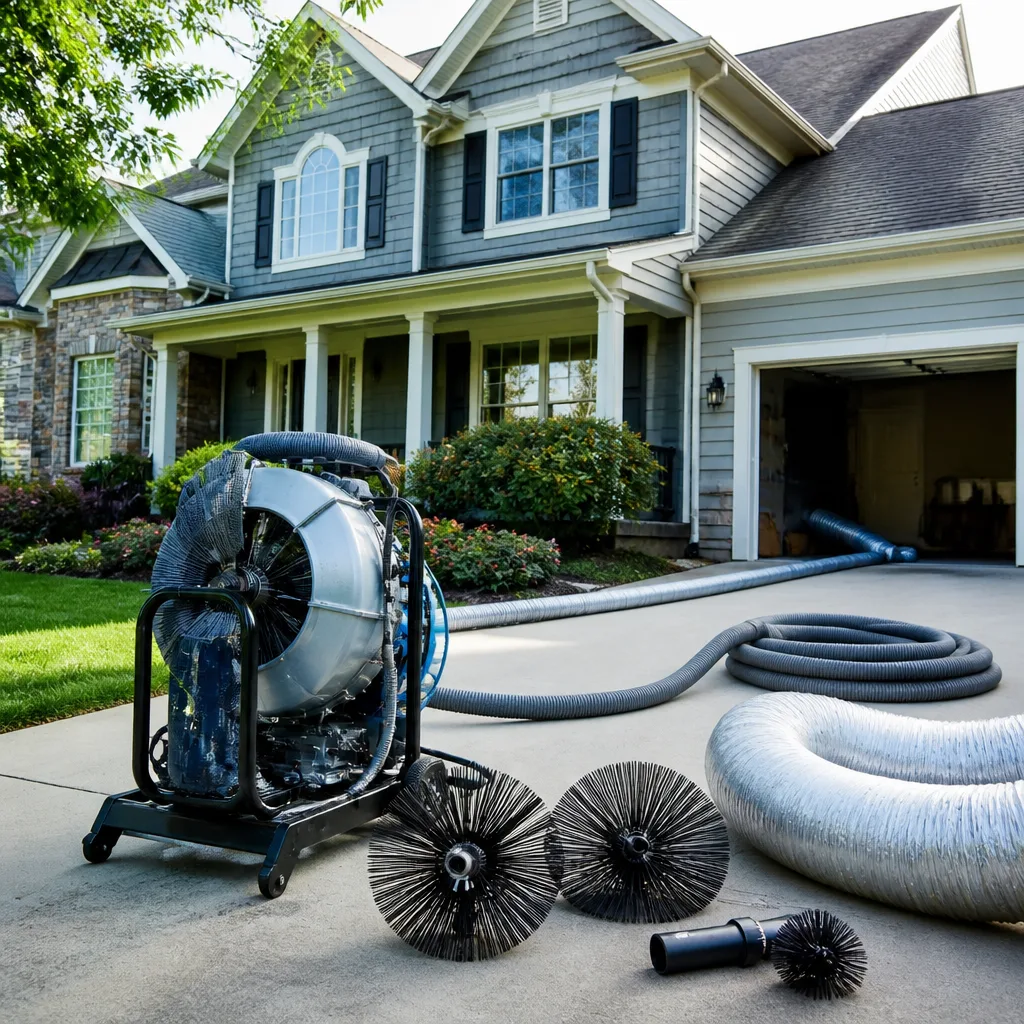 Whole-home duct cleaning
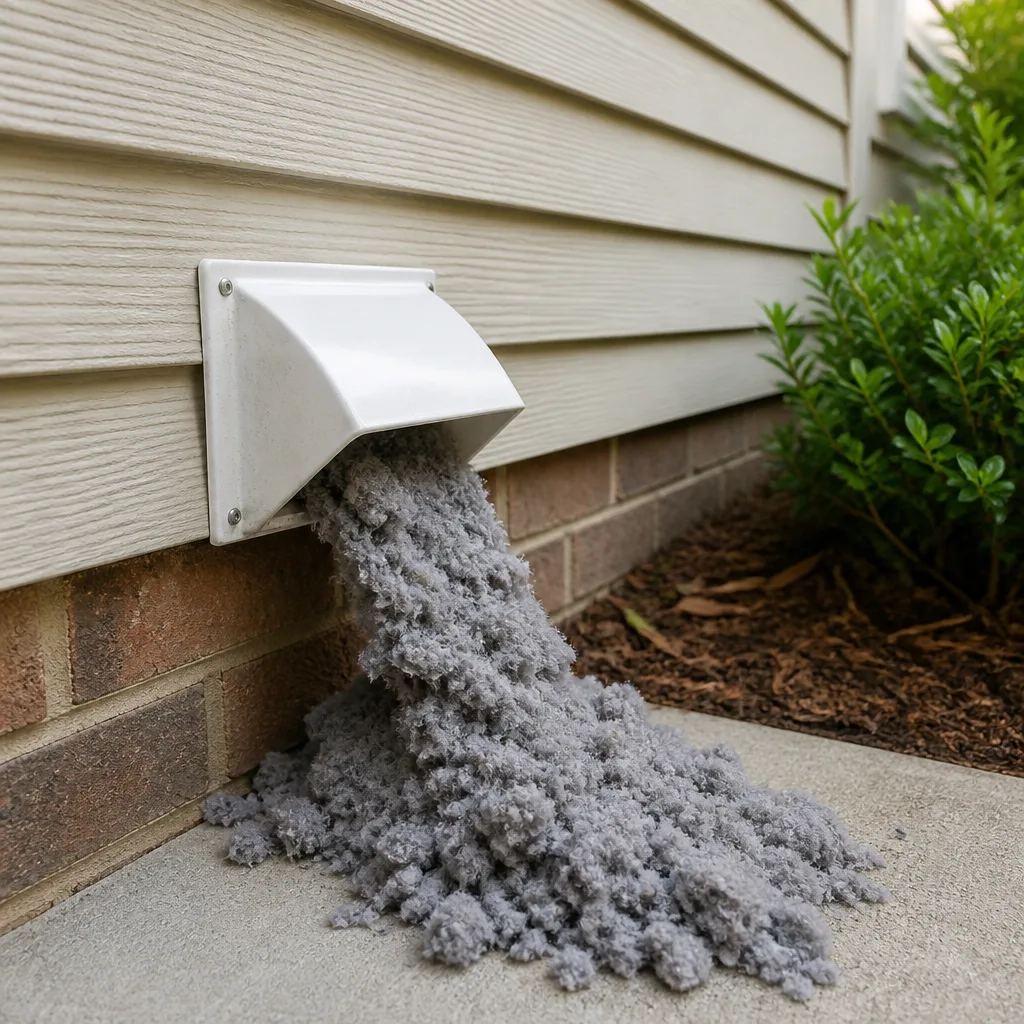 Dryer vent cleaning
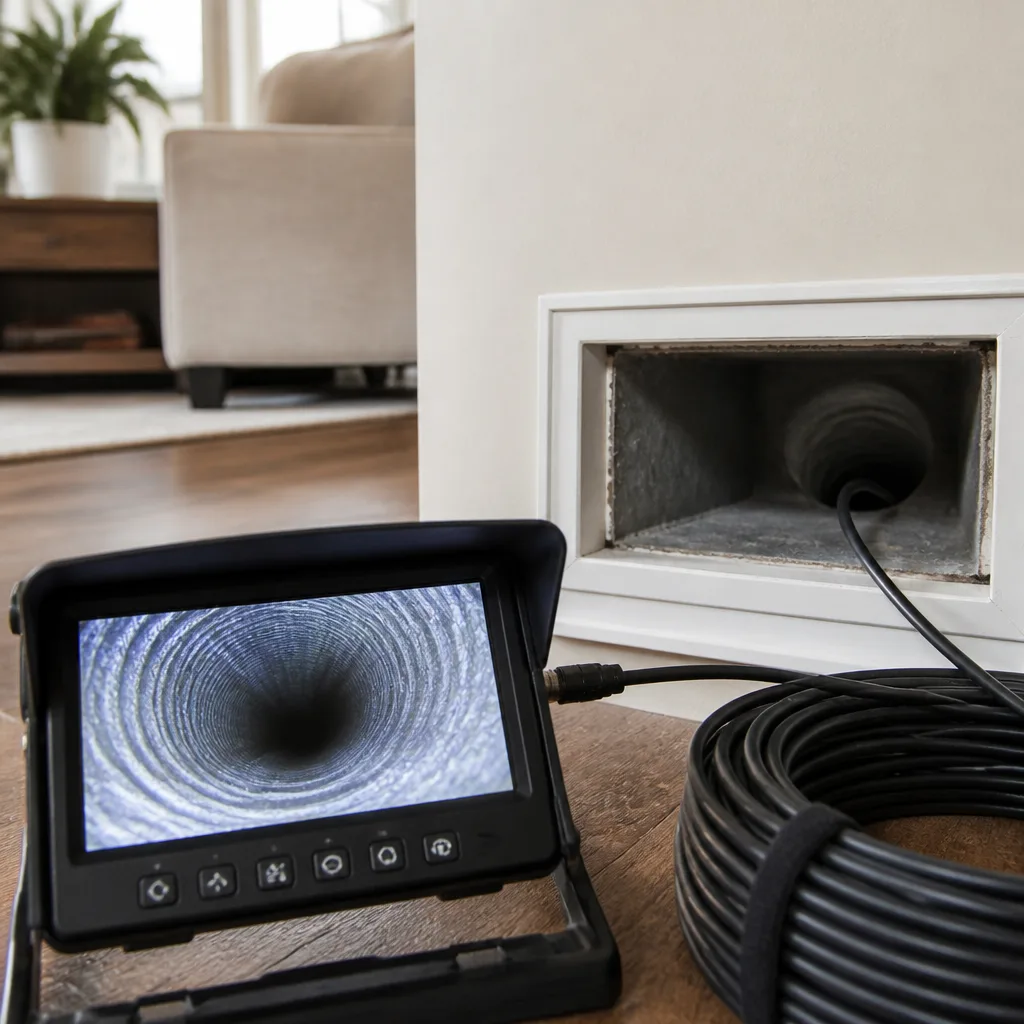 Camera inspection
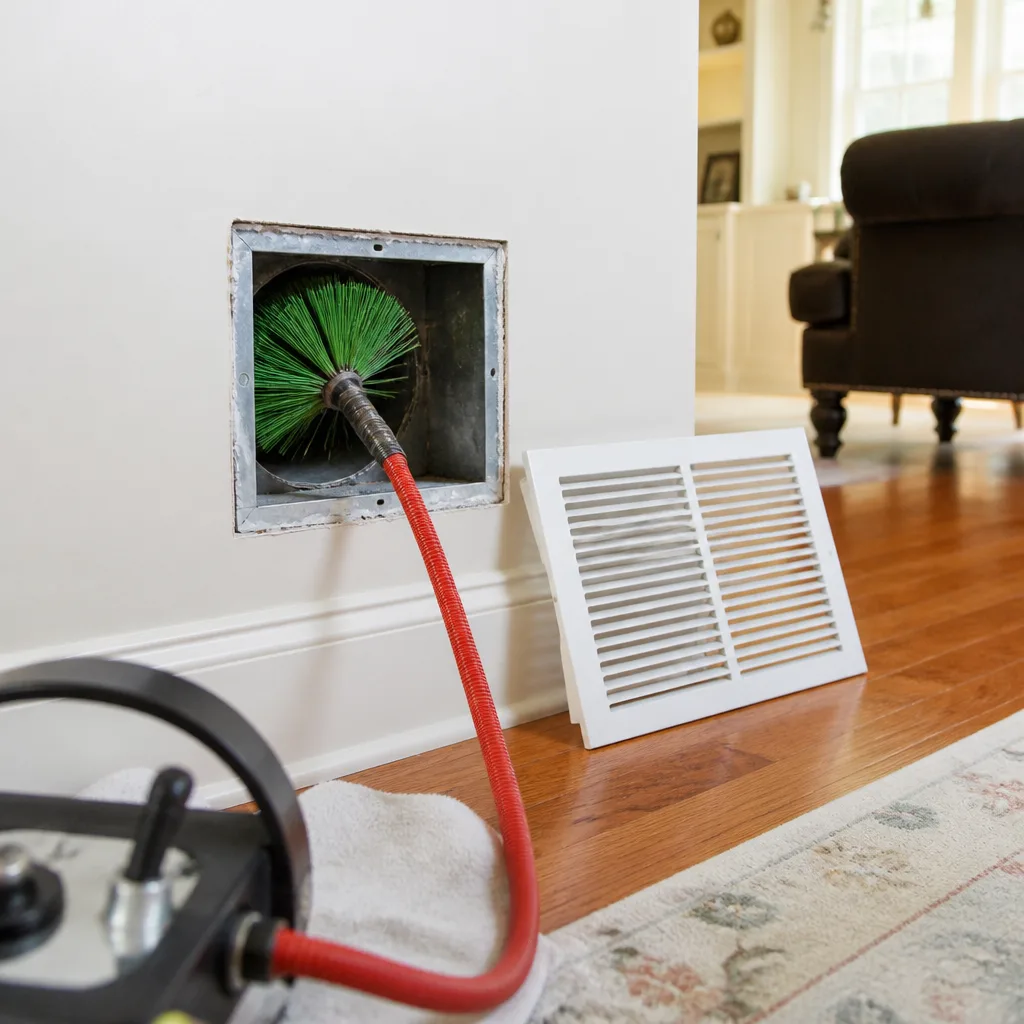 Sanitizing & deodorizing
Whole-system duct and dryer vent check with before-and-after photos - you see exactly what came out of your vents
That "$99 whole-house special" is a bait ad - the real number appears once they are in your hallway, or the "clean" is a shop-vac at the register. We photograph the inside of your ducts before and after instead.
Air Duct Cleaning Maintenance Schedule: What to Do and When
The advice you’ve probably seen is that ducts need cleaning every three to five years. That number gets repeated everywhere, and it’s almost never explained. It was never meant as a universal prescription. It was a baseline for a home with no pets, no smokers, no recent construction dust, and residents with no respiratory sensitivity. If you own a home in Northwood with a dog, a cat, a renovation behind you, or a family member with allergies, your home doesn’t qualify for that baseline. This guide replaces the calendar with something you can actually use: a condition-triggered schedule tied to your household, your climate, and what your ducts are telling you. We’ll walk through the intervals, what to do between cleanings, and how to track it all.
Quick Answer
Most Northwood homes need professional air duct cleaning on a 2-year interval, not the widely cited 3-to-5-year figure, because pets, seasonal particulate, and dust accumulation rates in this area push the schedule tighter. Homes that qualify for a longer 3-to-5-year cycle have no pets, no smokers, no recent renovation, and no one in the household with respiratory concerns. Homes with heavy shedding pets, a recent remodel, or active allergies should plan on roughly an annual reset. Your actual interval depends on specific conditions covered below.
Styles & brands we work with
- Whole-home duct cleaning
- Dryer vent cleaning
- Camera inspection
- Sanitizing & deodorizing
Table of Contents
- Why the Generic 3-to-5-Year Rule Fails Most Homes
- The Condition-Based Interval Matrix
- How Northwood’s Climate Changes Your Accumulation Rate
- Post-Renovation Cleaning as a Reset, Not a Routine
- What to Do Between Professional Cleanings
- What You Should Never Attempt Yourself
- Setting Up a Maintenance Log
- When to Stop Waiting and Call
Why the Generic 3-to-5-Year Rule Fails Most Homes
The three-to-five-year guideline comes from the EPA, and it’s cited by nearly every duct cleaning company in the country. What gets lost is the qualifier: it was written for a household free of pets, smokers, recent construction, and respiratory-sensitive occupants. That’s a narrow slice of the population. In practice, when we inspect ducts in Northwood, the homes that genuinely fit a five-year interval are the exception, not the rule.
Here’s what the guideline gets wrong for real households:
- It ignores occupancy. A retired couple with no pets and a tightly filtered home accumulates far less than a family of five with two dogs and a humidifier running all winter.
- It ignores renovation. Drywall dust, sawdust, and insulation fibers settle into duct interiors and keep recirculating long after the plastic sheeting comes down.
- It ignores climate. Seasonal particulate and dry periods concentrate dust differently depending on where you live, and Northwood’s conditions push accumulation faster than a national average would suggest.
- It ignores your HVAC system. A system with a leaking return or a poorly sealed trunk line pulls in attic or crawlspace air continuously, loading the ducts regardless of how clean your living space is.
- It assumes a filter alone fixes everything. Filters catch what reaches them. They don’t catch what settles on duct walls, boots, and coil surfaces.
The result is that a lot of Northwood homeowners wait five years when two would have been right, and they notice it as worsening allergies, dust on the registers, or a system that seems to work harder than it used to. The fix isn’t a stricter universal rule. It’s a schedule based on your home’s actual conditions.
The Condition-Based Interval Matrix
This is the core of the guide. Rather than giving you a single number, we’re giving you the conditions that push a home toward a tighter or looser interval. Find your household below and match the conditions.
Annual Interval (Clean Every 12 Months)
- Two or more shedding pets in the home.
- Anyone in the household with asthma, seasonal allergies, or chemical sensitivity.
- A recent renovation or remodel within the past 18 months (see the post-renovation section below).
- A smoker in the household, even if they smoke only in one room.
- Wood-burning fireplace or stove used regularly through the cool season.
- An HVAC system with visible dust buildup at the return grilles every few months despite regular filter changes.
- A home that sits in an active construction corridor where dust is airborne year-round.
Two-Year Interval (Clean Every 24 Months)
- One pet, moderate shedding, no respiratory-sensitive occupants.
- No pets, but a family of four or more with typical dust-generating activity.
- Standard system with a well-sealed duct network and no evidence of return leakage.
- Mild seasonal allergies in one household member, controlled with a mid-grade filter.
- Home located where seasonal particulate (pollen, dry-season dust) is noticeable through spring and fall.
Three-to-Five-Year Interval (Clean Every 36 to 60 Months)
- No pets, no smokers, no renovation in the past three years.
- No respiratory-sensitive occupants.
- Ductwork properly sealed and inspected at the last cleaning.
- High-quality filtration in place and changed on schedule.
- No visible dust accumulation at registers or returns between professional visits.
The matrix isn’t rigid. If you have a pet and a renovating neighbor, you’re at annual. If you’re a two-person household with no pets in a well-sealed home, you’re at the longer end. When we assess a home during a cleaning, we can tell you which interval your specific ductwork suggests based on what we find, not what a chart says.
How Northwood’s Climate Changes Your Accumulation Rate
National averages were built across every region. They don’t reflect what happens in a specific area. Northwood’s climate – mild winters, a dry season that concentrates particulate through summer and fall, and seasonal winds that carry dust off exposed ground – shifts the math. Dust doesn’t accumulate at a steady drip. It loads faster during the dry months and settles during the wetter ones, which means a duct system in Northwood can look fine in spring and be noticeably loaded by early fall.
The practical implication is that the timing of your cleaning matters as much as the frequency. Homes here benefit from scheduling a professional cleaning in late spring or early summer, before the dry season pushes a fresh layer of particulate through the system. That way you go into the heaviest dust months with clean ducts and a fresh filter, and the system isn’t starting from a deficit.
Mild winters affect the math in a second way. Systems here often run in cooling mode for a longer stretch than in colder climates, which means the cooling coil stays wet and the return side captures more airborne material over more months. In colder regions, that coil dries out and the accumulation slows. Here, it doesn’t. That’s one reason why the national 3-to-5-year baseline runs long for Northwood homes – the cooling demand is more persistent.
When we clean ducts in Northwood, we’re also cleaning the HVAC coil and blower surfaces that the ductwork feeds into, using professional extraction and containment equipment so that whatever we dislodge gets captured rather than recirculated. That’s what HVAC cleaning involves, and it’s distinct from duct cleaning alone. Both matter for a schedule that actually controls what’s in the air.
Post-Renovation Cleaning as a Reset, Not a Routine
Renovation dust is not the same as everyday dust. Drywall dust, joint compound, sawdust from trim work, fiberglass insulation fibers, and the fine silica that comes off cut masonry all behave differently once they reach a duct interior. This is what the trade means by construction-grade contamination: particulate that’s abrasive, fine enough to stay suspended for hours, and often hygroscopic, meaning it can absorb moisture from the coil and cling to duct surfaces instead of passing through.
That’s why a post-renovation cleaning isn’t a regular interval on the schedule. It’s a reset. It should happen once, after the renovation concludes and after the construction dust has settled, typically two to four weeks after the last of the work. Not during. Not on day one. During active construction, the ducts will simply recontaminate. After the dust settles, a professional cleaning returns the system to its pre-renovation baseline, and then you resume your normal interval from that point forward.
Two things are worth checking before you start the reset:
- Confirm the HVAC system was off during the dustiest parts of the work. If it ran continuously through drywall sanding, expect load in the return plenum and on the coil, not just in the branch runs.
- Ask whether the ductwork was sealed beforehand. Contractors sometimes tape registers before a renovation. If that didn’t happen, your starting contamination level is higher.
If the renovation was heavy enough to disturb insulation or open wall cavities, plan the reset cleaning with the HVAC coil in scope. Our air duct cleaning service uses Rotobrush and Nikro equipment, and we connect homeowners with local professionals who run containment with Abatement Technologies negative-air tools so that dislodged construction dust is captured at the source. That’s the difference between a cleaning and a spread.
What to Do Between Professional Cleanings
The interval is the foundation, but what you do between visits determines whether you actually make it to the scheduled date or find yourself calling early. Here’s what matters.
Filter discipline
Filter grade is the single biggest lever you control. A standard fiberglass filter catches very little. A pleated filter in the MERV 8 to MERV 11 range catches far more particulate, and it’s the right choice for most Northwood homes. Move to MERV 13 only if you’ve confirmed your blower can handle the pressure drop; too high a MERV can starve airflow and strain the system. Aprilaire and Honeywell both make whole-home filter cabinets and media filters that fit standard return configurations and offer better performance than thin slot filters. Check the filter monthly for the first three months after a cleaning to learn your home’s loading rate, then adjust the replacement schedule to match.
Register inspection
Once a month, pull a register grille and look inside the boot. You’re checking for visible dust accumulation, pet hair, or dark streaks. If a register shows meaningful buildup in under 90 days after a professional cleaning, that’s a signal your interval needs to tighten, or your return system is leaking.
Visual coil check
Open the air handler access panel once a year (power off) and look at the cooling coil. A clean coil is bright metal. A loaded coil has a gray or matted surface, sometimes with visible biological growth. Any visible growth is a reason to call, not to wait.
Keep the system running
Running the system through the cooling season keeps air moving, which is better than letting it sit. But running a system with a compromised return line pulls attic or crawlspace air in continuously, which loads the ducts regardless of filtration. If you notice persistent dust at certain registers, mention it during your next scheduled service so the technician can inspect the return side.
What You Should Never Attempt Yourself
We get asked all the time about shop vacuums and handheld blowers. Here’s the honest answer: a wet/dry shop vac with a duct attachment isn’t a cleaning. It disturbs what’s settled without capturing it, meaning whatever you dislodge recirculates through the living space over the next several hours. A blower is worse – it blows the load into the house.
The reason professional equipment matters isn’t horsepower. It’s containment. The negative-air setup is what keeps the dislodged material out of your breathing air. You can’t replicate that with a shop vac and a hose.
There’s also a safety line. The air handler contains electrical components and, depending on your system, refrigerant lines and a coil. Opening the unit and working near live electrical connections or refrigerant is a job for someone trained for it. The power should be off, and in many cases the system should be isolated. Don’t open a panel that puts you near line voltage or refrigerant. If the coil needs cleaning, that’s a job for a professional.
What you can do safely: change filters, inspect registers visually, and note anything unusual. What you shouldn’t do: feed a shop vac hose into a duct run, blow compressed air into a register, or open the air handler beyond a visual look at the coil surface with power off. If in doubt, leave it closed and call.
Setting Up a Maintenance Log
A simple maintenance log does two things. It helps the next technician understand what your system has been through, and it creates a documented service history that supports resale. Home inspectors and buyers respond to a clear record of what’s been done and when.
Here’s a five-minute setup that works:
- Create one page per system. Note the make and model of your air handler and outdoor unit, the install date, and the approximate square footage served.
- Log every filter change. Date, filter grade (MERV rating), and the brand if it’s a media filter. Aprilaire and Honeywell media filters have model numbers worth noting.
- Log every professional service. Date, service performed, equipment used, and a one-line note of anything the technician flagged.
- Note renovation dates. Even a small remodel. When you renovated, whether the system ran during the work, and when the post-renovation reset was done.
- Note register-level observations. If any register shows unusual buildup, log it. Patterns emerge over multiple entries that a single look won’t catch.
Keep the log in the same place you keep HVAC receipts. When you sell, the record is documentation of system care. When you call for service, the log lets the technician skip the guesswork and go straight to inspection. We’ve seen homes where the log shrinks the assessment time meaningfully because the tech already knows the system’s history.
When to Stop Waiting and Call
Some conditions override the schedule entirely. Call for a professional assessment if any of the following applies, regardless of when you last had the ducts cleaned:
- You see visible dust plumes coming out of a register when the system starts.
- You smell a musty or stale odor when the system runs, especially at startup.
- You’ve had a recent renovation and the system ran during the dustiest phase.
- You’ve noticed increased allergy symptoms in a household member since your last cleaning.
- You’ve moved into a home where you don’t know the previous owner’s service history.
- You see visible mold on registers, boots, or coil surfaces.
- You’ve had pest activity (rodents, insects) in the ductwork.
- Your system was installed recently and you don’t know what the install crew flushed out.
Air Duct Cleaning Northwood offers free estimates in Northwood. Call (866) 947-9073 to schedule an assessment. We answer 24/7. Fast dispatch from 7am to 7pm, Sunday through Friday.
Common Mistakes to Avoid
- Treating the 3-to-5-year guideline as fixed. It’s a baseline for a household that doesn’t resemble most Northwood homes. A pet, a renovation, or a respiratory-sensitive occupant moves the interval tighter.
- Skipping the HVAC coil. Ducts and coil are one system. Cleaning the ducts without inspecting the coil leaves the largest reservoir of load untouched.
- Blowing out ducts with a shop vac or blower. Without containment, you’re spreading what’s settled rather than removing it. The material ends up in the living space.
- Running the system through a renovation. It pulls construction dust into the returns, plenum, and coil. Shut it off during the dustiest work and plan a reset cleaning after.
- Not logging the work. Without a record, every future technician starts from scratch, and resale documentation is lost.
- Choosing the lowest quote without checking containment. A cleaning that doesn’t use negative-air containment isn’t comparable to one that does, regardless of the price.
- Waiting for a visible problem before calling. By the time dust plumes or odor show up, the system has been loading for a while. The schedule exists to prevent that.
See the difference
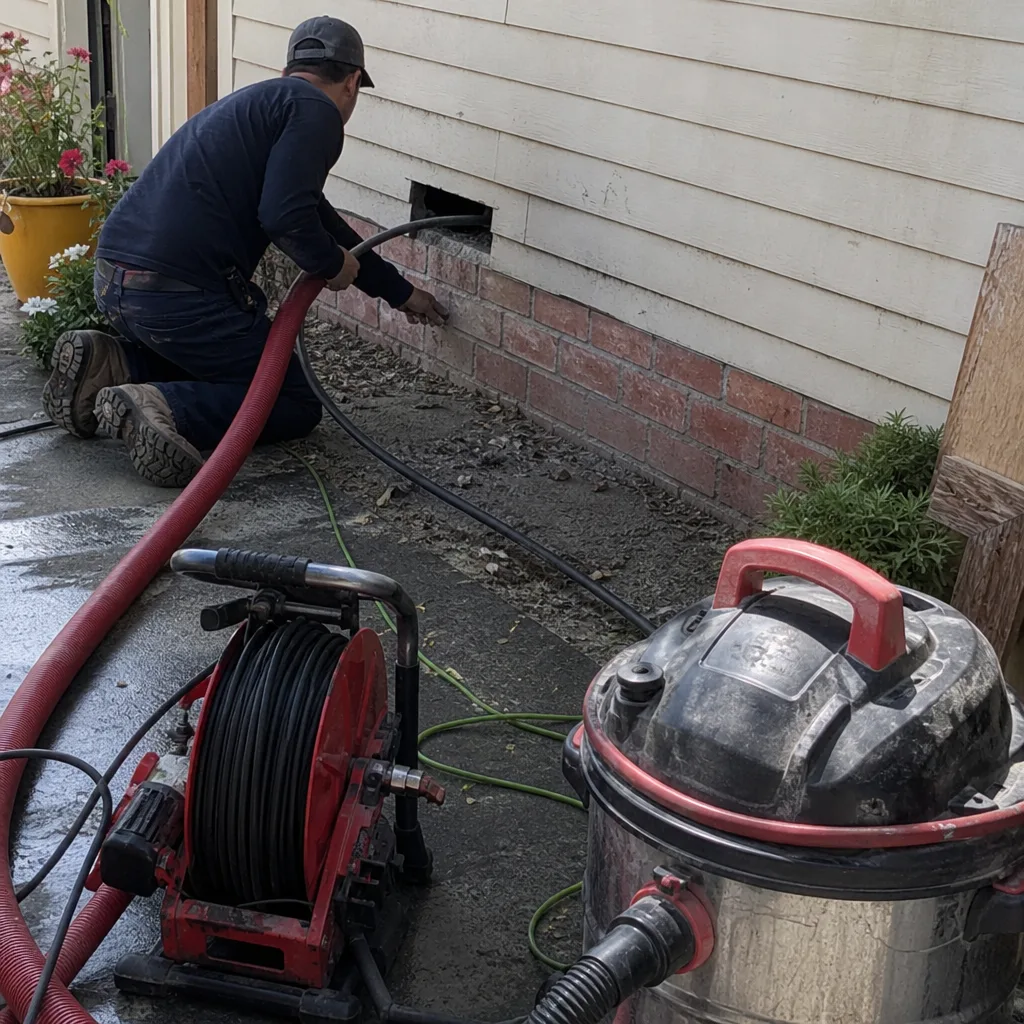 Before
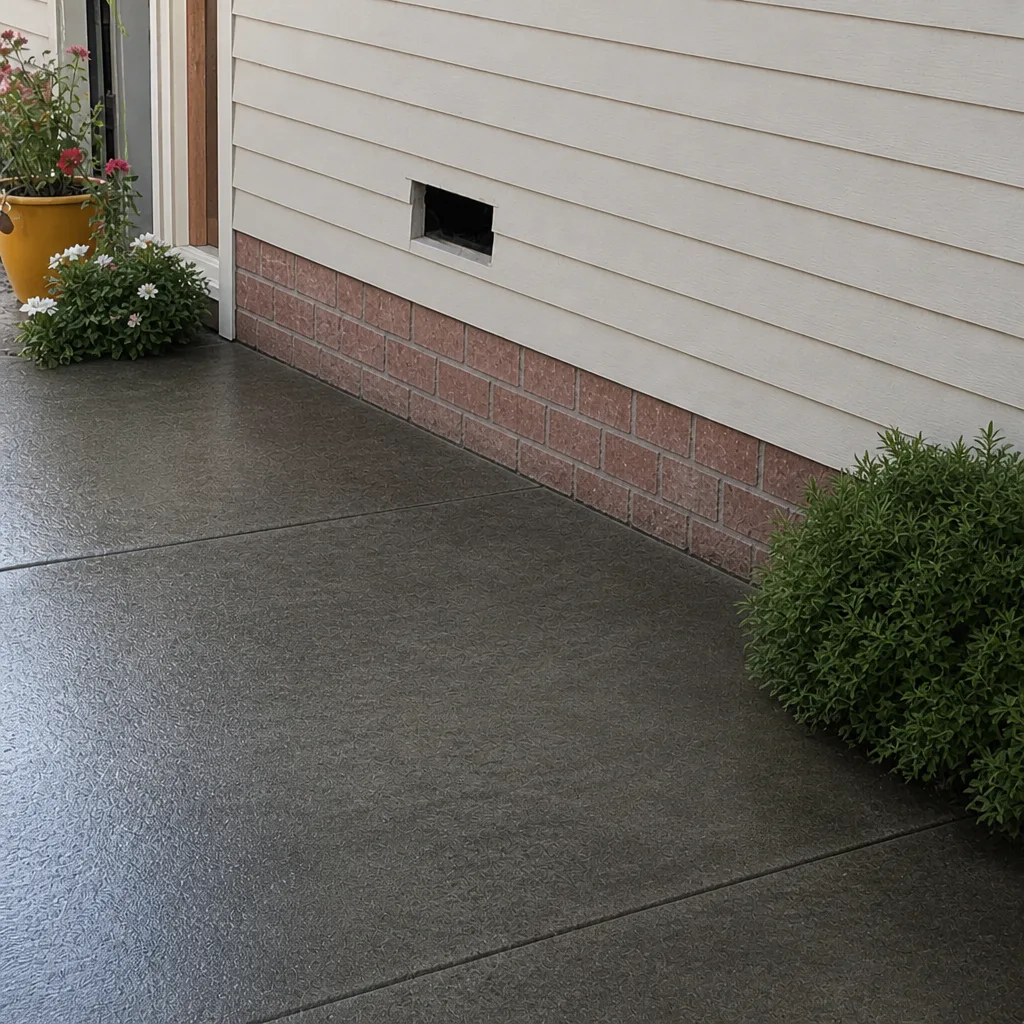 After
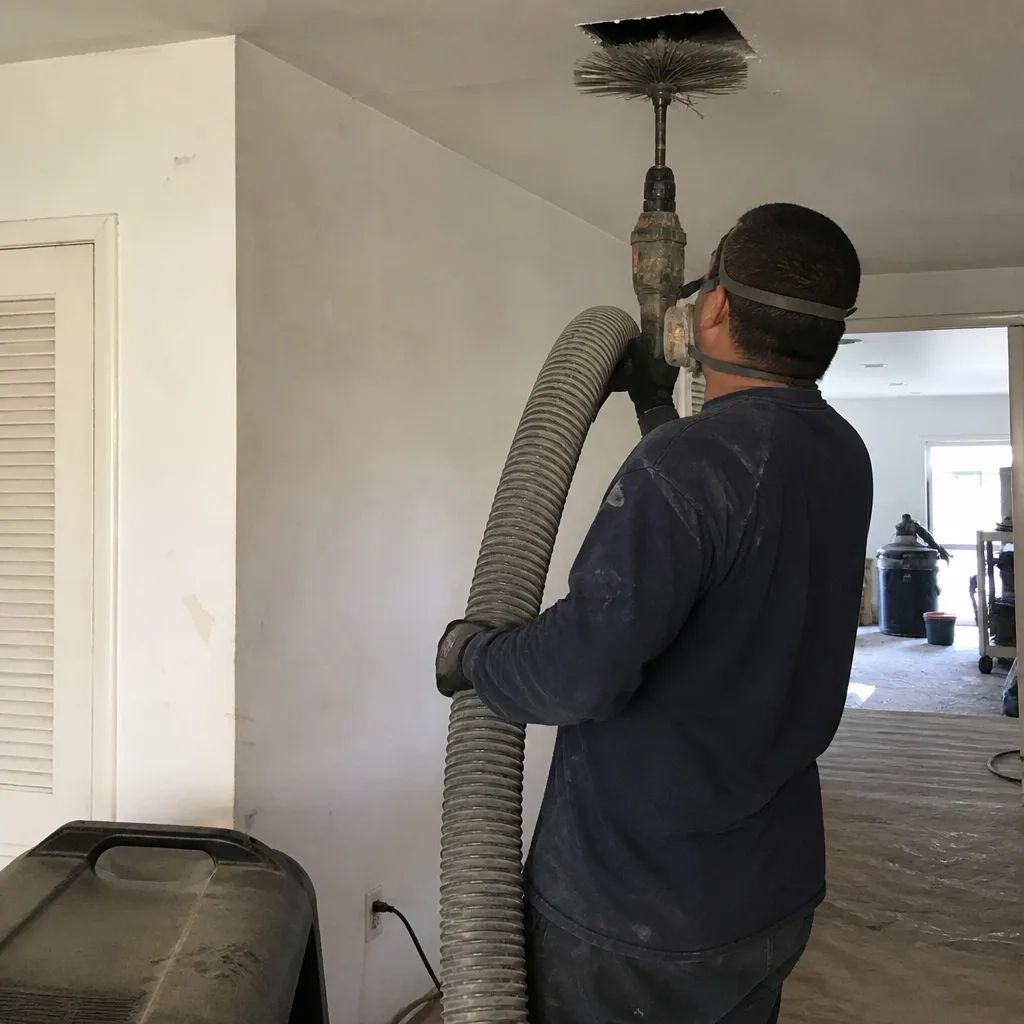 Before
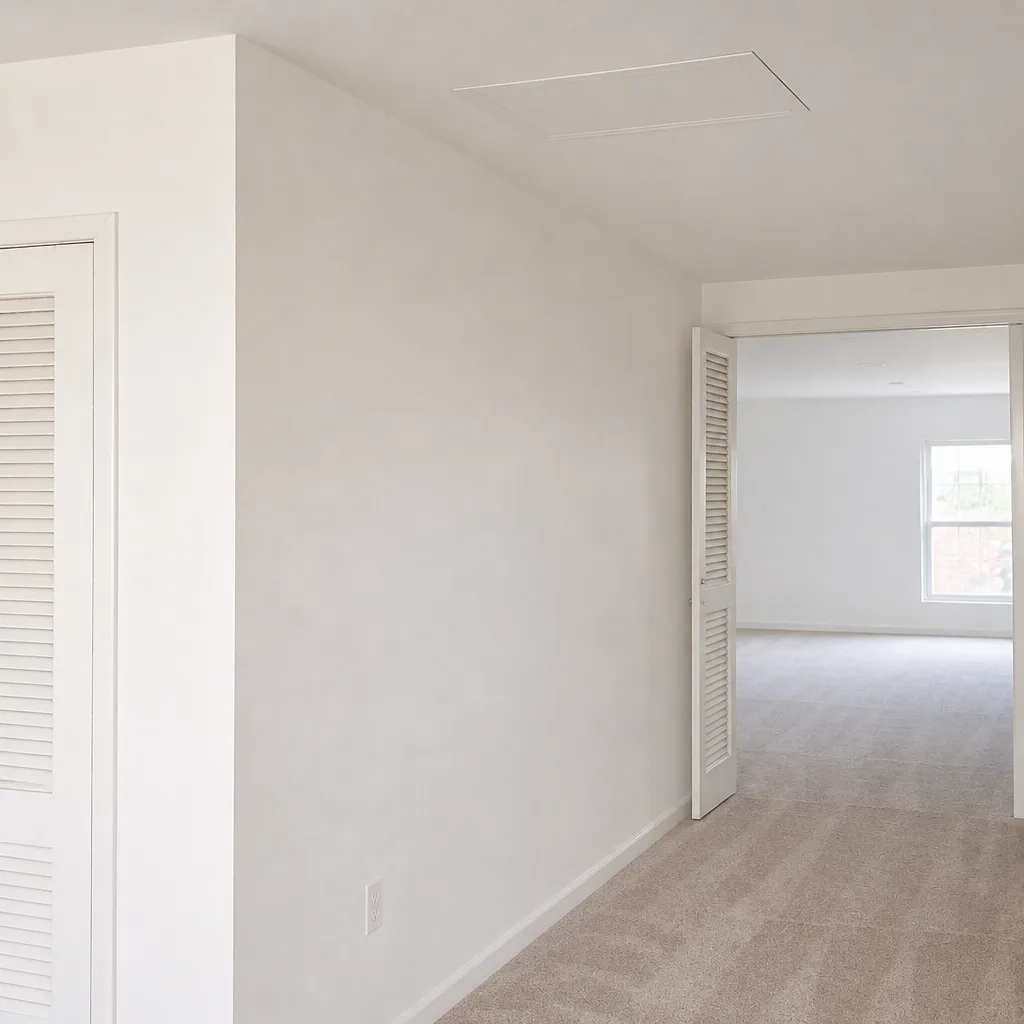 After
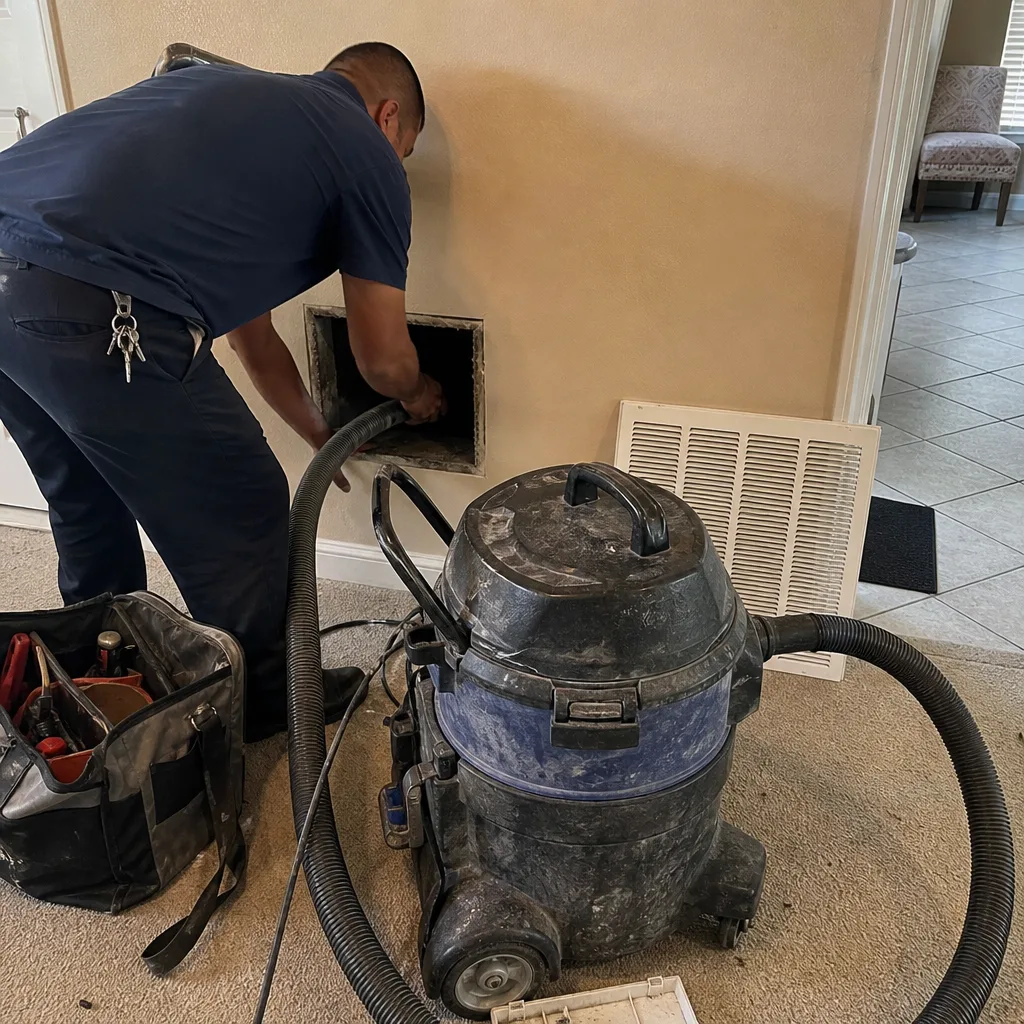 Before
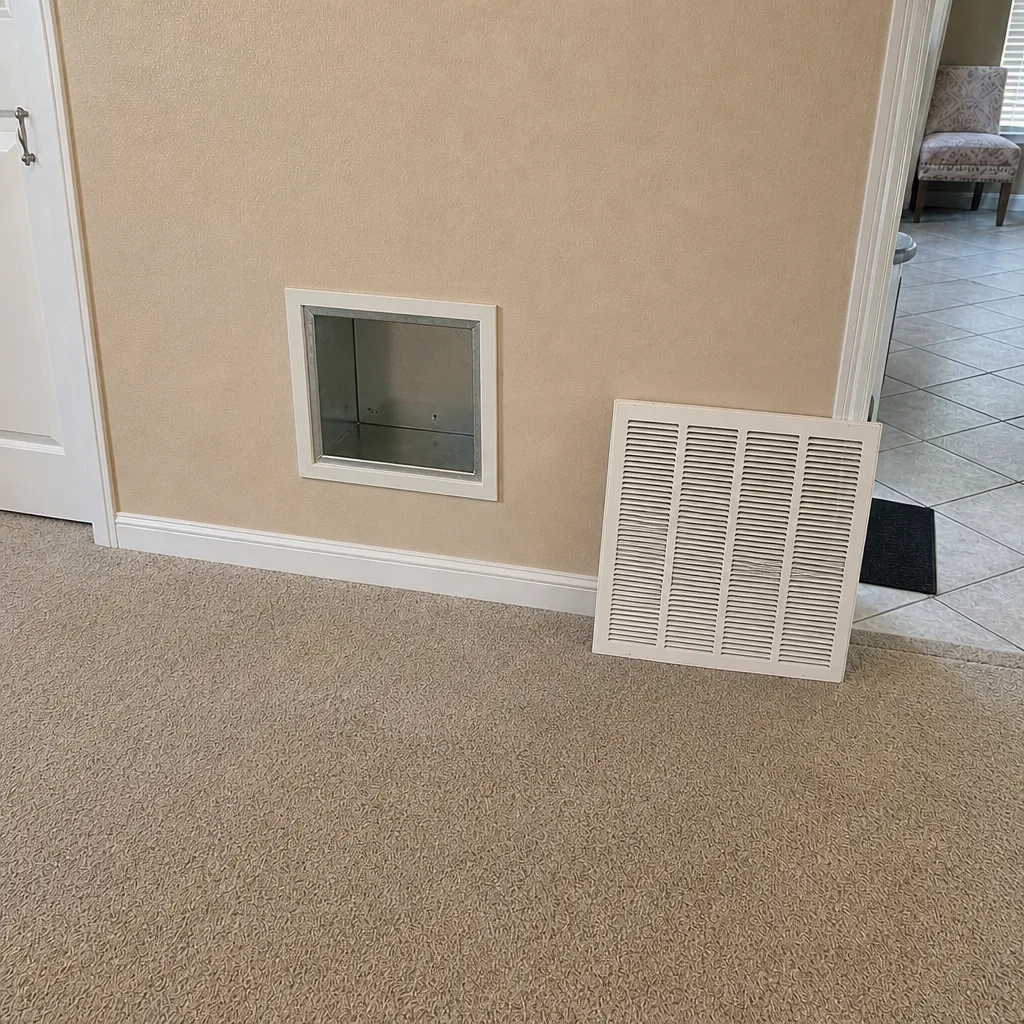 After
When to Call a Professional
If you’ve never had a professional cleaning in your current home, or you don’t know when the previous owner last did, start with an assessment. If your household has a pet, a respiratory-sensitive occupant, or a renovation in the past 18 months, you’re likely overdue. If you’ve noticed dust at registers, odor at startup, or visible mold anywhere in the system, call immediately. If your HVAC was recently installed and you want to establish a baseline, that’s also a good reason.
Air Duct Cleaning Northwood offers free estimates in Northwood. Call (866) 947-9073. Our technicians have up to 14 years of experience and use Rotobrush and Nikro professional equipment with Abatement Technologies containment, so the work is verifiable, not just claimed. We clean the system, not just the surface. Call (866) 947-9073. We answer 24/7. Fast dispatch from 7am to 7pm, Sunday through Friday.
Frequently Asked Questions
Most Northwood homes need cleaning every two years, not the widely cited three-to-five-year interval. The condition-based schedule tightens to annual for homes with two or more shedding pets, recent renovation, smokers, or respiratory-sensitive occupants, and can extend to 3-to-5 years for homes with no pets, no renovation, and well-sealed ductwork. Call (866) 947-9073 for a free assessment that matches your household.
It’s necessary for some households and not for others. Homes with heavy shedding pets, recent renovation dust, or family members with allergies benefit from an annual schedule because the accumulation outpaces the longer interval. Households without those conditions can safely run a 2-to-5-year cycle. The right answer depends on your specific conditions, which is why a professional assessment is worth doing before you commit to an interval.
Yes. Northwood’s dry season concentrates airborne particulate through summer and fall, and the mild winter means cooling systems run more months than in colder climates, keeping the coil wet and the return side capturing material longer. Both shift accumulation faster than a national average. Scheduling in late spring or early summer, before the dry season loads the system, is the practical approach.
Wait two to four weeks after the renovation concludes, once construction dust has settled, then have the ducts cleaned as a reset. Running the system during active construction loads the returns and coil heavily, so plan the cleaning with the HVAC coil in scope, not just the branch runs. After the reset, resume your normal interval from that point.
Change filters on a schedule matched to your home’s loading rate (pleated MERV 8 to MERV 11 is the right range for most homes), inspect registers monthly for visible buildup, check the coil surface once a year with power off, and log every service, filter change, and renovation date. Don’t try to clean ducts yourself with a shop vac or blower – those disturb settled material without containing it.
Professional-grade rotary brush and vacuum systems, not consumer shop vacs or portable blowers. Rotobrush and Nikro systems are the industry standard for this work, and Abatement Technologies negative-air containment prevents dislodged material from recirculating into the home during cleaning. Ask any provider what equipment they use and whether containment is part of the process before booking. Call (866) 947-9073 for a free estimate.
The Bottom Line
The 3-to-5-year interval isn’t wrong. It’s just narrower than most people assume. Homes with pets, renovations, smokers, or respiratory-sensitive family members need tighter intervals – annual for the heaviest conditions, two years for most Northwood households. Climate matters: dry-season particulate and prolonged cooling demand push accumulation faster here than in other regions. Post-renovation cleaning is a reset, not a routine interval. The best thing you can do between cleanings is filter discipline, register inspection, and a simple maintenance log that makes the next service easier and faster. If you’re not sure where your home falls on the schedule, that’s exactly what a free assessment tells you.
Whether you’re setting up a maintenance log for the first time or overdue for a clean, our team can help. In addition to dryer vent cleaning and the services covered in this guide, Air Duct Cleaning Northwood offers free estimates across Northwood. Call (866) 947-9073. We answer 24/7. Fast dispatch from 7am to 7pm, Sunday through Friday. Learn more at Air Duct Cleaning Northwood.
Written by the team at Air Duct Cleaning Northwood.