
Last updated November 24, 2026
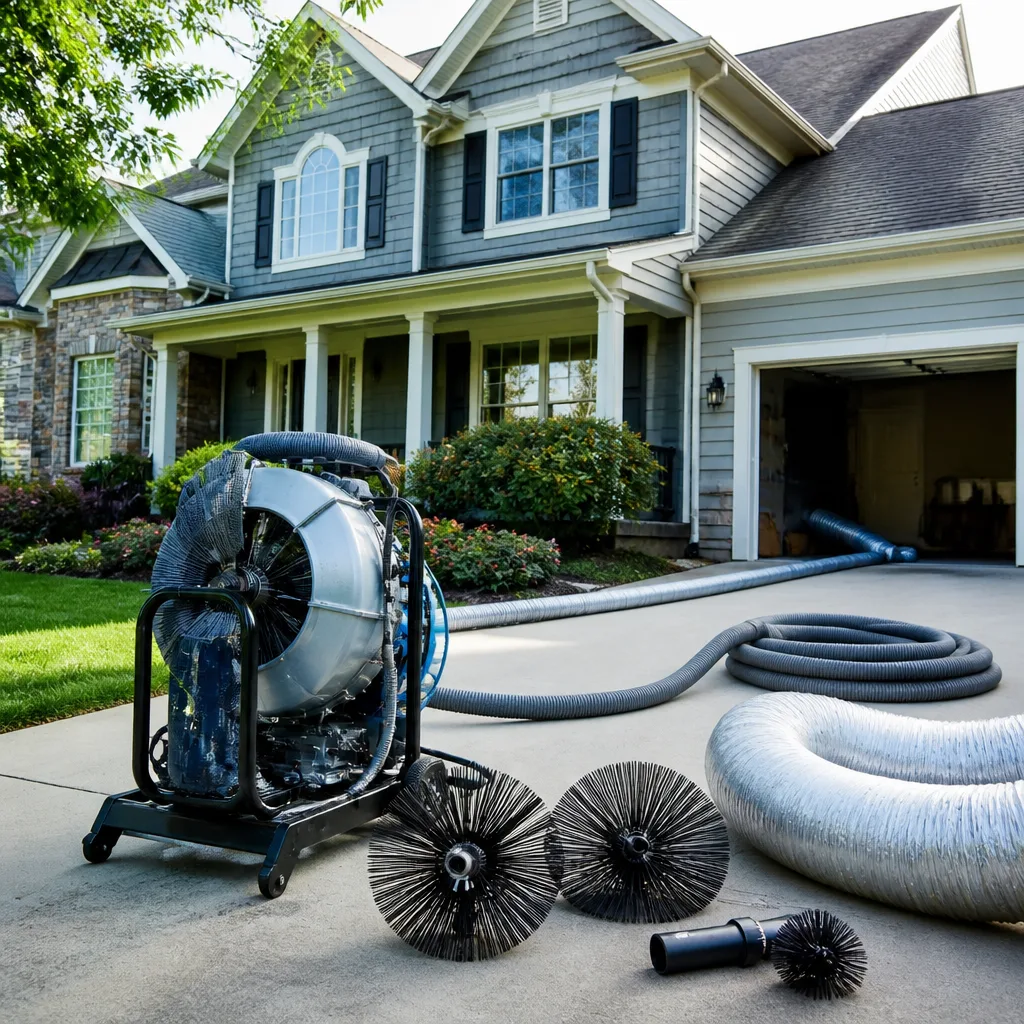 Whole-home duct cleaning
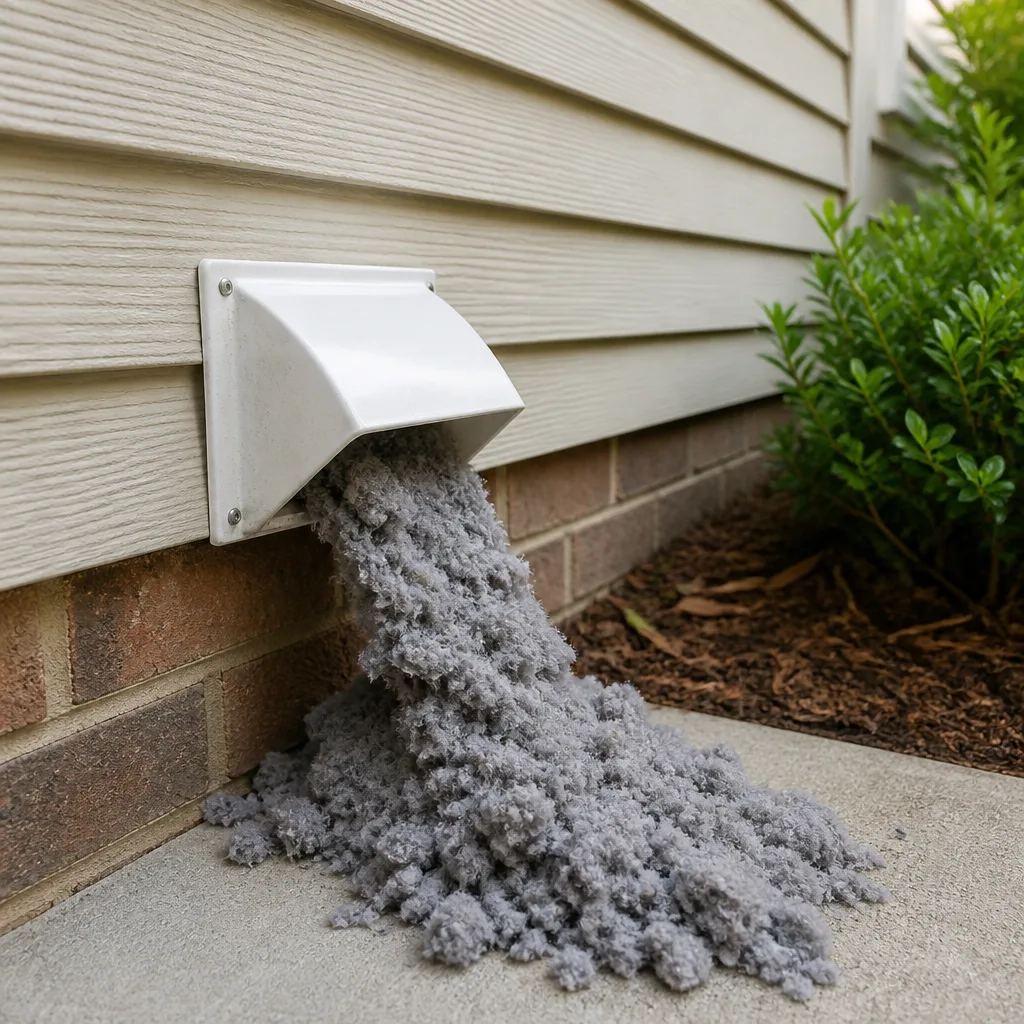 Dryer vent cleaning
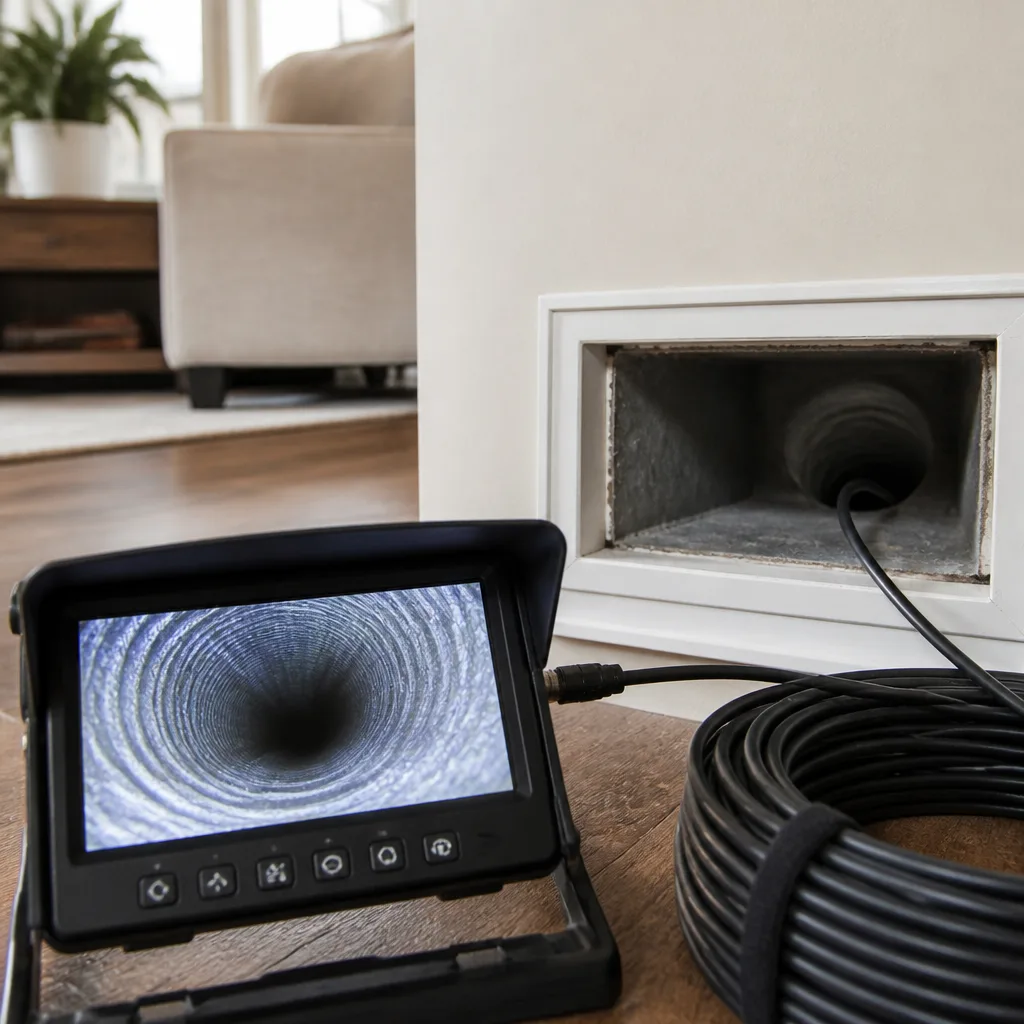 Camera inspection
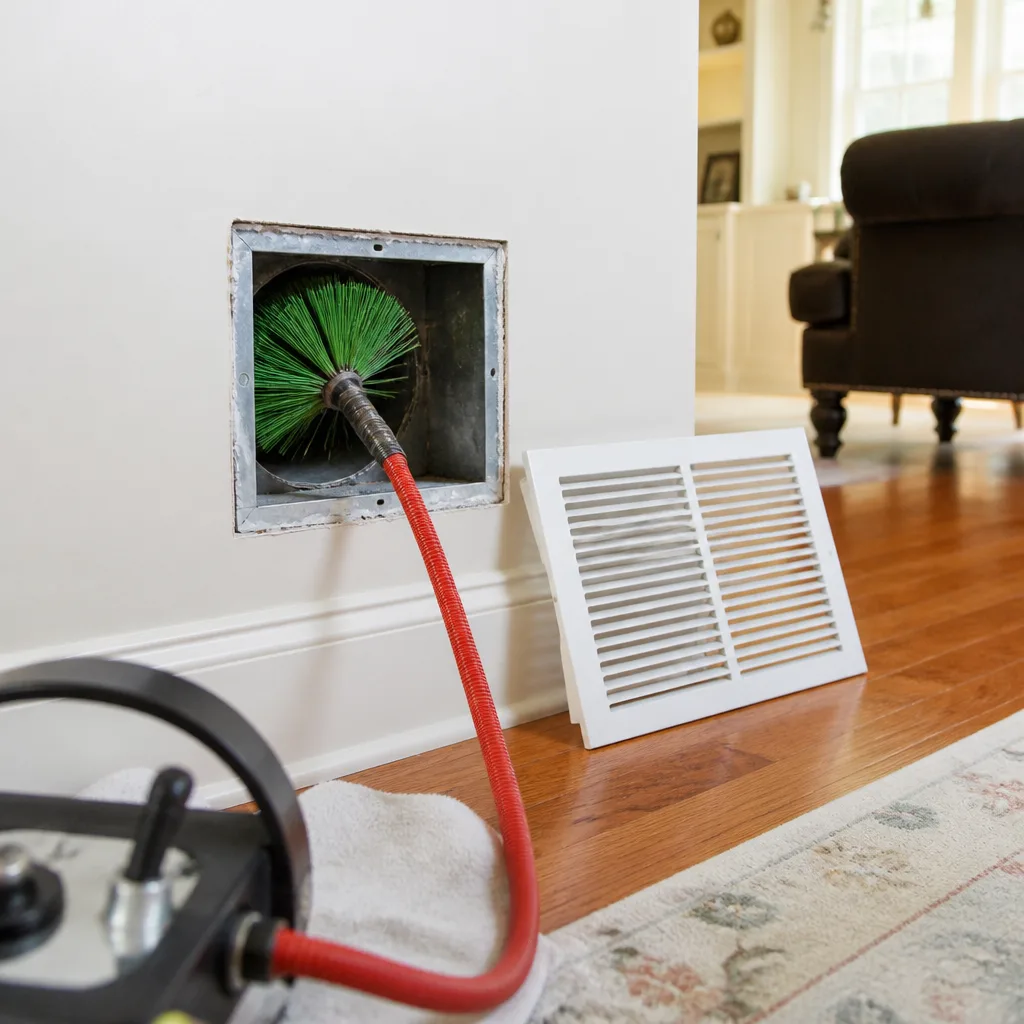 Sanitizing & deodorizing
Whole-system duct and dryer vent check with before-and-after photos - you see exactly what came out of your vents
That "$99 whole-house special" is a bait ad - the real number appears once they are in your hallway, or the "clean" is a shop-vac at the register. We photograph the inside of your ducts before and after instead.
Air Duct Cleaning Emergency Preparedness Guide for Northwood Homes
Here’s the part most homeowners get backwards about smoke: the danger to your ductwork isn’t measured in the hours you watch the sky turn orange. It’s measured in the two days your system keeps running while the air outside is thick. A running HVAC system pulls air through the return, past the filter, and into the ducts continuously. During a heavy smoke event, that steady draw can load your ductwork with more fine particulate in 48 hours than a normal couple of years of ordinary dust and pollen ever would. This guide walks Northwood homeowners through preparing before fire season, deciding what to do with the HVAC during an active event, and assessing the damage afterward. You’ll come away with a checklist, a decision tree, and a clear sense of when cleaning is genuinely warranted.
Quick Answer
Wildfire smoke can contaminate ductwork fast because a running HVAC system keeps pulling smoky outdoor air inside. The real protection comes from three things done in order: prepare the system and know your shutoff before fire season, shut the air handler down or recirculate carefully during an event, and assess and clean after the smoke clears. Cleaning alone doesn’t neutralize smoke odor, so post-event remediation often pairs thorough duct cleaning with sanitizing.
Styles & brands we work with
- Whole-home duct cleaning
- Dryer vent cleaning
- Camera inspection
- Sanitizing & deodorizing
Table of Contents
- Why Northwood Ducts Are Uniquely Exposed to Wildfire Smoke
- Pre-Fire-Season Preparation Checklist
- What to Do With Your HVAC During an Active Smoke Event
- Post-Event Assessment: Before You Restart the System
- What Wildfire Smoke Remediation in Ducts Actually Involves
- Documenting for Insurance: What Records to Keep
- When You Can Handle It Yourself and When You Can’t
Why Northwood Ducts Are Uniquely Exposed to Wildfire Smoke
Northwood sits close enough to surrounding wildland that smoke events aren’t a distant news item. When a fire burns in the hills or valleys nearby, the smoke doesn’t stay politely at the ridgeline. It settles into the low ground where homes sit, and it lingers. The same warm, dry inland climate that defines much of this region keeps the air still on many late-summer days, so particulate hangs in the neighborhood rather than blowing clean through. That combination matters for ductwork.
Most Northwood houses lean heavily on their HVAC system for both cooling and comfort through the hot months. A house that runs its system for hours a day during fire season is a house that actively moves outdoor air through its mechanical paths, and that includes whatever fine ash and combustion particulate is floating in the neighborhood. The ducts become the collection point. Particles settle on the interior walls of the supply and return runs, on the plenum, on the blower wheel, and on the evaporator coil face.
There’s a second factor specific to homes here. Many were built or updated with central systems tuned for strong airflow, and generous airflow is exactly what carries fine particulate deep into the duct runs rather than leaving it near the register. Smoke particulate is far finer than ordinary household dust. The particles that give smoke its haze are small enough that many pass right through a standard filter and land in places a filter was never designed to reach.
It helps to think of your duct system as a lung. Under normal conditions it handles dust, pollen, and pet dander without much trouble. During a smoke event, it’s asked to handle a load it was never sized for, and the residue it collects is different in character: lighter, finer, and more odor-active. That’s why a Northwood home can look spotless after an evacuation and still smell like a campfire the first time the heat comes on. The smell is a sign of where the smoke went.
In our experience, the homes that come through a smoke event best are the ones that treated preparation as a seasonal task, not a scramble. Fire season here has a rhythm. Preparing for it in advance is far easier and less expensive than recovering after it.
Pre-Fire-Season Preparation Checklist
The single most useful thing a Northwood homeowner can do is get the system into good condition before smoke is in the air. A compromised system full of gaps or a clogged filter doesn’t just underperform during a smoke event. It actively distributes contaminants through the house. Here’s the checklist we’d hand any homeowner before fire season.
- Find and label your HVAC shutoff. Locate the breaker or service switch that controls the air handler and mark it clearly. During a smoke event, the fastest way to protect your ducts is to stop the fan, and you don’t want to be searching the garage panel in the dark on a smoky evening. Show every adult in the household where it is.
- Change the filter now, and stock spares. A clean filter has the best chance of catching particulate, and a loaded one creates pressure problems. Buy one or two extras and keep them stored where you can find them under stress.
- Consider an upgrade before the season, not during it. If your filter slot can accept a higher-efficiency filter, upgrading early gives the system time to run correctly on the richer media. Aprilaire and Honeywell whole-home filtration products are worth understanding if you’re considering a step beyond a standard filter. Don’t guess at fit; check the slot depth and airflow needs.
- Get the ductwork inspected before fire season. This is the step most homeowners skip. Loose joints, disconnected runs, and torn flex duct are the entry points through which smoke particulate rides into closets and crawl spaces. Repairing them ahead of time is the difference between a sealed system and a leaking one. If you want a baseline, a professional air duct cleaning assessment will photograph what’s inside before the season starts.
- Check the return path. Return grilles near the floor draw whatever settles in the room. Make sure they’re unobstructed and that the filter at the return is seated properly.
One more note for Northwood homes: if you’ve recently installed a new HVAC system or finished a renovation, get the ducts cleaned before fire season rather than after. Construction debris left in the system becomes a smoke trap. It gives fine particulate something to adhere to.
What to Do With Your HVAC During an Active Smoke Event
This is the decision most homeowners handle wrong, and it’s understandable. The instinct is to keep the system running because the house is warm or the smoke smell is inside. But during an active smoke event, the HVAC is either part of the solution or part of the problem, and the difference depends on how you run it. Here’s the decision framework we’d give a Northwood homeowner.
Shut the system off when outdoor smoke is heavy
When smoke outside is thick and your system pulls in outdoor air through a fresh-air intake or through obvious leaks, the most protective move is to shut the air handler down. Stopping the fan stops the continuous draw of outdoor air through the system. Close windows and doors, seal the biggest gaps you can reasonably reach, and let the smoke outside stay outside. This is the moment your labeled shutoff earns its place.
Use recirculation mode deliberately, and know its limits
If your thermostat or system has a “fan only” or recirculation mode that closes the fresh-air intake and circulates indoor air only, it can help keep temperatures reasonable while the smoke is bad. But recirculation doesn’t clean the air. It just keeps air moving. If the system has already drawn smoke in, recirculating loads the ducts further and pushes existing contaminants around.
When recirculation makes contamination worse
Recirculation is a problem when your filter is already loaded, when there are leaks in the return side, or when the duct system has visible gaps. Airflow finds the path of least resistance, and if that path is a torn joint in the attic or a loose boot at the register, recirculation pulls smoky air in through the leak. If you don’t know the condition of your ductwork, recirculation is a gamble.
What not to do during an event
- Don’t run the system with a fresh-air intake open to a smoky outdoors.
- Don’t run it with a filter you know is clogged.
- Don’t open windows to “clear the smell.” That adds to the load.
- Don’t run your dryer vent or clothes dryer if the vent terminates into smoky outdoor air; it pulls smoke back in through the vent.
If the smoke event is prolonged and your system is struggling, that’s a fair time to call and talk it through. The system’s condition going into the event determines how it comes out.
Post-Event Assessment: Before You Restart the System
When the air clears, don’t just flip the system back on and hope. Smoke contaminants are easy to reintroduce, and a system that has been off for days deserves a look before it runs again. The assessment below is what we’d walk through in a Northwood home after a smoke event, and it’s the same process any careful technician would follow.
- Replace the filter. Even a filter that looks only lightly soiled may have caught a heavy load of fine smoke particulate. Change it before restarting.
- Look at the return and supply registers. If you see visible soot, ash, or a dark film around the register openings or on the grilles, that tells you particulate has been moving through those paths. Wipe what you can reach and note it.
- Smell test the system. Run the fan briefly and listen and smell. A persistent campfire odor at the registers means smoke has settled into the ducts and, likely, the coil and blower area.
- Inspect what you can see. Remove a return grille and look inside with a flashlight. A visible coating of fine grey or black particulate is the main visual indicator.
- Consider temporary filtration measures. A portable air purifier with a HEPA filter in the main living area helps clean room air while you sort out the system. For whole-home filtration, a professional can advise on step-ups compatible with your system, such as an Aprilaire or Honeywell media filter that your equipment can handle. Don’t block the return with improvised media.
- Call for a professional assessment if the smell persists or you see visible residue. That’s the honest line. If the system has a clear odor or visible particulate after you’ve replaced filters and run it briefly, the load is likely beyond a filter change.
Here’s the key judgment: the filter protects the system, not the reverse. Filters catch a fraction of fine smoke particulate on a good day, and a loaded filter catches less. If your ducts have been pulling smoky air, the leftover particulate lives in the ducts until it’s removed.
What Wildfire Smoke Remediation in Ducts Actually Involves
Wildfire smoke remediation is not the same as a routine duct cleaning. The particulate behaves differently, the odor problem is a separate challenge, and the process has to account for both. Here’s what a proper remediation of a Northwood home’s ductwork looks like.
Particle size is the whole story
Smoke from a wildfire carries a wide range of particle sizes, and the finest fraction is the one that matters most for ducts. These particles stay airborne longer, settle deeper into surfaces, and can lodge in the tiny gaps at duct joints. Standard cleaning equipment that relies on suction alone moves the larger debris but can stir up the fine fraction, which is why the right approach uses rotary agitation combined with strong, continuous negative pressure to capture the dislodged material rather than releasing it back into the room.
This is where equipment names actually matter. The Rotobrush and Nikro systems we use are the same class of rotary brush and vacuum equipment used in restoration and commercial HVAC work. Alongside that, we deploy Abatement Technologies negative-air and containment tools, which keep the air in the work area under negative pressure. In plain terms: the contaminants that get loosened are captured and removed, not recirculated through your Northwood home while the technician is working.
Cleaning alone doesn’t kill the smell
Removing the particulate removes the physical load, but the odor compounds that cling to duct surfaces can persist after a thorough cleaning. That’s where sanitizing comes in. A post-cleaning sanitizing treatment, such as a Guardsman-grade application, addresses the residual odor and surface microbial load. The sequence matters: clean first, sanitize second. Sanitizing a duct system that still holds particulate just coats the contamination.
What the service also catches
Our HVAC cleaning covers the coil, blower, and air handler cabinet, which hold as much smoke residue as the ducts themselves. If the inspection reveals compromised ductwork, we handle duct repair and sealing on the same visit rather than referring it out. That matters after a smoke event: cleaning a system that leaks is like wiping a countertop in a sandstorm.
Documenting for Insurance: What Records to Keep
If your home has been affected by wildfire smoke, the documentation you keep determines how well you can support a claim. Whether your policy covers smoke damage in your situation is a question for your insurer, not us, but there’s plenty a homeowner can do to be ready. These records also help you make an informed decision if you’re thinking about a claim.
Records to keep from the event
- Photos and video before and during the event if it’s safe to take them. Document visible smoke, ash on surfaces, and any register discoloration. Note the date and time for each.
- Notes on system run time. If you shut the system down during the event, note the date and time. If you ran it briefly, note that too. This tells the story of exposure.
- Filter change records. Keep the used filter and note the date it was replaced. The condition of the filter is evidence of what the system was handling.
- Photos of visible residue at registers, grilles, and the air handler cabinet. These are the most useful visual records for a claim.
What a professional assessment report provides
A professional assessment gives you something a homeowner’s photos can’t: an independent, documented record of the system’s condition. A typical report includes before-and-after photos of the interior of the duct runs, a written description of the contamination found, notes on any damaged or disconnected ductwork discovered during inspection, and the recommended remediation scope. That record is the backbone of a smoke-damage claim. If remediation is carried out, the same documentation shows the work was performed and what was removed.
We can work with your insurer and provide the assessment record. We don’t make coverage decisions, and we won’t tell you a claim will or won’t be honored. But we can put the photos and findings in front of you so you have them to submit.
When You Can Handle It Yourself and When You Can’t
Not every smoke event requires professional duct cleaning. Some Northwood homeowners can handle minor residue on their own. Here’s an honest dividing line, and it’s about the condition of the system more than the size of the event.
What you can reasonably do yourself
- Replace the filter and monitor the new one.
- Wipe down visible residue on register grilles and the filter slot.
- Run a portable HEPA purifier in the main living space.
- Keep the system off during heavy smoke if your shutoff is accessible.
When you should call a professional
- A persistent smoke odor at the registers after filter replacement and a short run.
- Visible dark particulate inside the return runs.
- Any known damage to ductwork, or flexible duct that looks torn or disconnected.
- A home with an allergy-sensitive occupant, a newborn, or someone with respiratory concerns.
- Any event during which the system ran for a prolonged period while smoke was heavy.
The self-assessment is fair and quick. If the smell is gone and the visible paths look clean, you’re likely fine. If you’re on the fence, a professional look gives you a real answer. Also, remember that the more precise the decision, the better the outcome, so it’s worth a call rather than a guess.
Common Mistakes to Avoid
- Running the system during the worst of an event. The instinct to stay comfortable is understandable, but a running system pulls smoky outdoor air into the ducts through every available path. Sometimes turning it off is the most protective thing a homeowner can do. Label the shutoff before you need it.
- Washing the walls and skipping the ducts. Surface cleaning helps, but it doesn’t reach the place where particulate collects. The ducts, blower, and coil hold the residue. A spotless room with a smoky duct system still smells like smoke when the heat runs.
- Skipping sanitizing after cleaning. Cleaning removes particulate; sanitizing addresses the odor compounds and residual surface load. Doing only the first leaves the job half done, and the smell returns. Sequence matters: clean, then sanitize.
- Believing a higher-MERV filter solves everything. Better filters help, but they don’t catch the finest fraction, and they don’t clean duct surfaces. Over-restricting airflow with a filter the system wasn’t designed for can also strain the blower. In Northwood homes, filter upgrades are worth doing, but they’re not a substitute for a clean system.
- Ignoring leaks and torn flex duct. A leaking duct system takes in smoky air during an event no matter how clean the ducts were before. Repairing and sealing compromised runs in advance is the single most effective preparation step. We repair what we find on the same visit rather than leaving gaps behind.
- Discarding evidence before a claim. If you’re pursuing an insurance claim, keep the used filter, your photos, and any professional assessment report. Tossing them early makes a claim far harder to support.
- Popping the AC back on the moment the sky clears. Restart the system after you’ve replaced the filter and done a smell and visual check. Running a system still holding smoke residue just moves it back into the living space.
See the difference
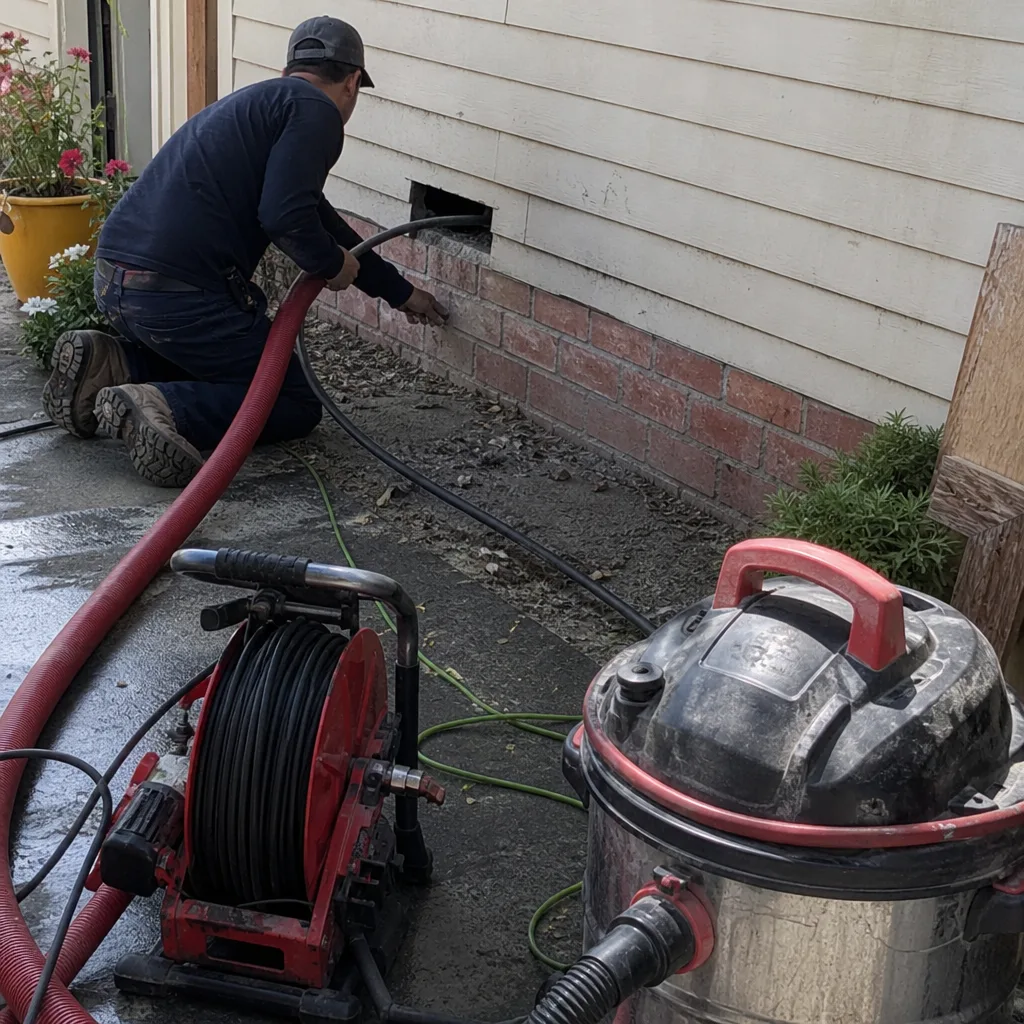 Before
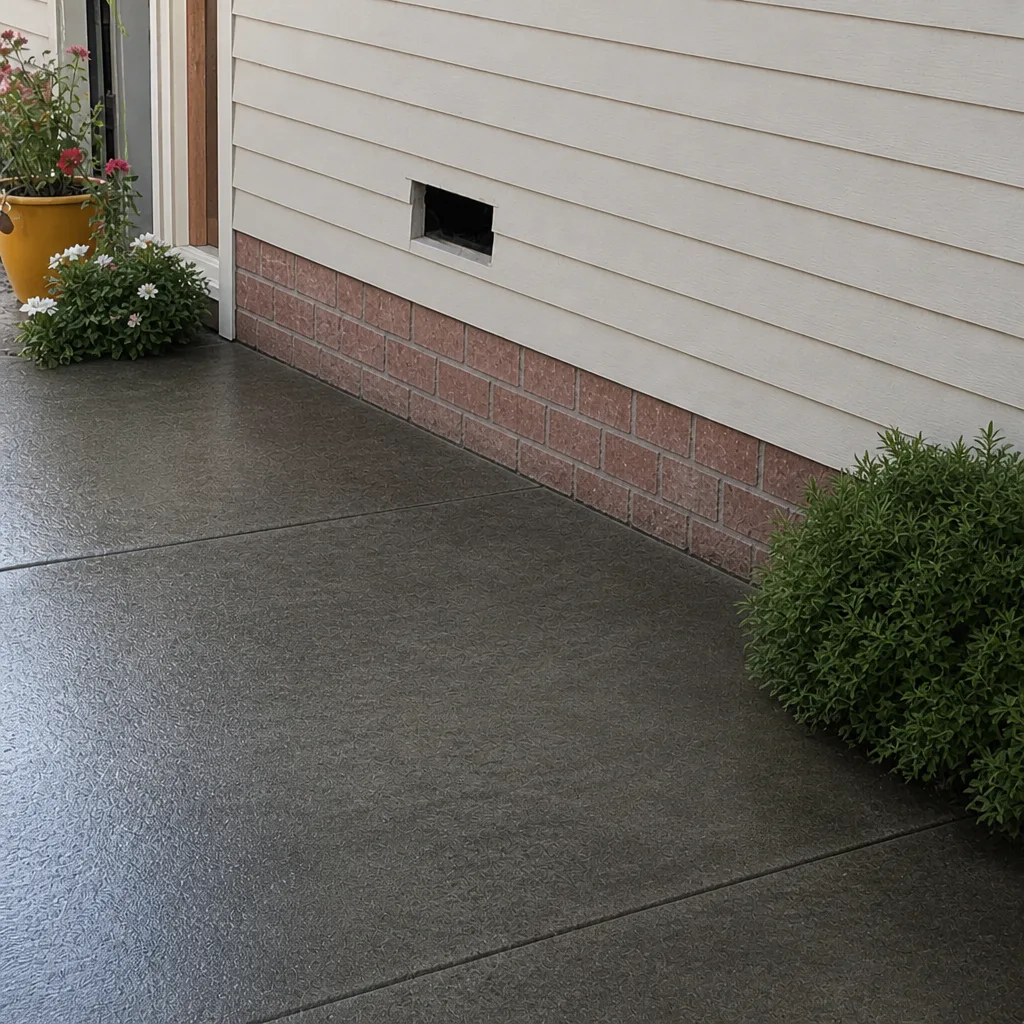 After
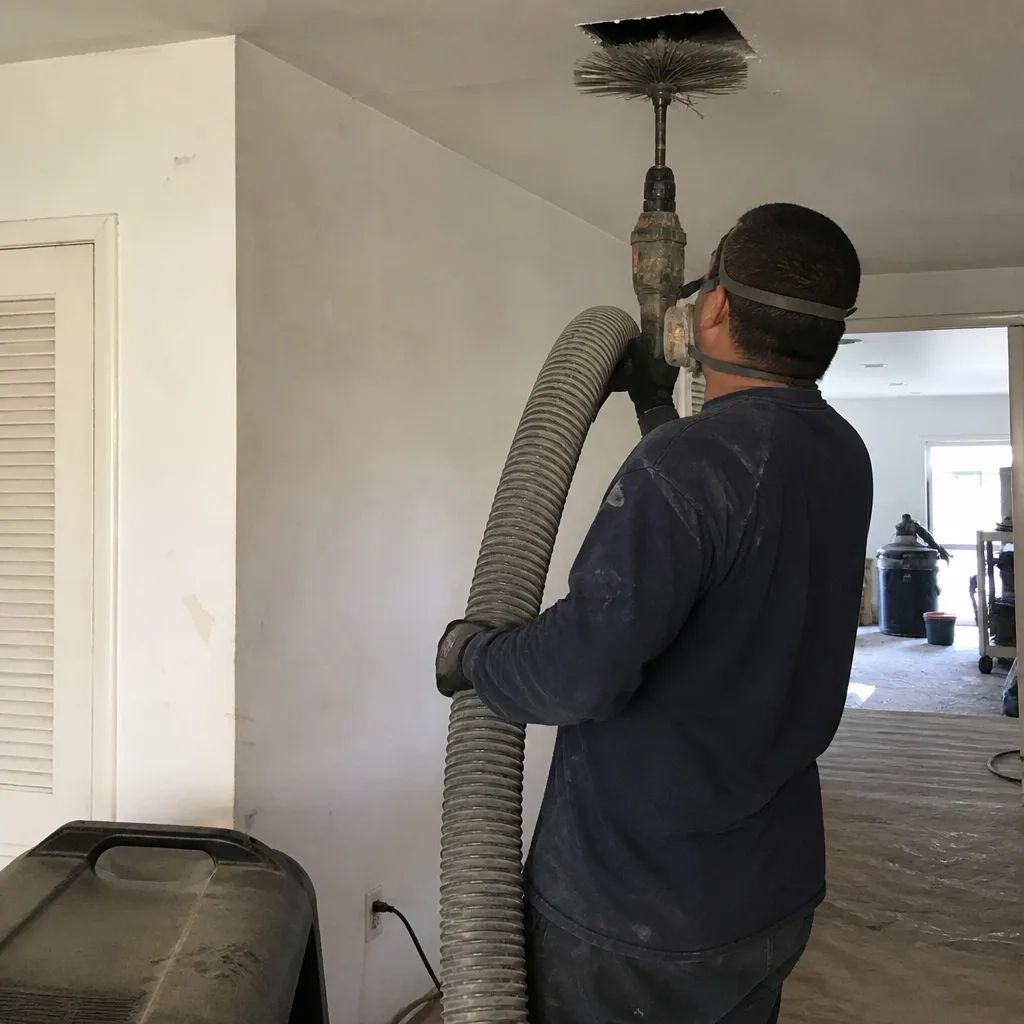 Before
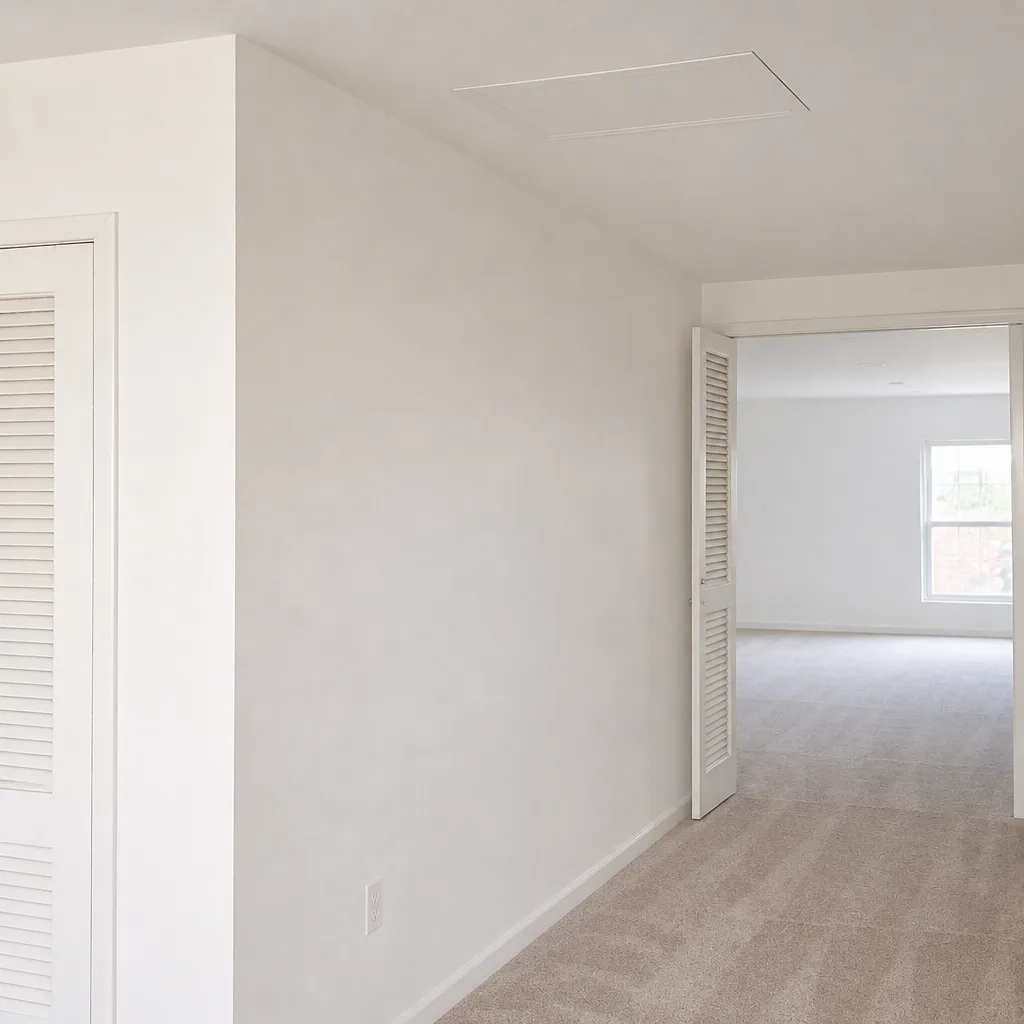 After
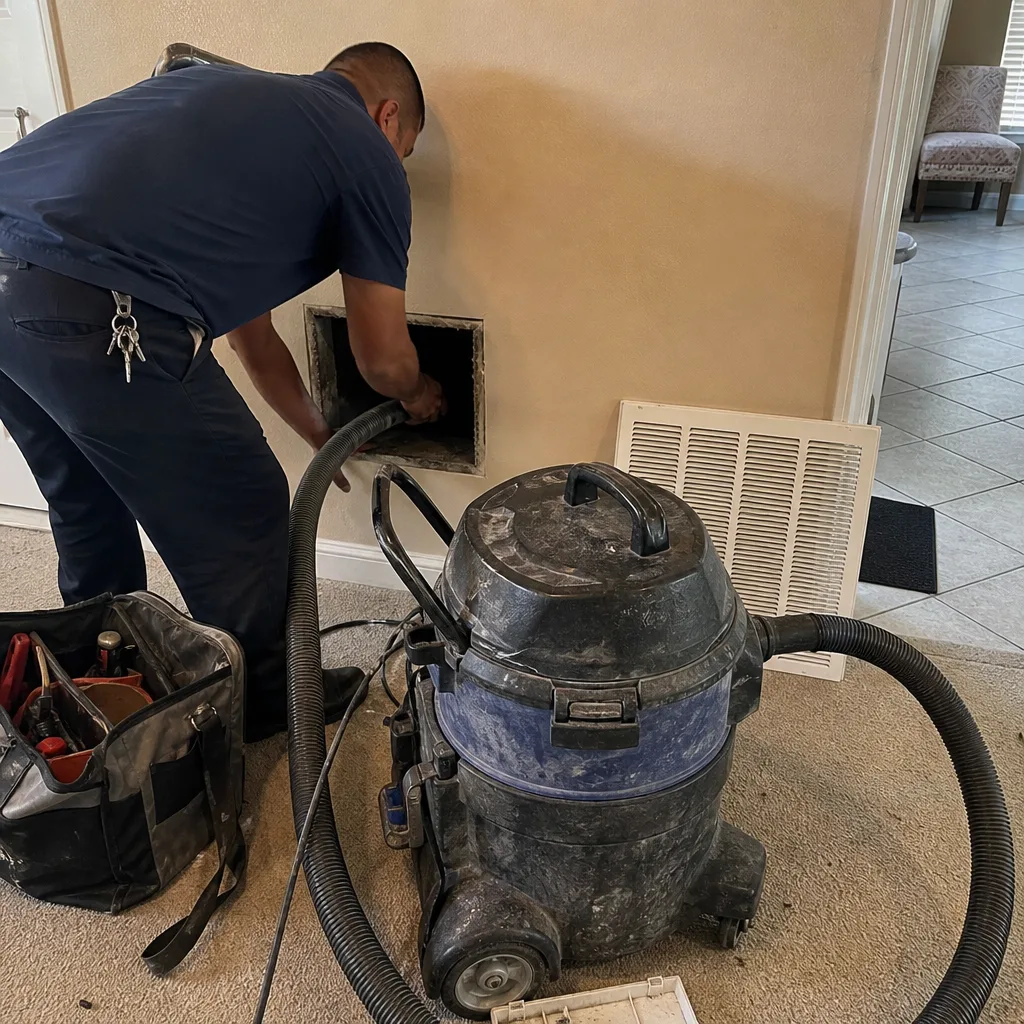 Before
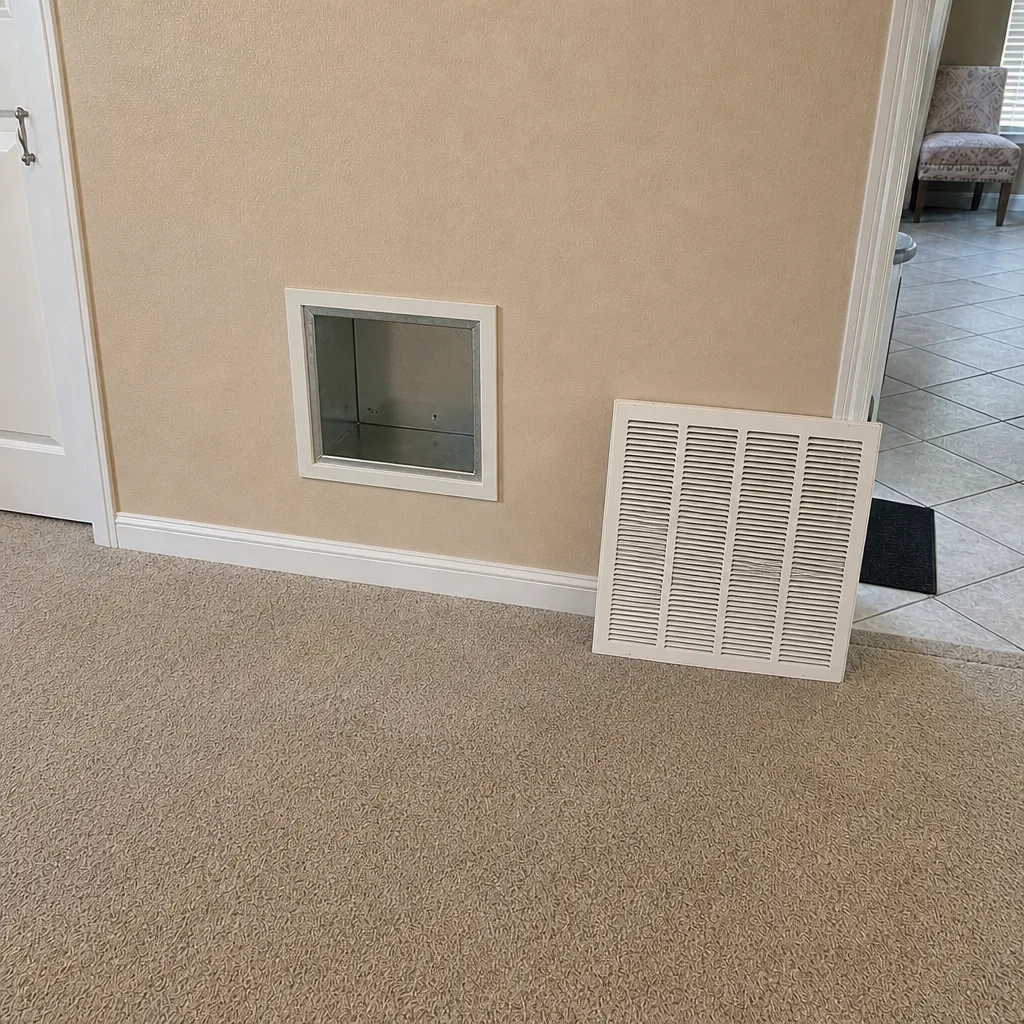 After
When to Call a Professional
Call a professional after a smoke event if the smell stays in the system, if you can see fine particulate in the return side, or if the system has any known damage to the ductwork. Call before fire season if you want to know the ducts are sealed and clean going in. Call if a household member has asthma or allergy concerns and the home has run through a prolonged smoke event. And call if you want a documented assessment for insurance purposes. Air Duct Cleaning Northwood offers free estimates in Northwood and can advise on the right scope for your system. We answer 24/7 at (866) 947-9073, with fast dispatch from 7am to 7pm, Sunday through Friday.
Frequently Asked Questions
A running HVAC system can pull more fine particulate into ductwork in about 48 hours of heavy smoke than accumulates under normal conditions in a couple of years. The system’s continuous draw is the reason. That speed is why preparation before fire season matters more than cleanup after.
Shut the air handler off when outdoor smoke is heavy, and use recirculation mode only if your system is sealed and your filter is fresh. Recirculation doesn’t clean the air; it just keeps it moving, and if the duct system leaks it pulls smoke in through the gaps. When in doubt, off is safer for the ducts. Call (866) 947-9073 if you’re unsure about your system’s condition.
Cleaning removes the particulate that holds the bulk of the smell, but it may not remove the odor entirely. That’s why we recommend sanitizing after cleaning, using a Guardsman-grade treatment as part of the air quality service. Clean first, sanitize second. The combination is what neutralizes the residual odor.
If the system still smells smoky after a filter change and a short run, or if you can see fine particulate in the return runs, call a professional for an assessment. Visible residue at the registers is a strong indicator. A free estimate tells you what the system actually needs. Air Duct Cleaning Northwood offers free estimates in Northwood at (866) 947-9073.
Coverage depends on your specific policy, so that’s a question for your insurer. What we can do is provide a documented assessment with before-and-after photos and a written description of the contamination, which you can submit as part of a claim. We can work with your insurer without making coverage promises. Keep your filter, photos, and assessment report organized.
Smoke remediation accounts for the finer, lighter particulate and the stronger odor that comes with fire events. Standard cleaning can move debris, but smoke residue needs careful agitation combined with strong negative-pressure containment, followed by sanitizing. In a Northwood home after a smoke event, the full protocol usually includes a coil and blower cleaning and a duct repair and sealing inspection.
The Bottom Line
The core lesson for Northwood homeowners is that smoke readiness is a before thing, not an after thing. Locate and label your HVAC shutoff, keep a clean filter in the system, repair any duct leaks before fire season, and know the difference between an event that calls for shutting the system down and one that’s safe to leave running. After a smoke event, assess before you restart. If the smell lingers or you see residue, a professional assessment is the honest next step. From dryer vent cleaning to full-system cleaning, we handle the whole air quality chain. Call (866) 947-9073 for a free estimate. We answer 24/7, with fast dispatch from 7am to 7pm, Sunday through Friday.
Written by the team at Air Duct Cleaning Northwood.