
Last updated November 24, 2026
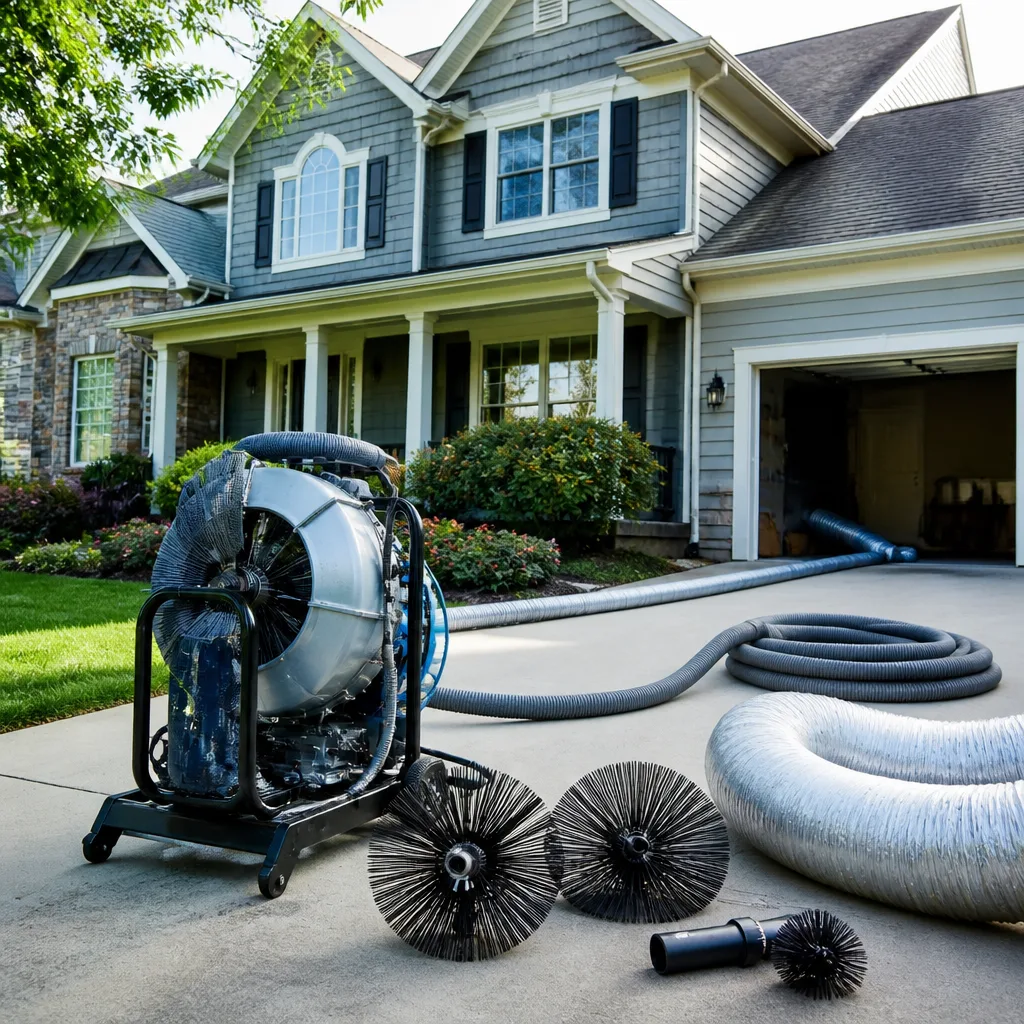 Whole-home duct cleaning
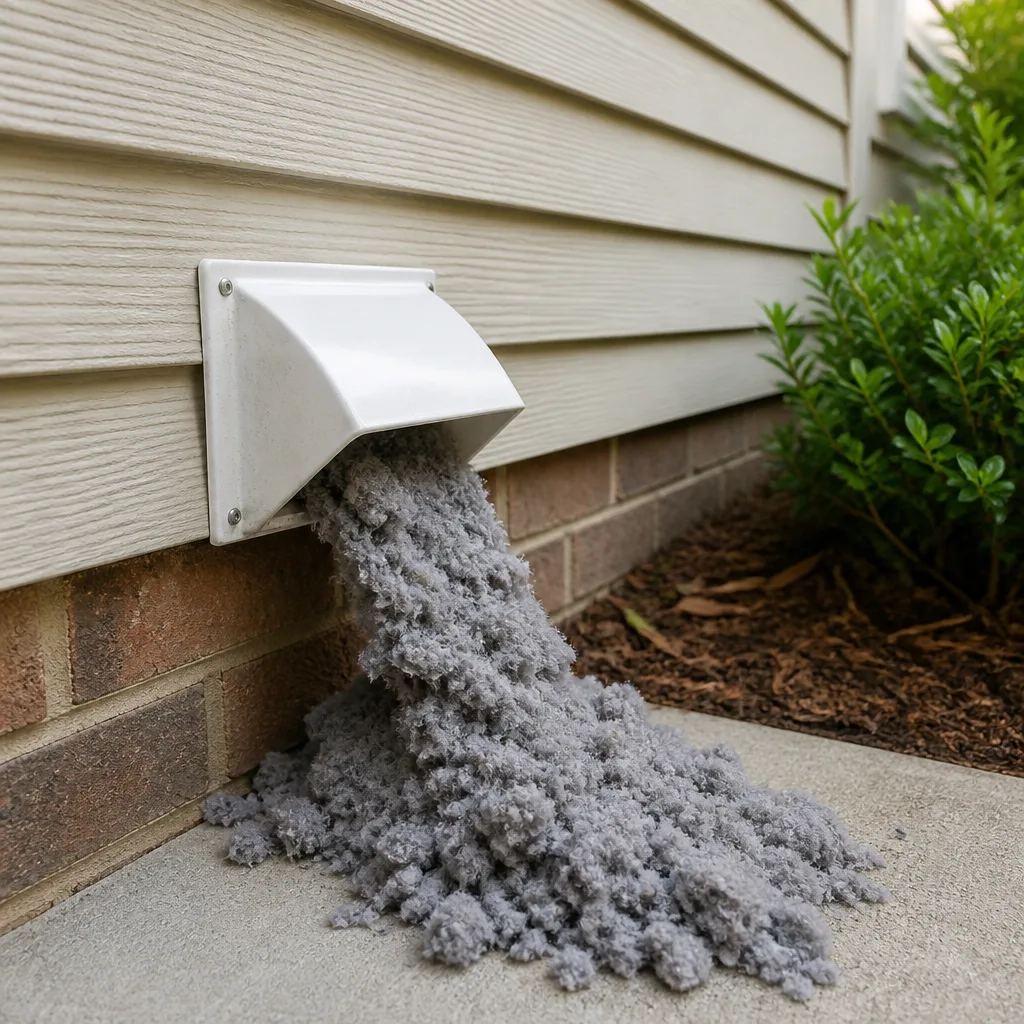 Dryer vent cleaning
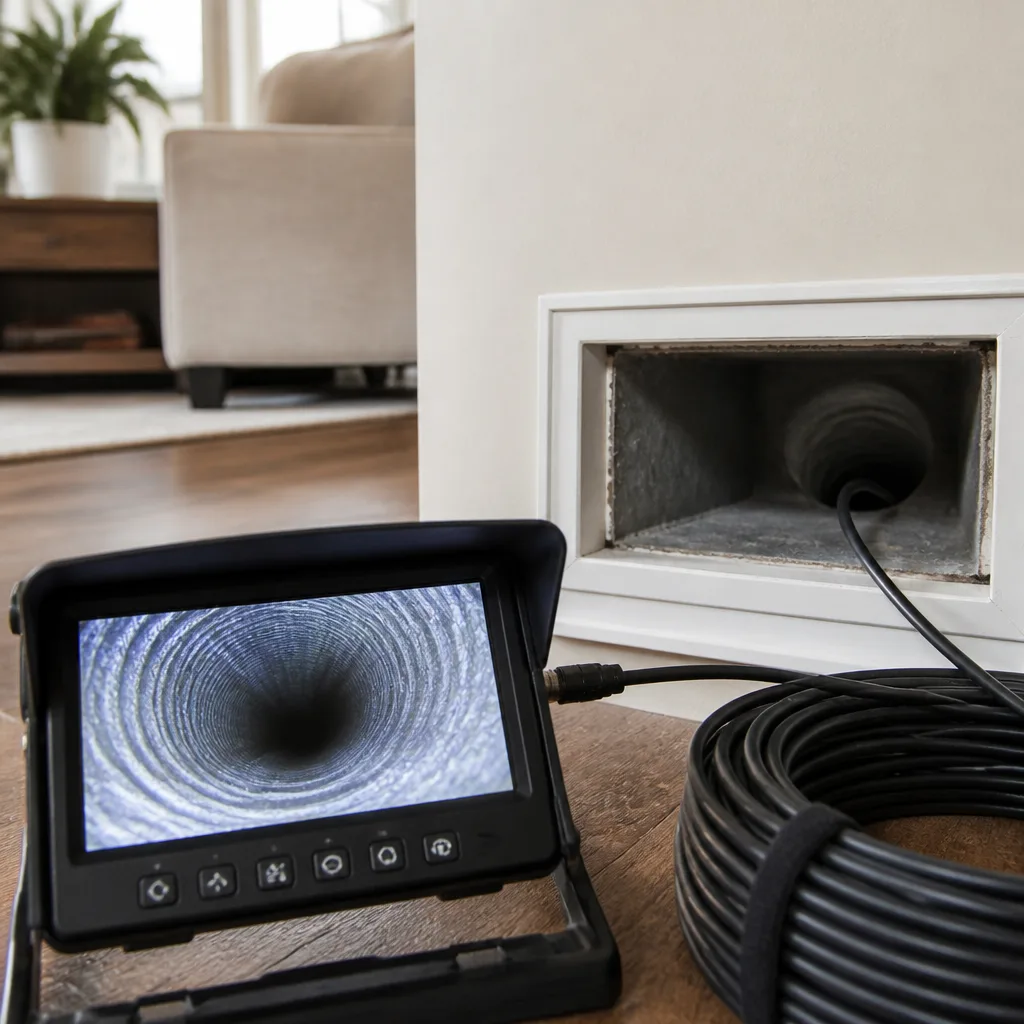 Camera inspection
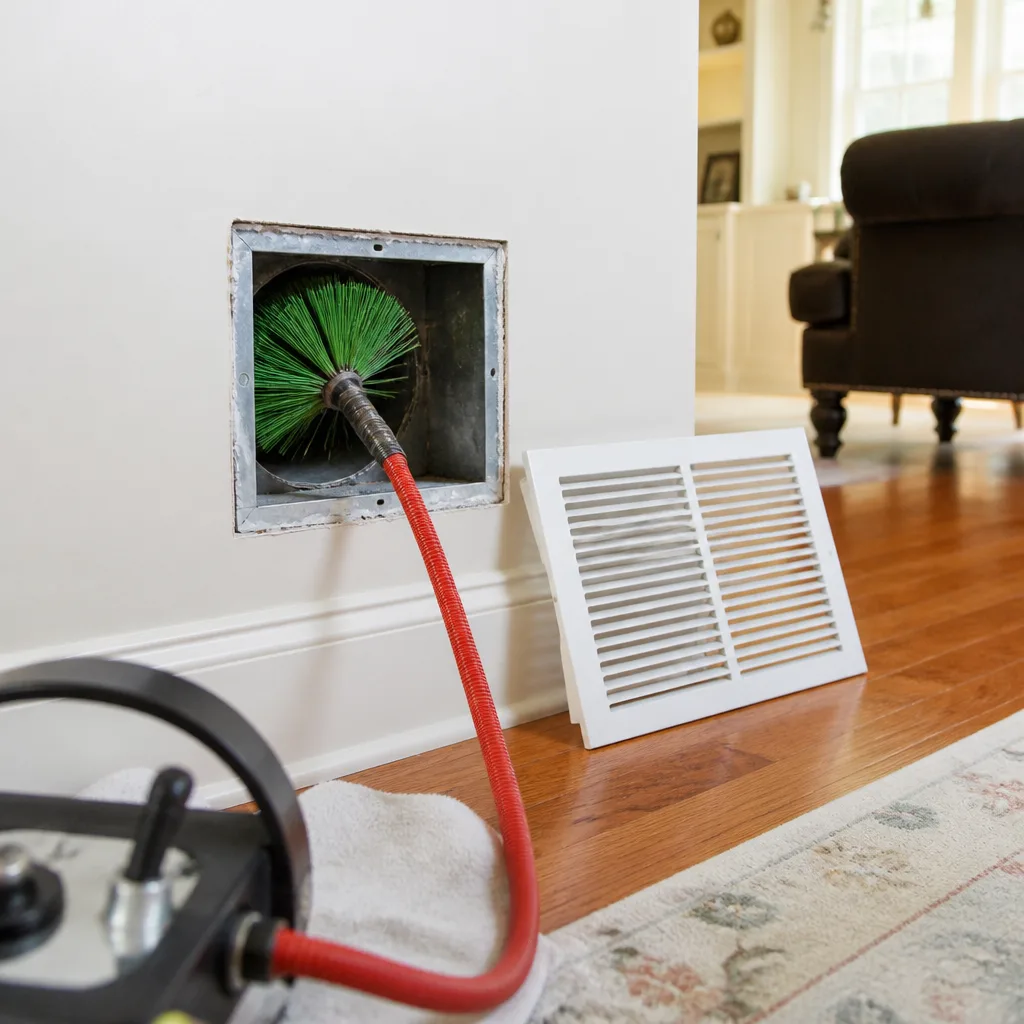 Sanitizing & deodorizing
Whole-system duct and dryer vent check with before-and-after photos - you see exactly what came out of your vents
That "$99 whole-house special" is a bait ad - the real number appears once they are in your hallway, or the "clean" is a shop-vac at the register. We photograph the inside of your ducts before and after instead.
Seasonal Air Duct Cleaning Care for Northwood: Year-Round Homeowner’s Guide
Most homeowners assume the worst season for their ductwork is winter, when the heater runs hardest. In Northwood, it isn’t. The period that does the most damage to duct system cleanliness is the late summer to early fall overlap: wildfire smoke drifting into the valley, air conditioning running at full load for weeks, and Santa Ana winds pushing fine particulate through every gap in the building envelope. By the time the first cool evening arrives, a lot of that material has already settled inside the system. This guide breaks Northwood’s year into four contamination windows, explains what’s actually happening inside your ducts during each one, and gives you the checks and habits that extend the time between professional cleanings. We cover smoke protocol, first-run-of-the-season startup checks, and the post-cleaning care steps most homeowners skip.
Quick Answer
In Northwood, air duct care follows four contamination windows rather than the four calendar seasons: a spring construction-dust window, a summer peak-cooling and wildfire-smoke window, a fall Santa Ana wind window, and a winter heating-startup window. The highest-risk period is the late summer to early fall overlap, when smoke infiltration, maximum HVAC runtime, and wind-driven dust hit the system at the same time. Professional cleaning at the end of that overlap, plus filter discipline and pre-season startup checks, keeps the system cleaner year-round.
Styles & brands we work with
- Whole-home duct cleaning
- Dryer vent cleaning
- Camera inspection
- Sanitizing & deodorizing
Table of Contents
- Northwood’s Four Contamination Windows
- Why Wildfire Smoke Behaves Differently Inside Ducts
- Santa Ana Winds and What They Push Indoors
- Pre-Season HVAC Startup Checks
- What to Do Immediately After a Heavy Smoke Event
- Construction Season Dust and Renovation Timing
- Post-Cleaning Seasonal Care That Extends the Interval
- A Month-by-Month Care Calendar for Northwood Homes
Northwood’s Four Contamination Windows
Northwood doesn’t hand your ductwork a neat calendar. It hands it a sequence of events. Understanding what each window deposits inside the system is the difference between cleaning on a schedule that matches your climate and cleaning on a generic “once a year” habit that may miss the worst window entirely.
Window 1: Spring construction season. Northwood sees steady renovation and new-build activity through the spring. Drywall dust, sawdust, and fiberglass particles are light enough to stay airborne for hours, and a running HVAC system pulls them straight into the return. If a neighbor is remodeling, or you are, expect elevated loading in the return-side ductwork.
Window 2: Peak cooling runtime. Through the hot months the air handler runs longer and more often than at any other point in the year. More runtime means more air moved through the ducts, which means more dust captured on interior surfaces and more opportunity for particulate to reach the supply registers.
Window 3: Wildfire smoke and Santa Ana winds. This is the overlap that matters most. Smoke from regional fires combines with dry, wind-driven particulate pushing against every seal in the house. Fine particles enter through return leaks, attic penetrations, and door and window gaps, then get pulled into the airstream.
Window 4: Winter heating startup. The first heating cycle after months of cooling-only operation blows air across interior duct surfaces that have been collecting material since spring. Whatever settled through the summer and fall gets distributed through the house on the first cold morning.
Mapping your own home to these windows is straightforward. Think back over the last twelve months and ask which of the four events you experienced most heavily. That window is where your cleaning interval should key off. Professional air duct cleaning timed to the end of the late summer and fall overlap removes the year’s heaviest accumulation before the heating season spreads it.
Why Wildfire Smoke Behaves Differently Inside Ducts
Wildfire smoke is not dust with a different color. It behaves differently inside a duct system for three reasons: particle size, adhesion, and odor persistence. Each one changes what a cleaning has to accomplish.
Size
The particles in wildfire smoke that cause the most trouble are the fine and ultrafine fractions. They are small enough to stay suspended in moving air for long periods, which means a standard return filter catches some but not all of them. The fraction that gets past the filter travels deeper into the system than ordinary household dust, reaching duct runs and internal insulation surfaces that a surface-only vacuum pass won’t touch.
Adhesion
Smoke particles carry a sticky, tarry component from burned vegetation and structural material. Once they land on a duct wall or a register face, they bond more aggressively than dust does. That adhesion is why smoke residue doesn’t simply blow out the next time the system runs, and why it accumulates in layers on the return side of the system where airflow is strongest.
Odor persistence
Smoke odor inside ductwork comes from the residue itself, not from the air passing through. That distinction matters. Running the system on fan-only to “clear the air” can make the smell worse by pushing air across contaminated surfaces. Odor that lingers weeks after the smoke clears is a sign residue has bonded inside the system rather than simply passed through.
What this means for cleaning
Removing smoke residue takes agitation, not just suction. A rotary brush system like Rotobrush or a contact vacuum head like the Nikro line physically lifts bonded material from duct walls before extraction. Containment matters just as much. Without negative-air control, agitating bonded smoke residue sends it into the living space instead of out of the system. That’s why the Abatement Technologies negative-air setup we use matters for smoke jobs specifically: dislodged contaminants are captured and removed rather than recirculated.
If the smoke smell persists in your Northwood home weeks after a fire event, the residue is in the system. That’s a cleaning job, not an air freshener job.
Santa Ana Winds and What They Push Indoors
Santa Ana winds change the pressure dynamics around a house. Dry, gusting offshore wind raises the pressure on one side of the building and lowers it on the other, and the HVAC system’s return can act as a low-pressure entry point for outside air. Fine particulate from dry brush, dust, and ash moves with that wind.
You can’t stop the wind. You can reduce how much of it ends up inside your ducts:
- Check return-side sealing. Gaps at the return plenum, the filter slot, and any attic-mounted components become infiltration points under wind pressure. These are the same gaps that let conditioned air escape year-round.
- Upgrade the filter during wind events. A filter rated for finer particulate catches more of the wind-driven load. Change it after the event, not before, since it will load up fast.
- Keep the system running with the house closed up. Recirculating air through a good filter is better than opening windows during a wind event, when you’d be pulling the outdoor particulate load straight inside.
- Watch the register faces. Streaking or visible dust on supply and return register faces after a wind event is a sign that material has reached the openings of the system.
Wind-driven infiltration is one reason duct repair and sealing belongs in the same visit as cleaning. Cleaning the system and leaving a return gap open means the next wind event starts the loading cycle over. We repair what we find rather than just report it, which closes that loop. If you find compromised ductwork during a wind-season inspection, our HVAC cleaning scope includes identifying those gaps while the system is open.
One more point on timing: Santa Ana events often come in clusters. If your home has been through two or three significant wind events in a season, that’s worth noting for your next professional assessment, even if the dust load in your furnace filter looks manageable.
Pre-Season HVAC Startup Checks
Before you run the heating system for the first time in a Northwood winter, you want to know that the air about to move across the duct surfaces is clean. Otherwise the first heating cycle distributes months of settled material through every room. These are the checks to run before that first cold morning.
- Replace the filter before the first heating run. Don’t wait to see how it looks. Filter loading is invisible from the outside. A fresh filter before startup gives you a clean baseline.
- Look at the return grilles. Remove a return grille and shine a light inside the opening. Visible dust build-up on the duct wall just inside the grille is a sign the interior surfaces are loaded.
- Sniff the supply air on the first heating cycle. A dusty or smoky smell on startup is normal for a few minutes as the heat exchanger warms. Odor that persists beyond the first cycle is a sign of accumulated material inside the system.
- Check register faces for streaking. Dark streaks around the register slots, sometimes called air shadowing, suggest dust is being deposited at the supply openings. It generally indicates loading deeper in the system.
- Listen for whistle or rattle. Sealing problems and loose joints often become more audible as air volume shifts between heating and cooling. Those gaps are also infiltration points.
- Note your last cleaning date. If you can’t remember, that’s a useful data point. Most homes need professional service based on contamination, not on a fixed calendar interval.
- Walk the accessible ductwork. In a garage or attic run, look for disconnected sections, torn insulation, or gaps at joints. Those are the places to flag for repair and sealing on the next service visit.
If you find several of these signs at the same time, the system is ready for a professional look. Air duct cleaning by a trained technician with professional-grade equipment will confirm what the inspection suggests and clean what needs cleaning in one trip.
What to Do Immediately After a Heavy Smoke Event
After a significant smoke event affects Northwood, you have a narrow window where good decisions make a real difference to your duct system’s condition. Here’s the sequence we recommend.
- Turn the system off while the smoke is still present. Running the air handler during active smoke pulls the outdoor load straight into the return. Wait until outdoor air quality has visibly improved before running the system again.
- Close the house and filter the air. Keep windows and doors shut. If you have a portable air cleaner, run it in the room where you spend the most time.
- Change the filter once smoke has cleared. The filter absorbed the smoke load while the system was running. A fresh filter after the event protects the evaporator coil and blower from carrying that load forward.
- Run the system with fresh air intake minimized. If your system has a fresh-air intake damper, keeping it closed for a period after the event limits the amount of residual outdoor particulate drawn in.
- Smell the supply air. If smoke odor comes through the registers after the outdoor air has cleared, residue has reached the system. That’s a cleaning job.
- Schedule a professional assessment if you have sensitivity concerns. Homes with allergy-sensitive occupants or recently installed HVAC equipment benefit from an inspection after a major smoke event. A professional will check the filter slot, return plenum, and duct interior for bonded smoke residue.
- Document the event date. Knowing which smoke events your home was exposed to helps the technician decide whether to focus the assessment on the return side or to extend it to the supply side as well.
Sanitizing is a related step. Where smoke odor persists after cleaning, a treatment from a Guardsman-grade sanitizing line addresses residual biological and odor-carrying material on duct surfaces. You can read more about our sanitizing scope on our dryer vent cleaning and full indoor air-quality pages, which cover the products and treatments we handle across the whole home.
Construction Season Dust and Renovation Timing
Construction season in Northwood runs long because the winters are mild. That means renovation dust is a repeated seasonal deposit rather than a one-time event. Each project nearby or in your own home contributes drywall dust, sawdust, and fiberglass particulate. Some of it settles on surfaces you can see. Some of it enters the return.
Timing your cleaning relative to renovation matters more than most homeowners realize:
- Before major interior work: if the system is already due, clean it before, so the renovation dust loads onto a clean baseline rather than the previous year’s accumulation.
- During the work: seal off returns in work areas with plastic and tape, keep the system off when actively cutting or sanding, and change filters more frequently.
- After the work: schedule a follow-up inspection. Construction dust that reaches the return plenum settles there and can stay for months before anyone notices.
- On new HVAC installs: a fresh system in a house that has just been worked on is a good time to confirm the ducts are clean before the new equipment goes into service, rather than pulling old debris through a new blower.
Duct repair and sealing often comes up during construction-season inspections. Renovation sometimes leaves connected sections loosened or displaced, and gaps at joints undo a cleaning quickly. This is the repair-what-we-find part of the service, done on the same visit rather than left for a separate contractor.
One practical note on timing: the months when renovation dust is high often coincide with the cooling season, which is the same window when HVAC runtime is high. That’s the worst combination for duct loading in Northwood – dust in the air and a system running continuously to pull it inside.
Post-Cleaning Seasonal Care That Extends the Interval
The weeks after a professional cleaning are the most important for how long the cleaning lasts. The system is clean, seals have been checked, and the filter is fresh. What you do next determines whether that condition holds for years or degrades in a season. These are the habits we recommend to Northwood homeowners.
- Change filters on a schedule tied to your windows. After the late summer smoke and wind overlap, change the filter. After the winter heating season winds down, change it again. And change it immediately after any significant renovation or smoke event. Calendar reminders help.
- Keep return grilles clear. Furniture, rugs, and storage boxes near return grilles restrict airflow. That restriction increases the velocity of air moving through the remaining opening, which pulls more particulate onto duct surfaces.
- Watch the filter slot seal. A filter slot that doesn’t seal tightly lets unfiltered air bypass the filter entirely. That’s the fastest way to undo a cleaning.
- Check the register faces monthly. A quick wipe of a supply register with a white cloth tells you a lot. If the cloth comes up dark while the system is running, the interior is loading.
- Close up the house during smoke and wind events. Recirculating through a fresh filter is far better than pulling outdoor air in.
- Do a light interior check each season. Remove one return grille, shine a light inside, and inspect the duct wall. Photograph it if you want a baseline for comparison next season.
- Address duct sealing problems early. If you notice air noise, streaking, or uneven airflow between rooms, get it looked at. Small gaps get bigger under wind pressure.
- Consider whole-home filtration. A system-level filter upgrade to an Aprilaire or Honeywell-rated unit captures more fine particulate at the source than a standard filter slot. We’re familiar with both product lines and can recommend the right fit for your system.
Together these steps do something a cleaning alone can’t: they extend the interval before the next professional service is needed. The goal isn’t to avoid professional cleaning. It’s to make sure it happens when the system actually needs it, not on a blind calendar.
A Month-by-Month Care Calendar for Northwood Homes
Every home is different, but this calendar maps to the four contamination windows described above and gives you a starting point for scheduling. It’s the same sequence we use when thinking through what a typical Northwood year looks like for a duct system.
- Early spring: fresh filter, return grille walk-through, note any renovation planned nearby.
- Mid spring: if renovation is happening in or near the house, seal returns in work zones and shorten filter-change intervals.
- Late spring: check supply registers for streaks or dust. Consider a professional inspection if the system is due.
- Early summer: fresh filter before cooling season begins. Check accessible ductwork for loose joints and insulation gaps.
- Mid summer: monitor return grille faces. System runs hardest now, so loading increases fastest.
- Late summer to early fall: the highest-risk window. Have a fresh filter on hand, close the house during smoke and wind events, and note any lingering smoke odor.
- Early fall: the best time of year to schedule a professional cleaning. The system is at its heaviest loading point, and cleaning now removes accumulation before heating season begins.
- Late fall: pre-season HVAC startup checks before the first heating cycle.
- Early winter: fresh filter after the first heating runs, watch for lingering odor or streaking on supply registers.
- Mid winter: monitoring only. Note any new cracks or air noise in accessible ductwork.
The exact month for each step shifts with your home’s condition, but the sequence is right for a Northwood climate. Sorting a professional cleaning into the late summer to early fall window captures the year’s heaviest loading in one pass.
Common Mistakes to Avoid
- Running the system during active smoke. Pulling outdoor smoke into the return is the single fastest way to contaminate a duct system. Turn the system off and wait for outdoor air to clear.
- Cleaning on a fixed calendar rather than by contamination. A home that has been through two significant smoke events and one renovation needs service sooner than a home that has been quiet all year. Judge by what happened, not by the twelve-month mark.
- Skipping the filter change after a smoke or wind event. The filter did its job and absorbed the load. Leaving it in place transfers that load to the coil and blower.
- Ignoring duct sealing problems during a cleaning. Cleaning a system and leaving a return gap open means the next wind event undoes the work. Repair and seal what’s found during the cleaning visit.
- Accepting a broad “we’ll vacuum everything” explanation from a contractor. Ask what equipment will be used and how contaminants are contained during the job. A shop vac has no containment. Rotobrush, Nikro, and Abatement Technologies are the names to expect on a professional call.
- Using one filter rating year-round. During smoke and wind events, finer filtration catches more fine particulate. During quiet months, standard filtration keeps airflow moving freely. Adjust to the window.
- Trying to remove smoke odor with air fresheners. Odor from bonded smoke residue persists because the residue is still there. Sanitizing and cleaning address the source.
See the difference
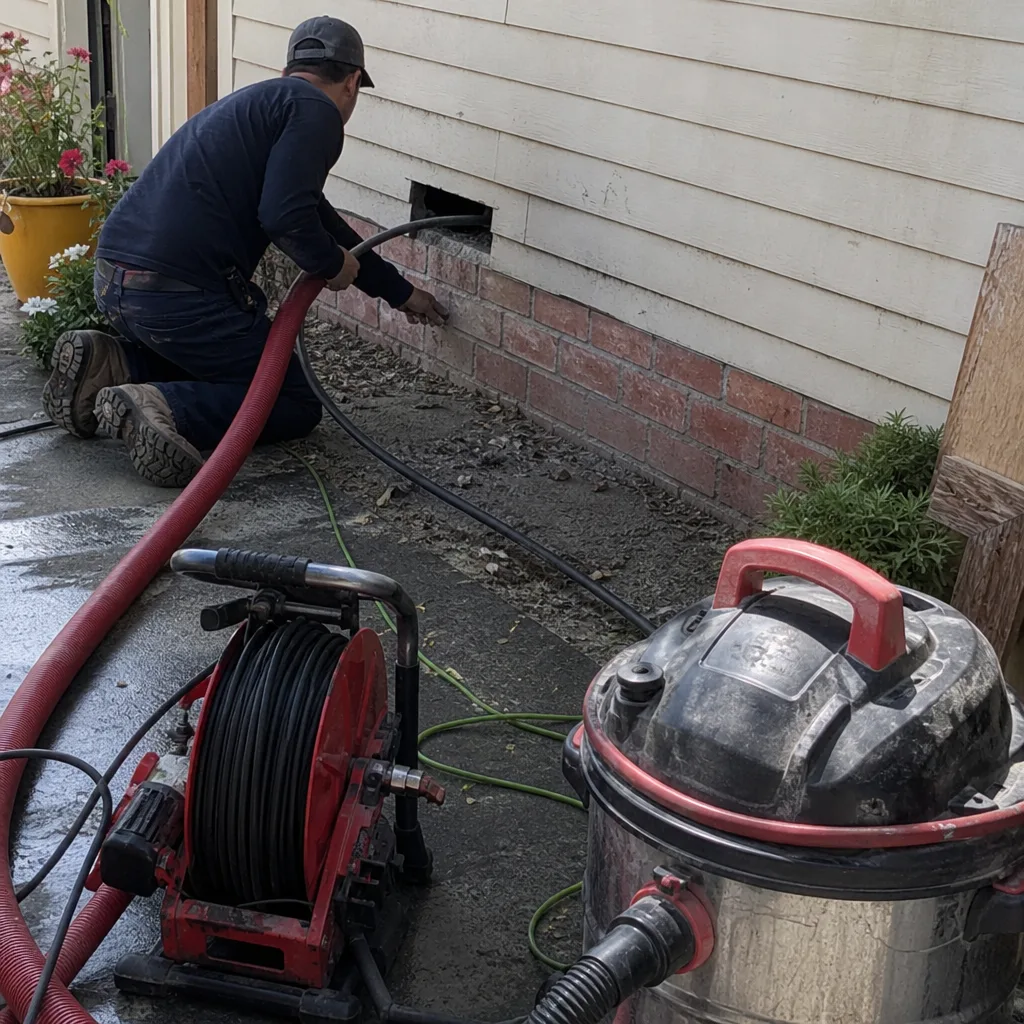 Before
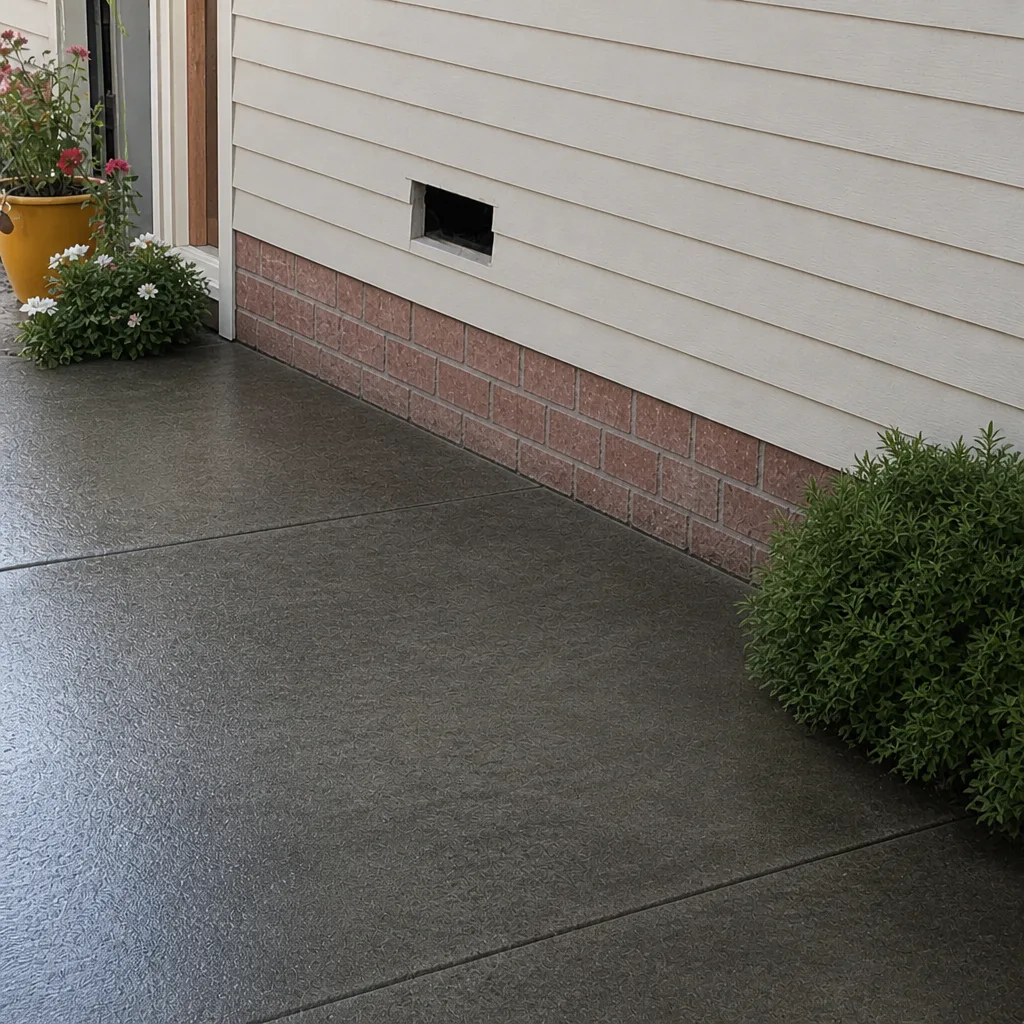 After
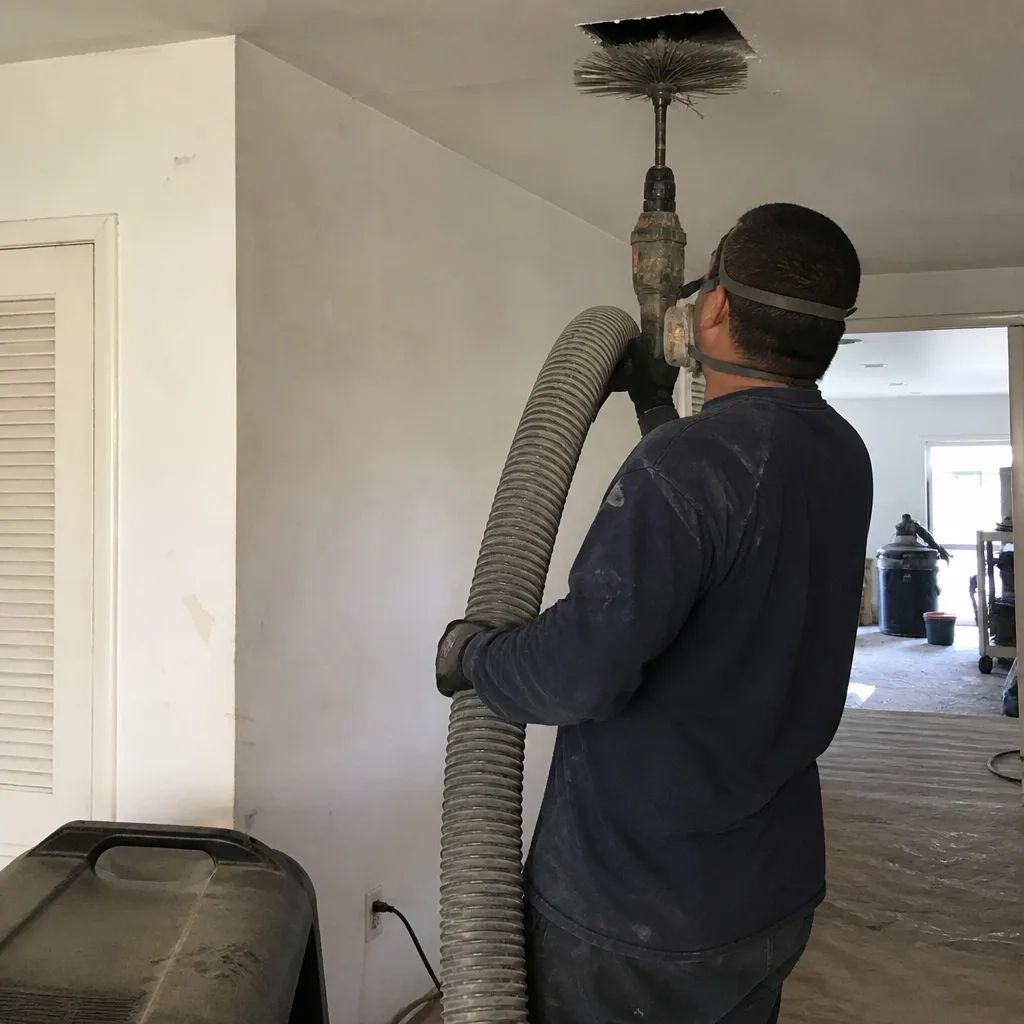 Before
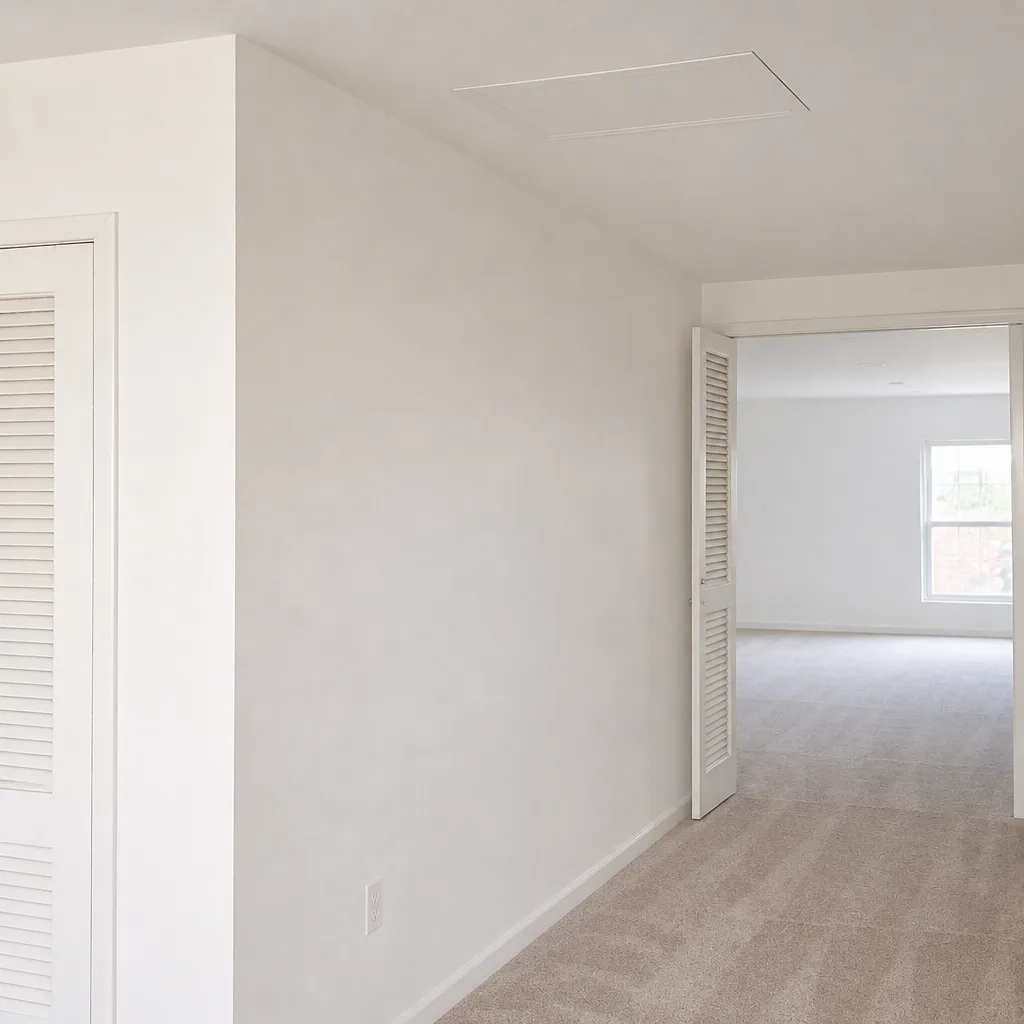 After
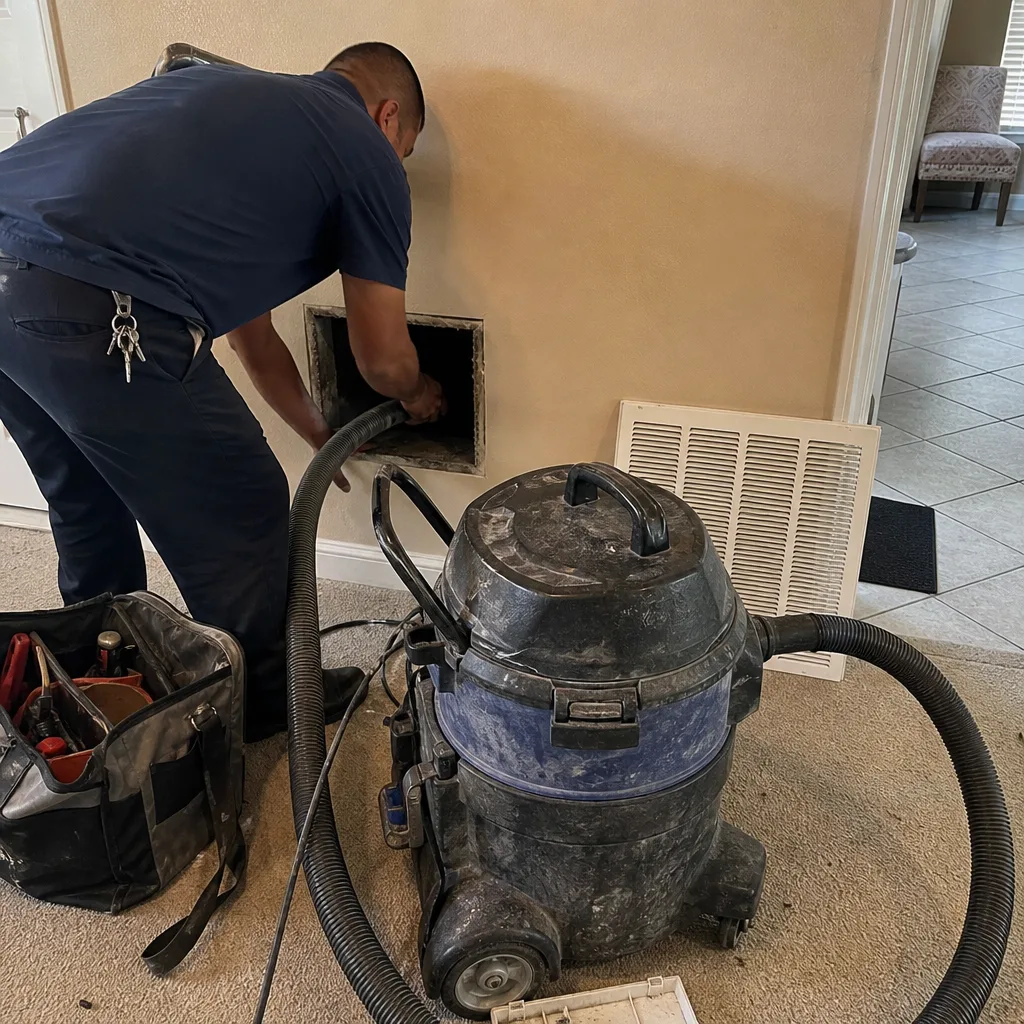 Before
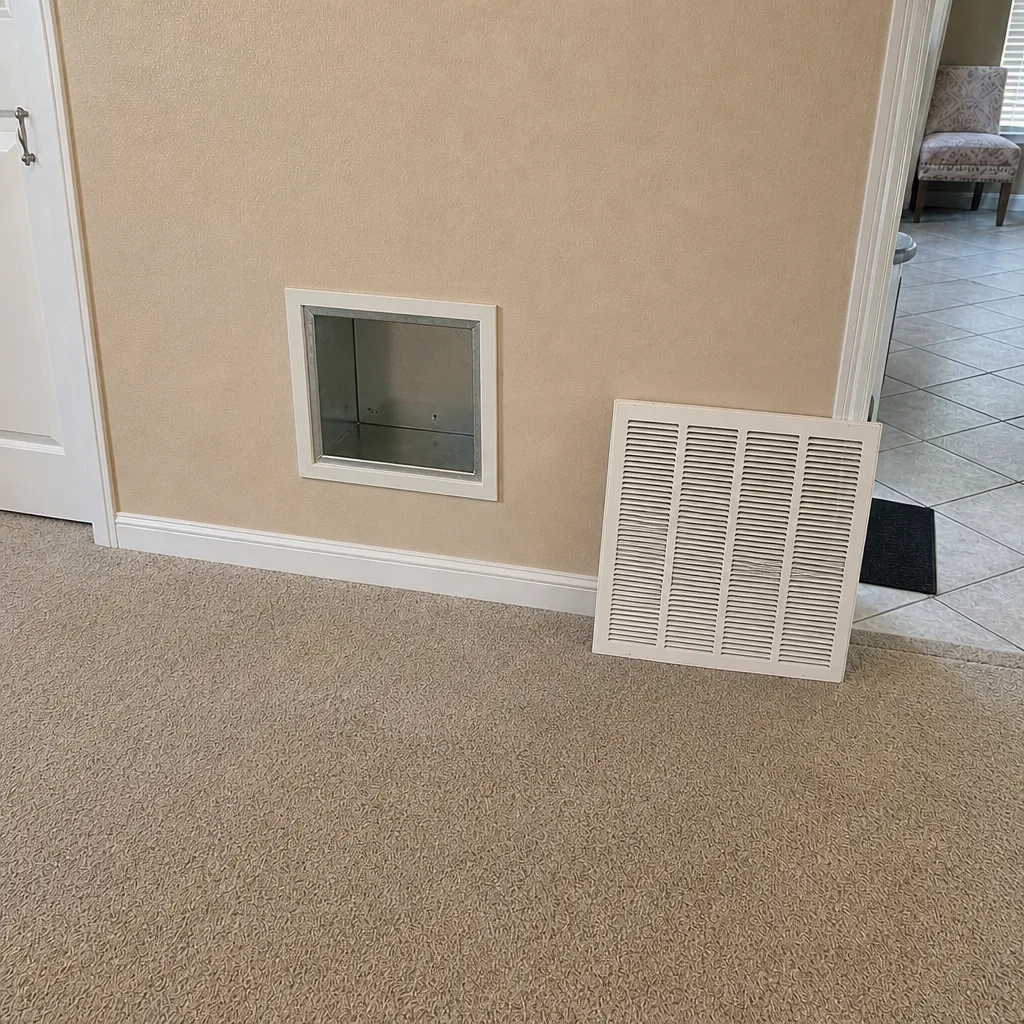 After
When to Call a Professional
Some situations call for a professional assessment rather than more homeowner checks. Call us when you find persistent smoke odor inside the house weeks after a fire event, when the first heating cycle blows visible dust into the room, when you’ve gone through a significant renovation and the system hasn’t been inspected, when the accessible ductwork has visible gaps or disconnected sections, or when your last cleaning was long enough ago that you’re guessing at the date. Duct repair and sealing, air quality and sanitizing, and full-system cleaning all fall inside the same service visit. Air Duct Cleaning Northwood offers free estimates in Northwood – call (866) 947-9073. We answer 24/7. Fast dispatch from 7am to 7pm, Sunday through Friday.
Frequently Asked Questions
The best time is late summer to early fall. That window follows the heaviest annual loading from peak cooling runtime, wildfire smoke, and Santa Ana wind infiltration, and it comes before the winter heating season starts pushing air across the system. Cleaning in that window removes the year’s accumulation before it gets distributed on the first cold morning.
Pricing in the Northwood market varies with the size of the system, the number of branches, and how much repair and sealing is needed. We set one flat price per system based on a written estimate before any work starts, never a per-vent price. For an exact quote on your home, call (866) 947-9073. We answer 24/7. Estimates are free.
Cheap quotes usually reflect a different scope. A shop vac, no containment setup, and a quick pass over the visible ductwork will cost less than a professional job with rotary agitation, negative-air containment, and repair capability on the same visit. A $99 coupon price that grows to a much larger invoice once the technician is on site is the classic version of the problem. One flat price per system, agreed in writing before work starts, avoids that entirely.
Before-and-after photos of your own ducts are the simplest answer. You should be able to see the condition of the duct interior before and after the cleaning, in the same sections. Our technicians use Rotobrush and Nikro systems with negative-air containment, so the cleaning is verifiable rather than invisible.
Not on a fixed calendar. In Northwood, the right interval depends on how many contamination windows your home has been through since the last cleaning: smoke events, substantial renovations, wind infiltration, and the length of the cooling season. A home that has been quiet for two years may need service less often than one that just went through a smoke-heavy fall. A free estimate is the fastest way to find out where yours stands. Call (866) 947-9073.
Yes, when the smell is coming from residue bonded inside the system. Smoke particles carry a tarry component that sticks to duct surfaces and doesn’t blow clear when the house airs out. Cleaning lifts the residue with rotary agitation, containment captures it, and a Guardsman-grade sanitizing treatment addresses the residual odor at the source.
Yes. Duct repair and sealing is a core service, so a technician can fix compromised ductwork on the same visit rather than leaving it for a separate contractor. That matters most after a wind event or renovation, when small gaps appear and quickly undo a cleaning.
The Bottom Line
Northwood’s climate doesn’t hand homeowners a clean winter-summer split. It hands four contamination windows that overlap, with the worst of them in late summer and early fall when smoke, wind, and maximum HVAC runtime all hit the duct system at once. Cleaning needs to land at the end of that overlap, not on a blind twelve-month cycle. Between cleanings, filter discipline, pre-season startup checks, and a quick smoke-event protocol do more for your indoor air than most homeowners realize. If your system is due, get a free estimate: what’s actually inside your ducts is the only thing worth scheduling on. Call (866) 947-9073 for a free estimate. We answer 24/7. Fast dispatch from 7am to 7pm, Sunday through Friday.
Written by the team at Air Duct Cleaning Northwood.